Est. 1948 · Herzogenaurach, Germany · The Leaping Cat
Puma.
Italy. BVB. Africa. The King.
Born from a family feud that split an entire German town. The brand that staged the greatest marketing moment in sports history, dressed Italy's World Cup winners, and made the most controversial kit ever manufactured. 5,679 Puma kits in the ShirtSociety archive.

Born from a feud
1948 · Herzogenaurach, Bavaria · The river between brothers
When Adolf "Adi" Dassler and his brother Rudolf split in 1948 after a bitter falling-out, Rudolf crossed the River Aurach and founded a new company. He named it Ruda, then within months renamed it Puma. Adi, on the other side of the river, named his company adidas.
Herzogenaurach became known as "the town of bent necks": residents looked down at each other's shoes before speaking to establish which side of the feud they were on. Puma employees shopped at Puma-aligned stores. adidas employees did the same. The rivalry persisted for decades, outlasting both founders, and shaped two of the biggest brands in football history.
For collectors, the Puma origin story matters because it explains the brand's competitive intensity. Rudolf Dassler was determined to beat his brother, and the early decades of Puma's football presence were driven partly by that personal rivalry, signing athletes, sponsoring tournaments, and pursuing the same clubs and national teams adidas was courting.
Bavaria, Germany
Pelé and the boot-tying moment
1970 · World Cup Final · Mexico City · The greatest stunt in sport
Before the 1970 World Cup quarter-final against Peru, Pelé bent down to tie his bootlaces. Cameras across the world caught it. The laces were Puma. The moment had been staged: Puma paid a reported $120,000 to ensure a broadcast close-up of the brand. They chose a quarter-final deliberately, early enough in the tournament to avoid being overshadowed, late enough to guarantee a global audience. Widely regarded as the first truly modern sports marketing activation.
Pelé wore Puma King boots throughout his career. The King, launched in 1968, was also worn by Cruyff and Eusébio, and remains in production over fifty years later.
For kit collectors, the Pelé connection is context: it establishes Puma as the brand that understood the commercial power of a single moment, an insight that defined sports marketing for decades.
Browse Brazil kits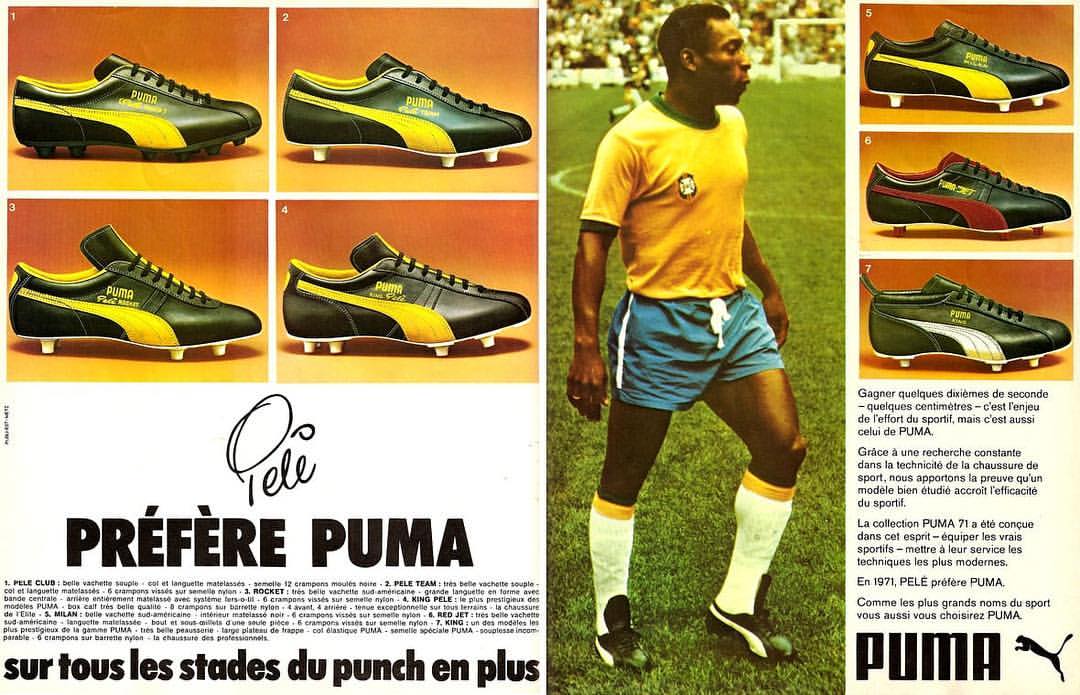
1968
King launched
$120k
Paid to Pelé
Cruyff and the two stripes
1974 · World Cup · West Germany · One shirt, two stripes, one principle
At the 1974 World Cup, Adidas sponsored the Dutch national team. Their kit carried three stripes. Johan Cruyff had a personal contract with Puma and refused to wear a competitor's mark. Rather than back down, he had a version of the Dutch shirt made with two stripes instead of three. Every Dutch outfield player wore three. Cruyff wore two.
The Netherlands reached the final. Cruyff won the Ballon d'Or that year, his third in four years, and was named the tournament's best player. The de-branding was total: not just the shirt, but his shorts and socks also had the Adidas stripes removed or replaced. Every piece of kit on his body was stripped of the competitor's mark. The two-stripe shirt is one of the most examined kits in football history, a garment altered for commercial reasons that became a symbol of individual principle.
Browse Netherlands kits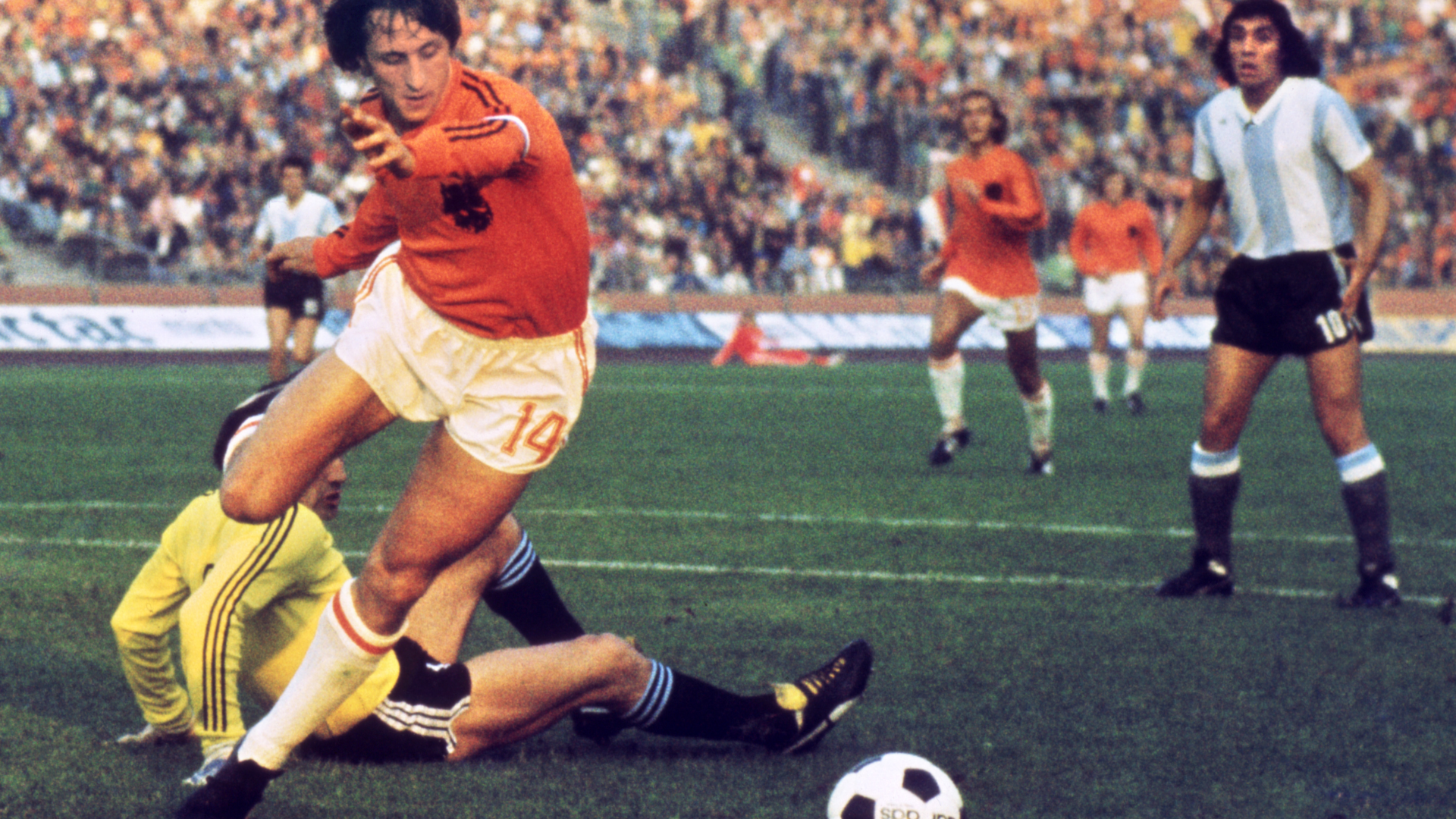
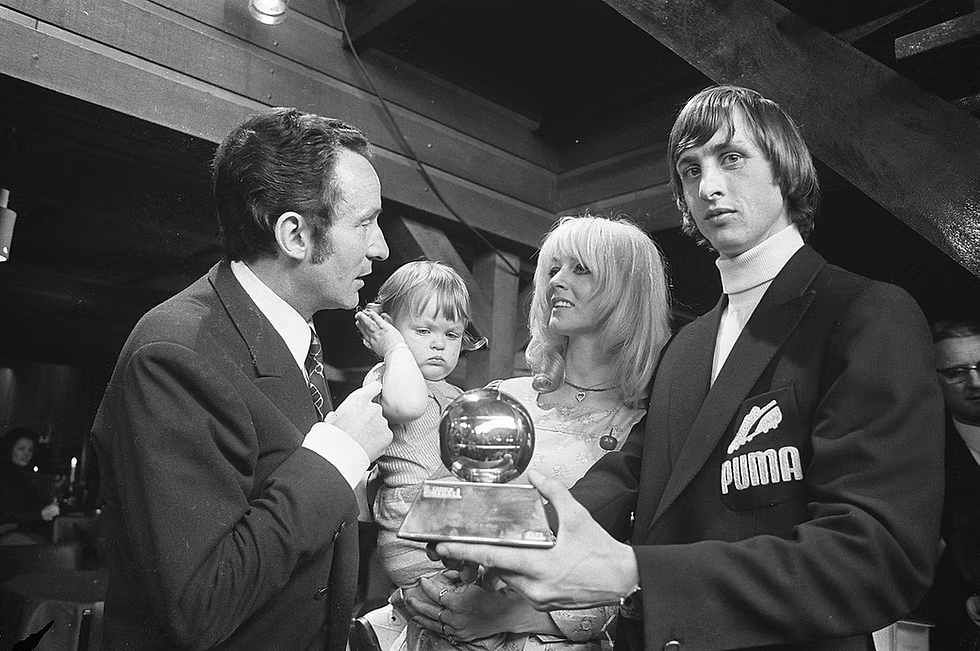
Ballon d'Or 1974
Cruyff wins the annual award in Puma, his third in four years.
Cameroon: the kit that changed the rules
2002–2004 · African Cup of Nations · Puma vs FIFA
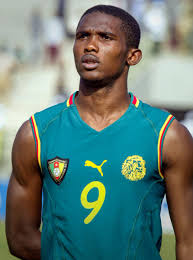
For the 2002 African Cup of Nations, Puma designed a sleeveless shirt for Cameroon. FIFA deemed it non-compliant and threatened to ban the players. The row made global headlines, and modified sleeved versions were worn at the 2002 World Cup.
Two years later, at the 2004 Africa Cup of Nations, Puma went further: a one-piece "unitard" combining shirt and shorts. FIFA sanctioned Cameroon with a six-point deduction from their 2006 World Cup qualifying campaign, later reduced to three points on appeal, for wearing it.
Two separate controversies, two separate kits. For collectors, the 1998, 2002 and 2004 era Cameroon shirts are among the most desirable African national team items in existence: bold, graphic, and historically loaded.
Browse Cameroon Puma kits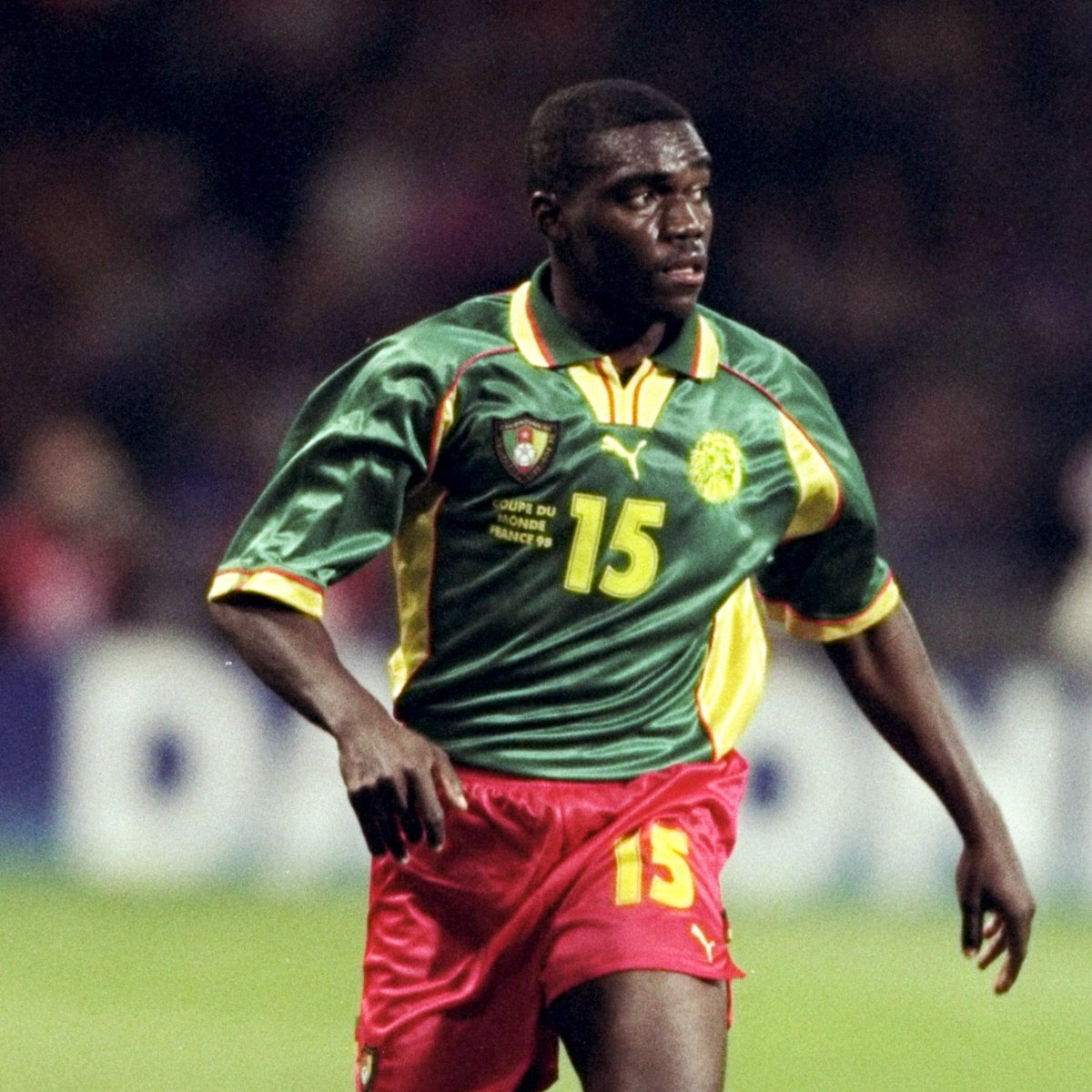
1998
2002
The Azzurri
2003 to present · Gli Azzurri
Puma took over the Italy national team kit contract in 2003 and has held it ever since, over two decades of supplying one of international football's most storied identities. The partnership has produced some of the finest kits in Puma's football history.
The peak came in 2006. Italy won the World Cup in Germany, defeating France on penalties in the Berlin final. The deep blue home shirt, clean, structured, with a high collar and the FIGC crest in its classic form, is one of the most collected Puma items of any era. Fabio Cannavaro lifted the trophy in it.
Euro 2012, where Italy reached the final, produced another highly collected shirt. The 2020 European Championship, won by Italy under Roberto Mancini with a style that captured the football world's imagination, generated significant collector demand for that era's Puma kits too.
Browse all Italy Puma kits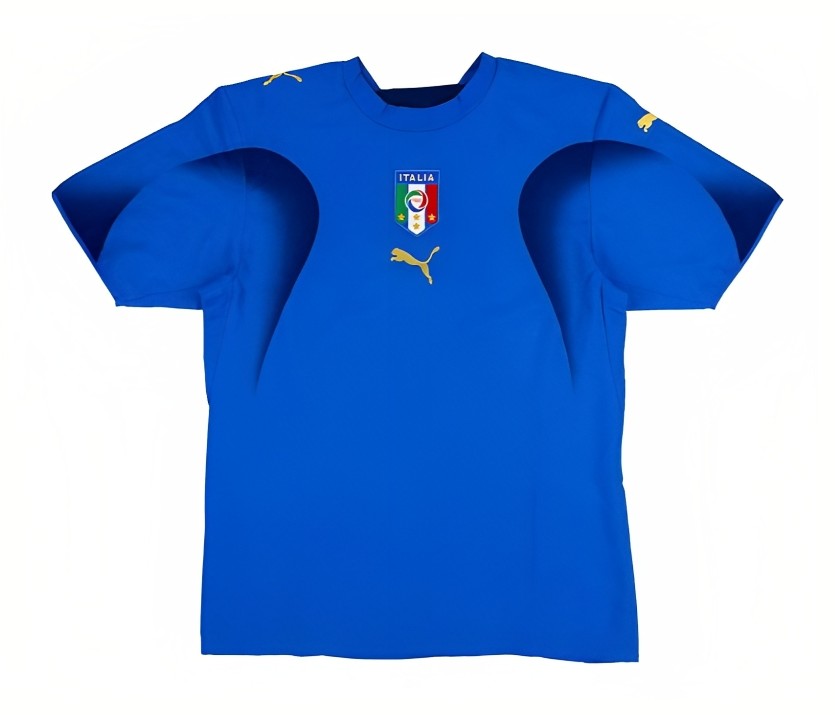
Borussia Dortmund: the yellow partnership
2012 · 2024 · Two Wembley finals, one Puma yellow
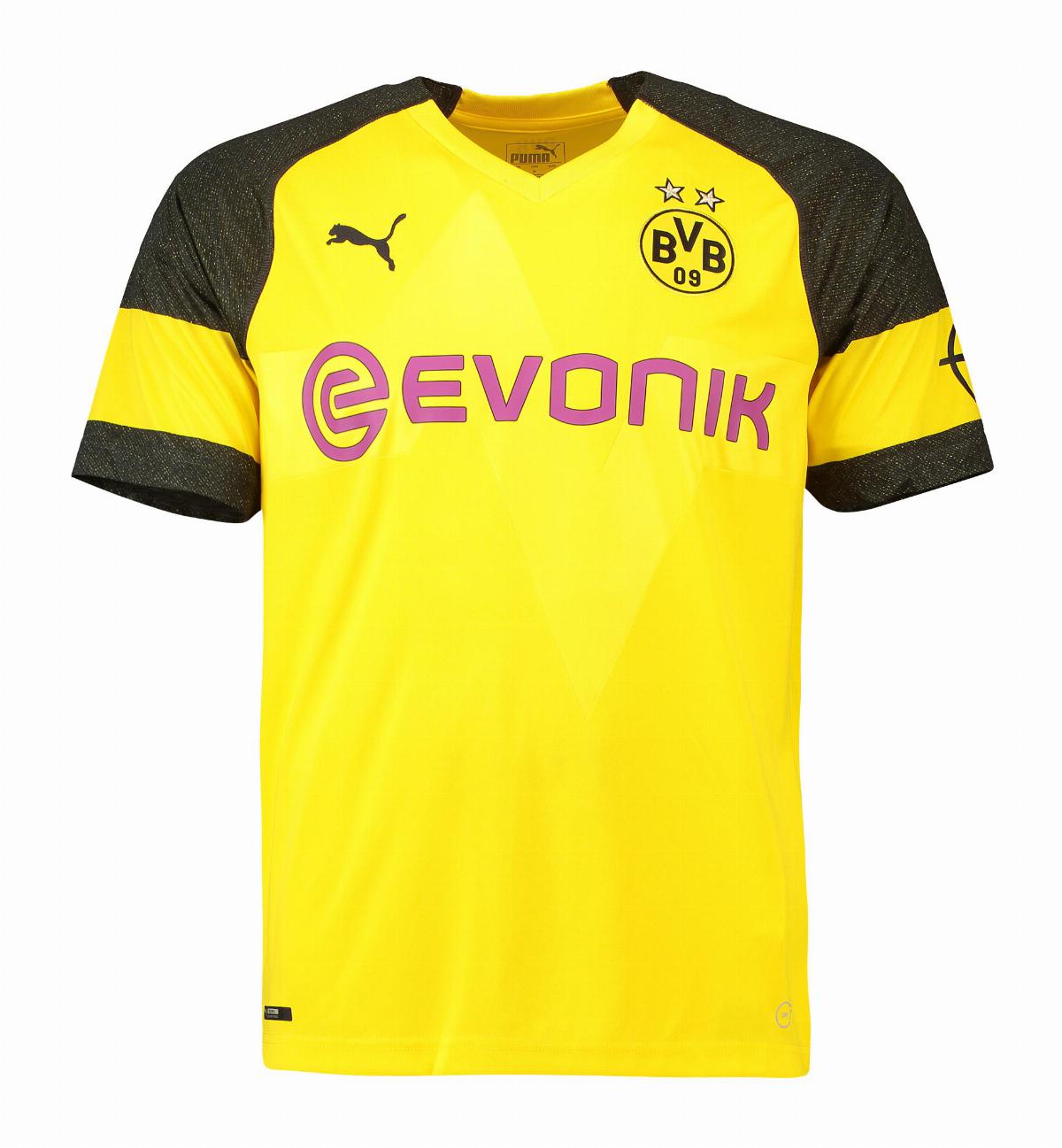
Borussia Dortmund and Puma have produced one of the most visually consistent partnerships in modern football. BVB's signal yellow is the most distinctive colour in club football, and the Puma execution across the 2010s and 2020s has been consistently strong.
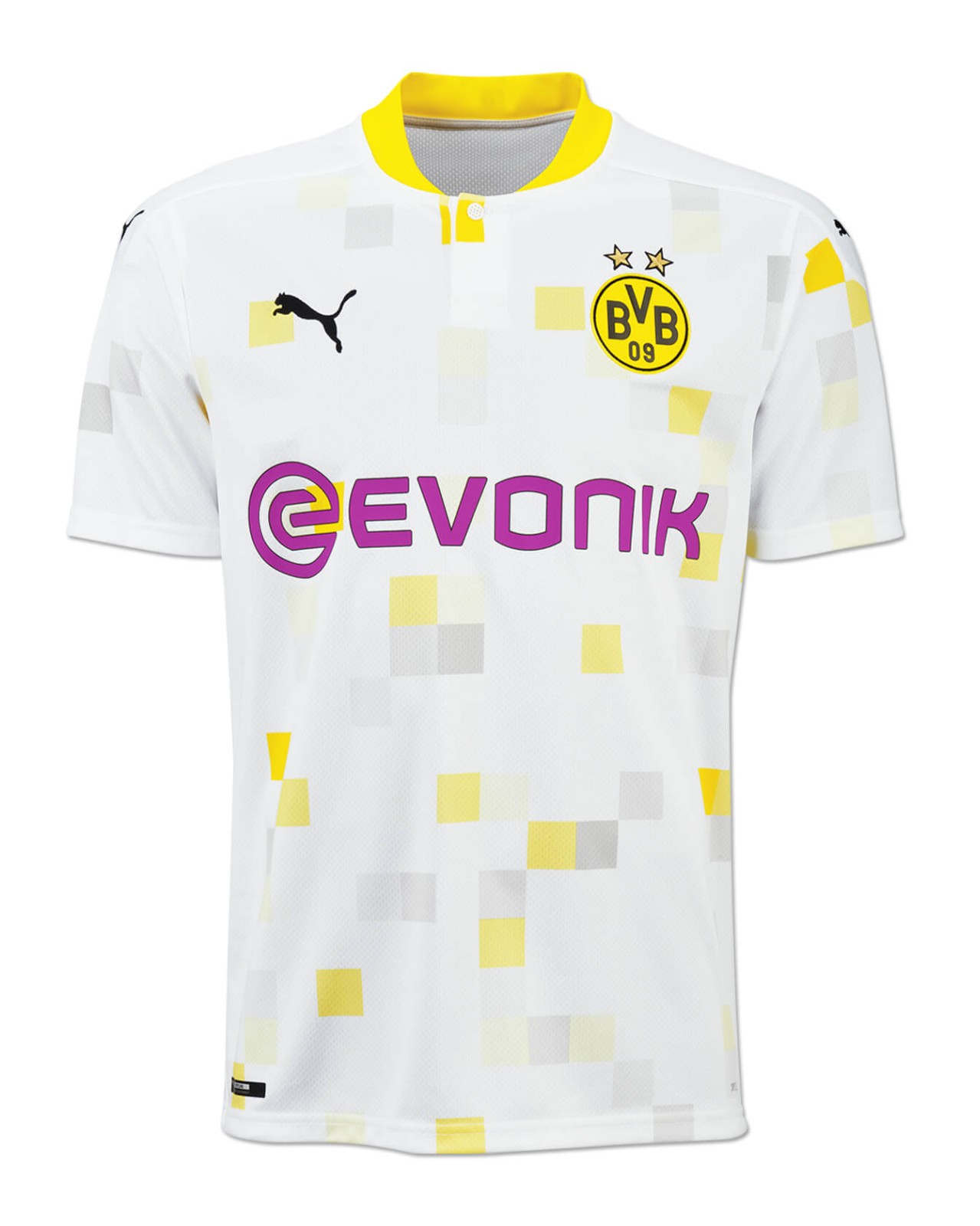
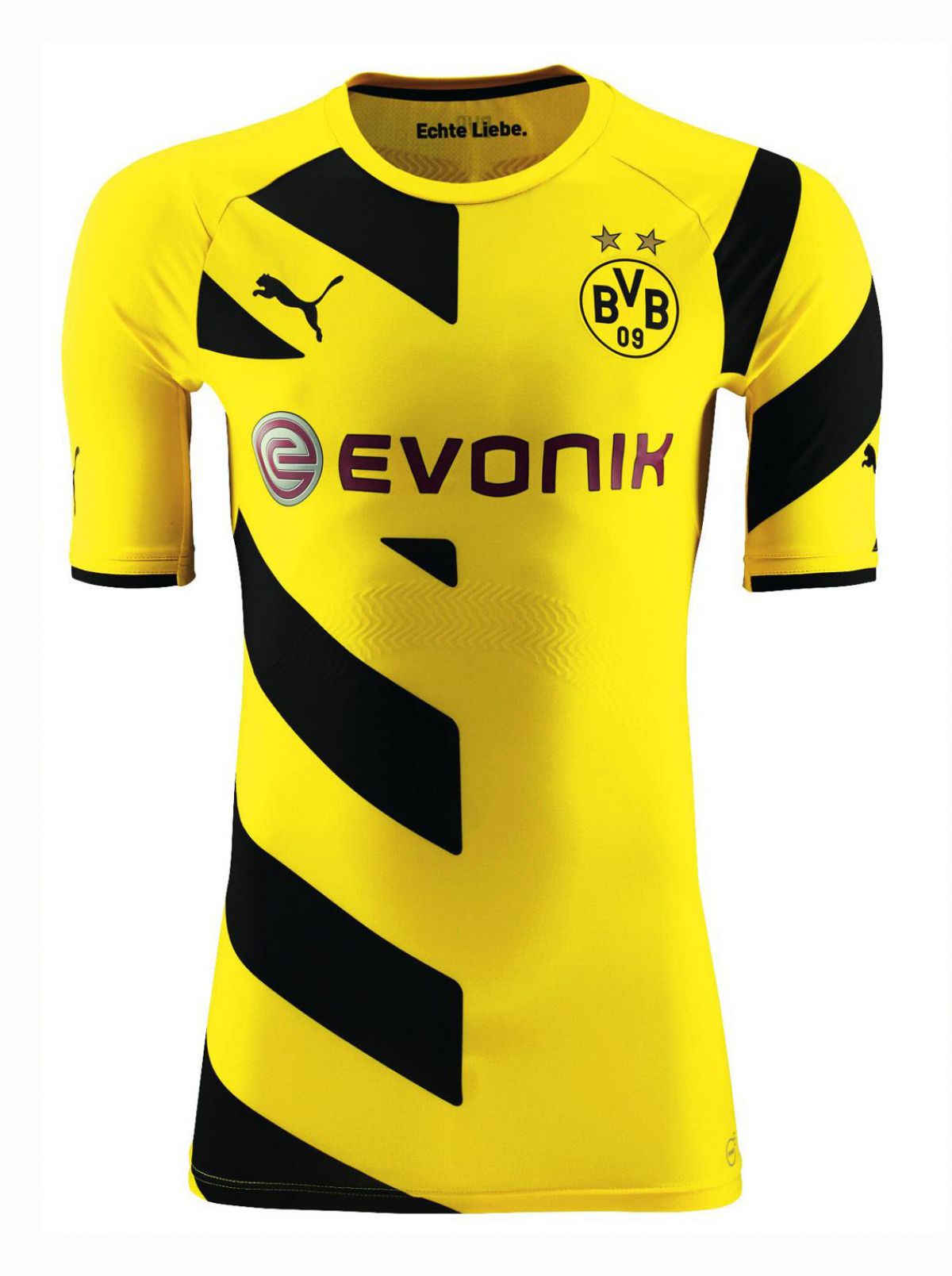
The high point came in 2012/13. Klopp's finest side, with Lewandowski, Reus, Hummels and Götze, reached the Champions League final at Wembley. They lost 2–1 to Bayern in an all-German final, but the shirt from that season is one of the most collected Puma items of any era. Signal yellow, perfectly proportioned, on the chest of a side that played some of the best pressing football the Champions League had seen.
Eleven years later, BVB returned to Wembley for the 2024 final, losing 2–0 to Real Madrid. Two Champions League finals at the same ground in the same Puma yellow. No other club has done that. The archive from this era is one of the most coherent and collectable in Puma's history.
Browse all BVB Puma kits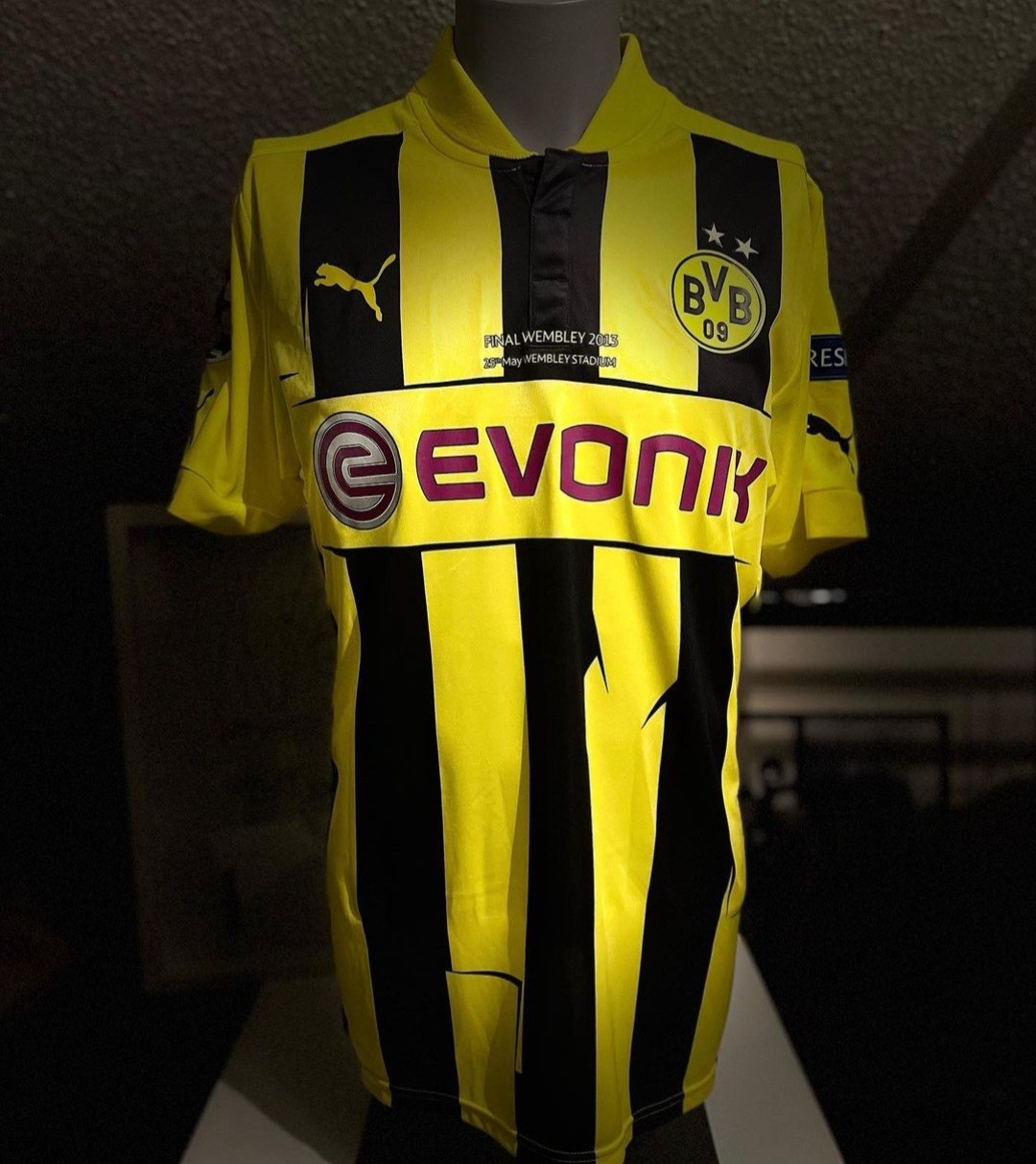
Key milestones
Rudolf Dassler founds Puma in Herzogenaurach
Registered as Puma Schuhfabrik Rudolf Dassler after the split with his brother Adi. The two companies operate from opposite banks of the same river. The family feud that created Puma also created adidas. The two brands define competitive sportswear for the next seventy years.
The Puma King: football's most iconic boot
The Puma King launches and is adopted by Pelé, Johan Cruyff, Eusébio and dozens of the era's greatest players. It remains in production over fifty years later. The King is to football boots what the Air Max is to running, a design that transcends its function.
Pelé ties his laces: the greatest sports marketing moment
Before the 1970 World Cup quarter-final against Peru, Pelé pauses to tie his Puma boot laces, a staged moment chosen deliberately to guarantee maximum broadcast exposure. Widely credited as the origin of modern sports marketing. Puma's identity as a brand of football icons is cemented in Guadalajara.
Czech Republic reach the Euro 1996 final in Puma
Czech Republic reach the European Championship final, losing to Germany on a golden goal. Karel Poborský's famous chipped goal against Portugal is one of the tournament's iconic moments. The Puma shirts from that tournament, clean mid-1990s Central European design, are underrated collector items. See the shirt.
Lazio's Serie A era begins: Nesta, Vieri, Mihajlović
SS Lazio begin their Puma era with one of the most talented squads in Serie A: Alessandro Nesta, Christian Vieri, Sinisa Mihajlović, and Pavel Nedved. In 1998/99 they win the Cup Winners' Cup — the last edition ever played. The following season, 1999/00, they win the Serie A title and Coppa Italia double. The shirts from this entire window are the most sought-after in the club's history, and the CWC shirt is arguably the rarest.
Cameroon's sleeveless shirt: Puma vs FIFA
Puma designs a sleeveless kit for Cameroon for the 2002 Africa Cup of Nations. FIFA objects. Modified versions are worn at the 2002 World Cup. In 2004, Puma goes further with a one-piece "unitard" at the Africa Cup; FIFA sanction Cameroon with a points deduction in 2006 World Cup qualifying. Two separate controversies, two separate kits. The most talked-about sequence of kits in football history.
Italy win the World Cup: Cannavaro lifts the trophy
Italy defeat France on penalties in the Berlin final. Fabio Cannavaro wins the Ballon d'Or. The deep blue Puma home shirt becomes the most collected Italian kit of the modern era. See the shirt.
BVB reach the Champions League final at Wembley
Borussia Dortmund, Klopp's finest side, reach the UCL final, losing to Bayern München 2–1 in an all-German Wembley showdown. Robert Lewandowski, Marco Reus, Mats Hummels. The yellow Puma kit from that season is one of the decade's most collected shirts. See the UCL Final kit.
BVB reach Wembley again: Real Madrid win
Borussia Dortmund return to Wembley for the 2024 Champions League final, losing 2–0 to Real Madrid. Donyell Malen, Jadon Sancho, Niclas Füllkrug. Two Wembley finals in eleven years in Puma yellow. No other club has done that. See the 2024 UCL Final kit.
Logo history

1948–1968
Founding wordmark
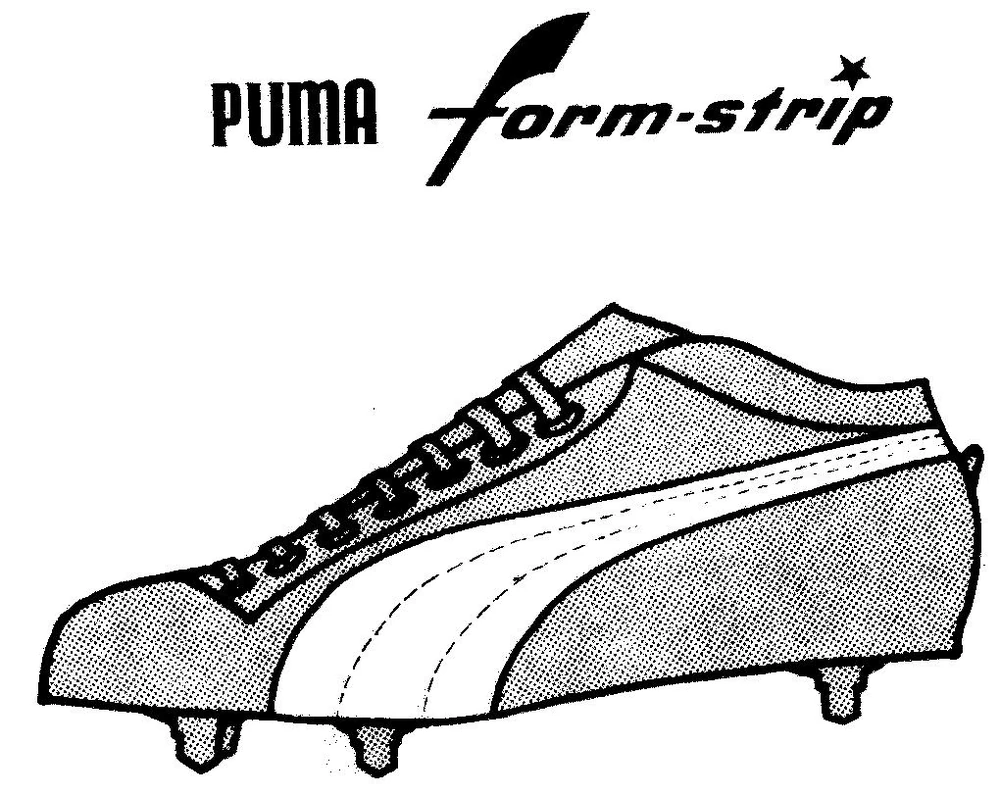
1958–1968
Early leaping cat
1978–1980
Naturalistic cat
1980s–2000s
Graphic evolution
Present
The leaping cat
The Puma cat has evolved from naturalistic early drawings to the stylised graphic mark used today. For collectors, the logo variant is one of the most reliable dating tools on an unmarked shirt. The 1970s and early 1980s cat sits differently and has a more dimensional quality than later versions. The 1990s mark is the one most associated with Puma's peak kit era.
5,679
Kits in ShirtSociety
211
Clubs
2006
World Cup with Italy
1948
Founded
Iconic Puma kits
The most significant, most collected and most historically resonant Puma football shirts ever made.
Cannavaro lifts the trophy in Berlin. Totti, Pirlo, Buffon, Inzaghi. The deep Azzurri blue in its most collected modern form. Italy's fourth World Cup in the finest Puma shirt the brand has ever produced.
Klopp's greatest team, Lewandowski, Reus, Hummels, reach Wembley. They lose to Bayern 2–1 but the shirt captures an era. Signal yellow, black, and the Puma cat on the chest of a side that played some of the best pressing football in Champions League history.
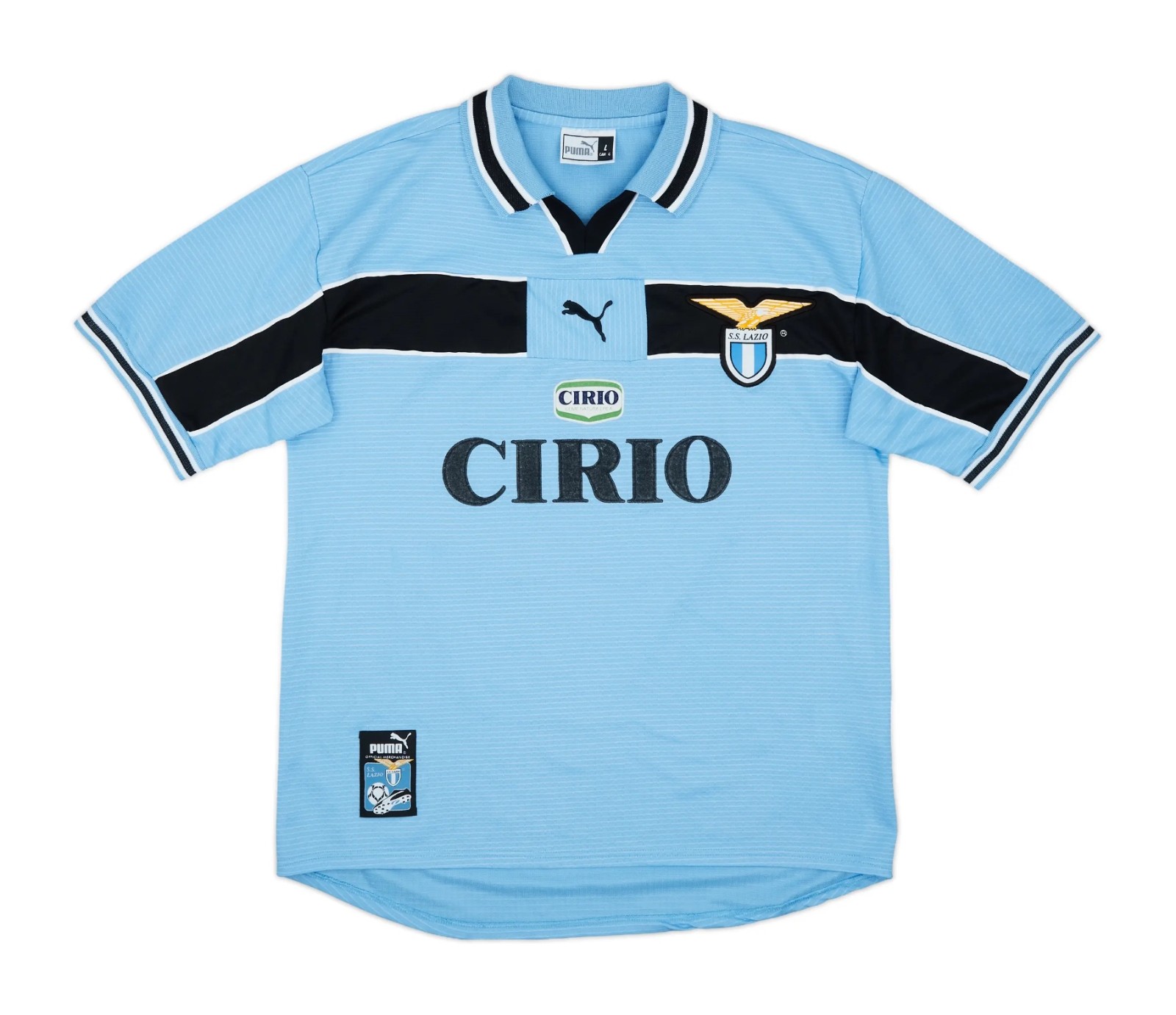
Lazio win the Scudetto, their second and most recent Serie A title. Nesta. Mihajlović. Nedved. Crespo. A golden era shirt for one of Italian football's most storied clubs, and the hardest Lazio Puma kit to find in good condition.
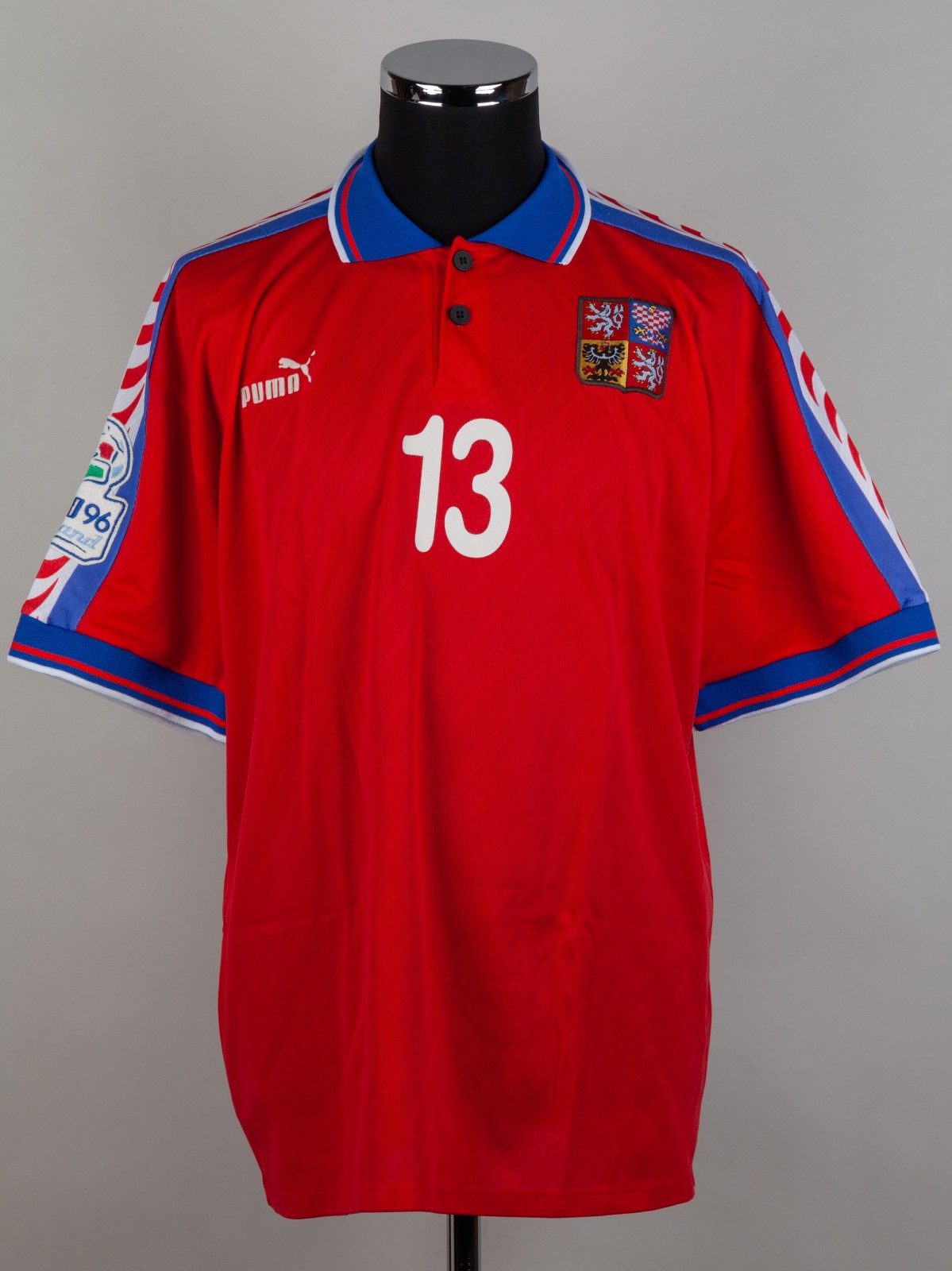
Poborský's chipped finish against Portugal. Berger's penalty in the final. Czech Republic's first major tournament as an independent nation ends in a Wembley final. An underrated shirt from an underrated side, the mid-1990s Puma template at its cleanest.
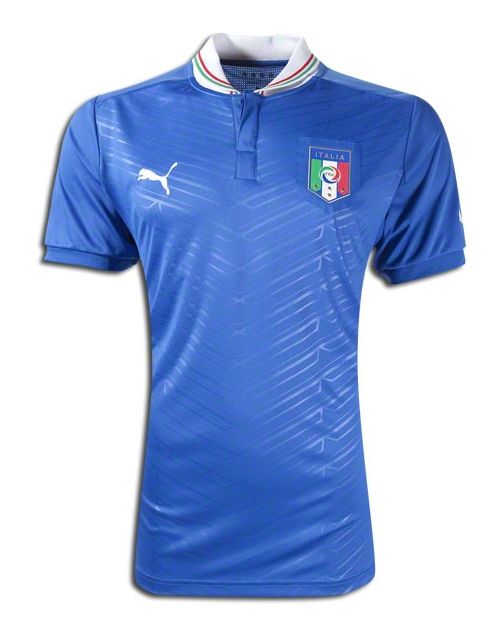
Pirlo's audacious Panenka in the semi-final against England. Balotelli's double against Germany. Italy reach the final only to be beaten 4–0 by Spain. The shirt documents one of Italian football's most elegant recent sides, even in defeat.
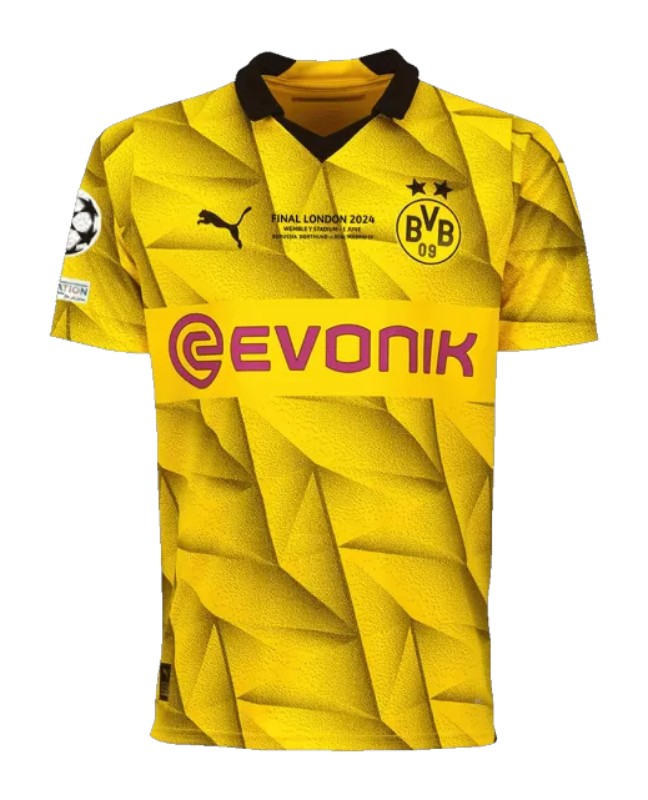
BVB return to Wembley eleven years later, losing 2–0 to Real Madrid. Two Champions League finals at the same ground in the same Puma yellow. A shirt that will be remembered as part of one of the UCL's strangest recurring storylines.
Collector notes: what to look for
Puma's history spans 75 years and multiple distinct design eras. Here is what experienced collectors watch for.
The leaping cat: logo dating
Puma's cat logo has evolved through several distinct forms. The 1970s–80s cat sits differently to the 1990s version, which differs again from the contemporary mark. Logo variant is one of the most reliable ways to date an unmarked Puma shirt. Early cats are more naturalistically drawn; later versions are more graphic and stylised.
The Italian market: Lazio and the Serie A window
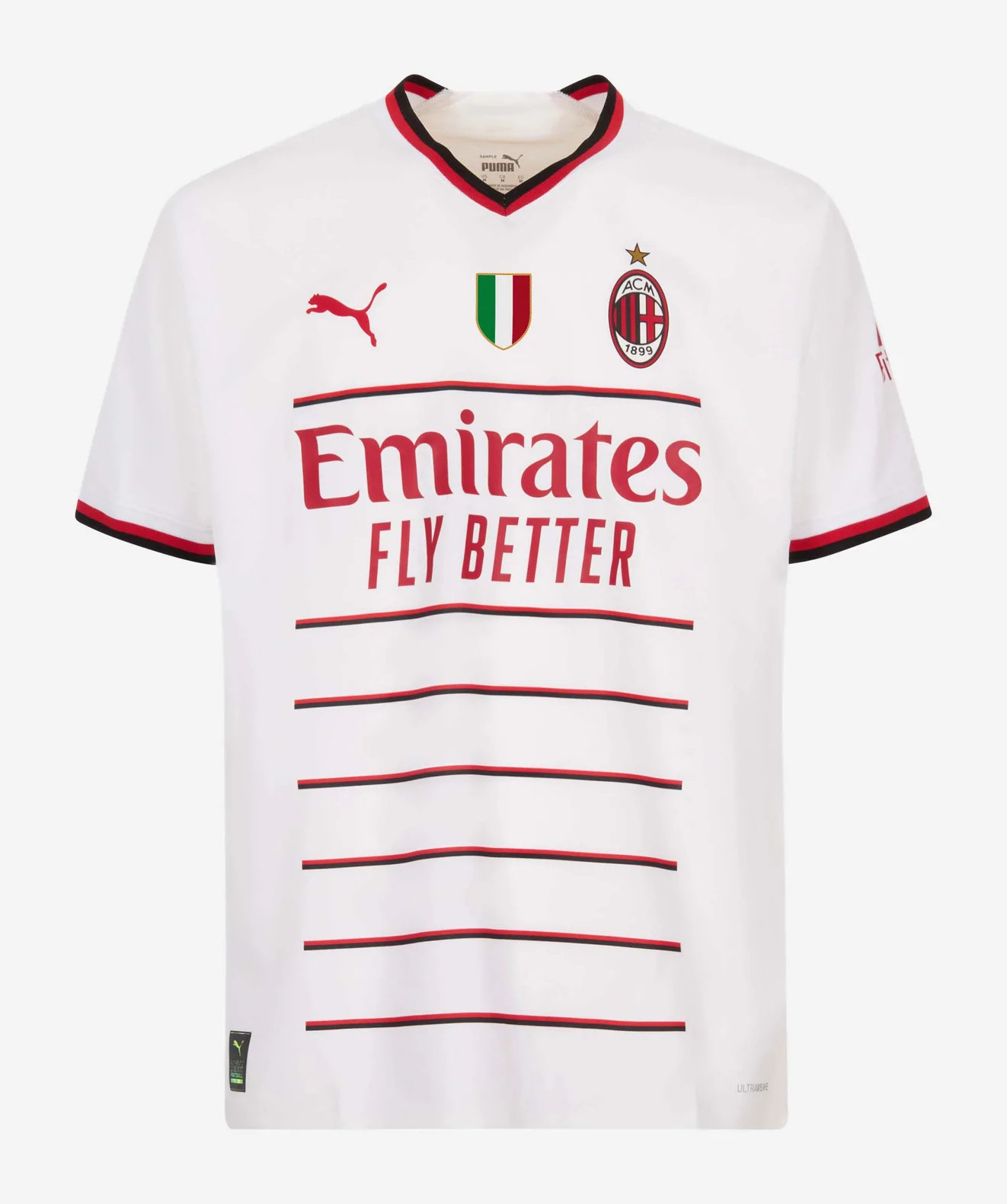
Puma's Serie A presence in the late 1990s and early 2000s was significant. Lazio, Udinese, Parma, and others wore Puma during a period when Italian football was the best in the world. These shirts, particularly match-worn examples, are undervalued relative to their historical significance and are worth prioritising now.
Africa: the most underrated Puma archive
Puma has a long history with African national teams: Cameroon, Senegal, Ghana, Ivory Coast, and others. These kits often feature the boldest design choices Puma has made in any era. The Cameroon 1998 shirt, the Senegal 2002 World Cup kit, and the various African Cup of Nations designs represent some of the finest work in football shirt design.
BVB: the yellow wall archive
Borussia Dortmund's Puma partnership runs deep. BVB signal yellow is one of the most distinctive colours in football, and the Puma execution has been consistently strong. The 2012–13 and 2023–24 UCL Final kits are the obvious targets, but the broader BVB Puma archive, particularly the 2015–16 and 2017–18 seasons, contains genuinely excellent shirts at accessible prices.
Fit and sizing: the ACTV shift
Puma's fit changed dramatically between eras. 1990s Puma shirts — the Czech Republic 1996, the Lazio window, the early Cameroon kits — run large by modern standards, with generous cuts typical of the era. From around 2010 onwards, Puma pioneered the ultra-slim "ACTV" fit for elite national teams, with internal taping and compression panels. Italy and Ivory Coast shirts from 2012 onwards are cut extremely tight. If you're buying across eras, size up for the 1990s, size down for post-2010 ACTV kits, and check the label carefully: "ACTV" on the hang tag confirms the tighter template.
Featured in
Kit-release
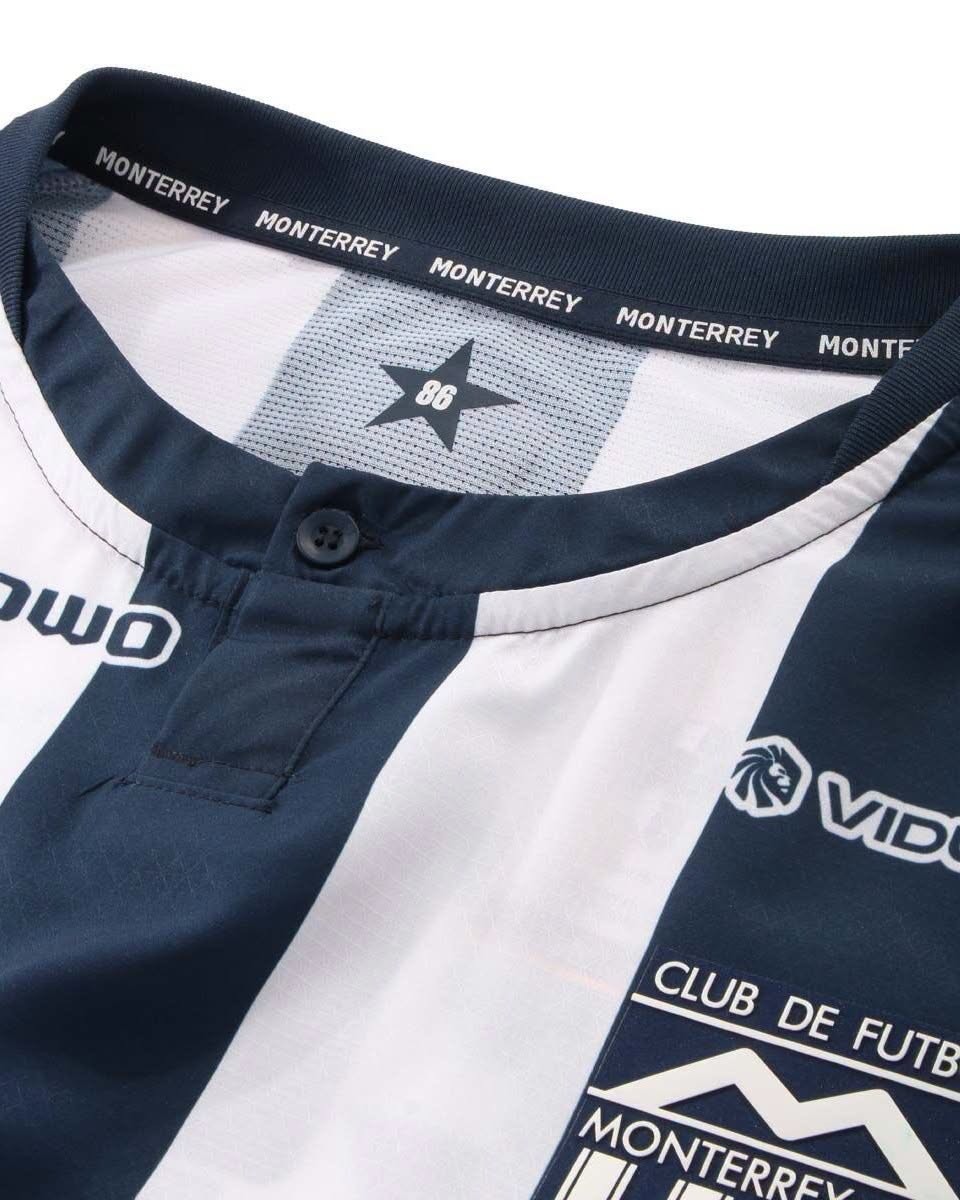
CF Monterrey mark 40 years since their first Liga MX title with Puma's Legado 86 kit
History
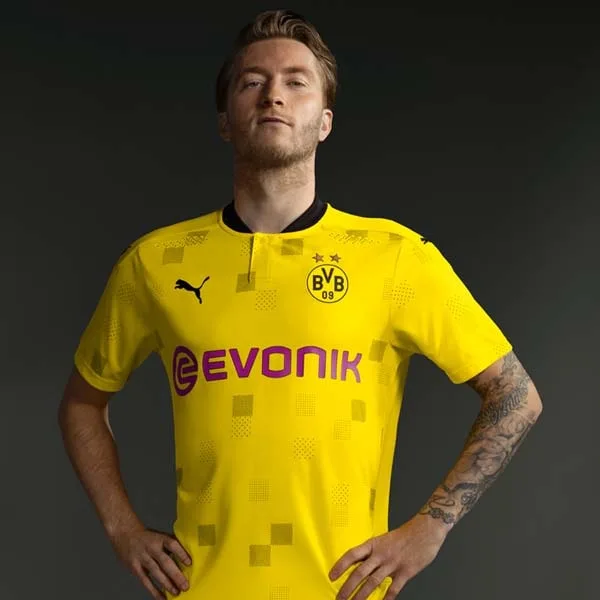
The other side of Herzogenaurach: Puma's history in football
Kit-release
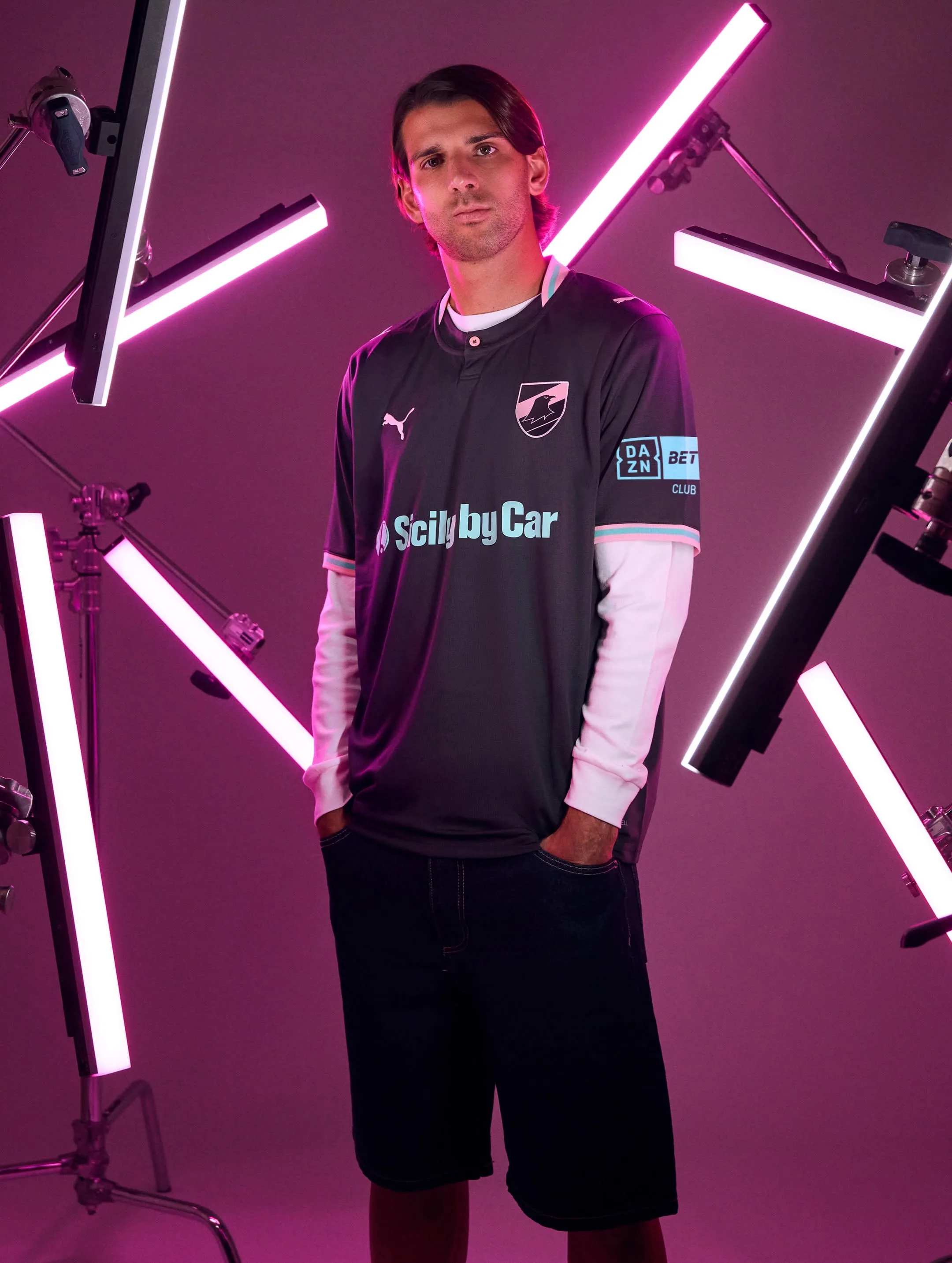
Palermo's 2026/27 Puma third kit revives the 1987 crest in dark gray and neon
Kit-release
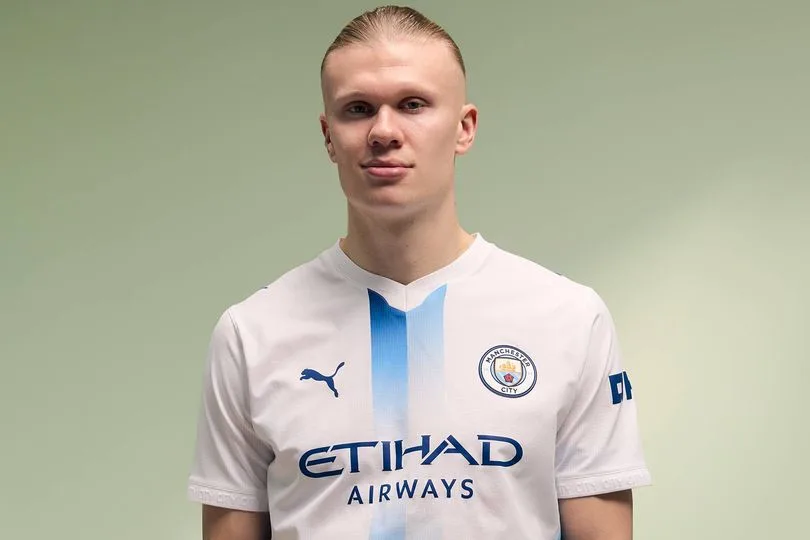
Manchester City 2026-27 third kit by Puma: designed by a fan using AI