
Est. 1909 · Dortmund · Die Schwarzgelben · Echte Liebe
Borussia Dortmund
Founded in 1909 in the Borsigplatz district of Dortmund, BVB are one of the most supported clubs in world football. Eight German championships, five DFB-Pokal, one Champions League. And a stadium that defines the club more than any trophy. Riedle. Klopp. Lewandowski. Reus. 342 BVB kits catalogued on ShirtSociety.
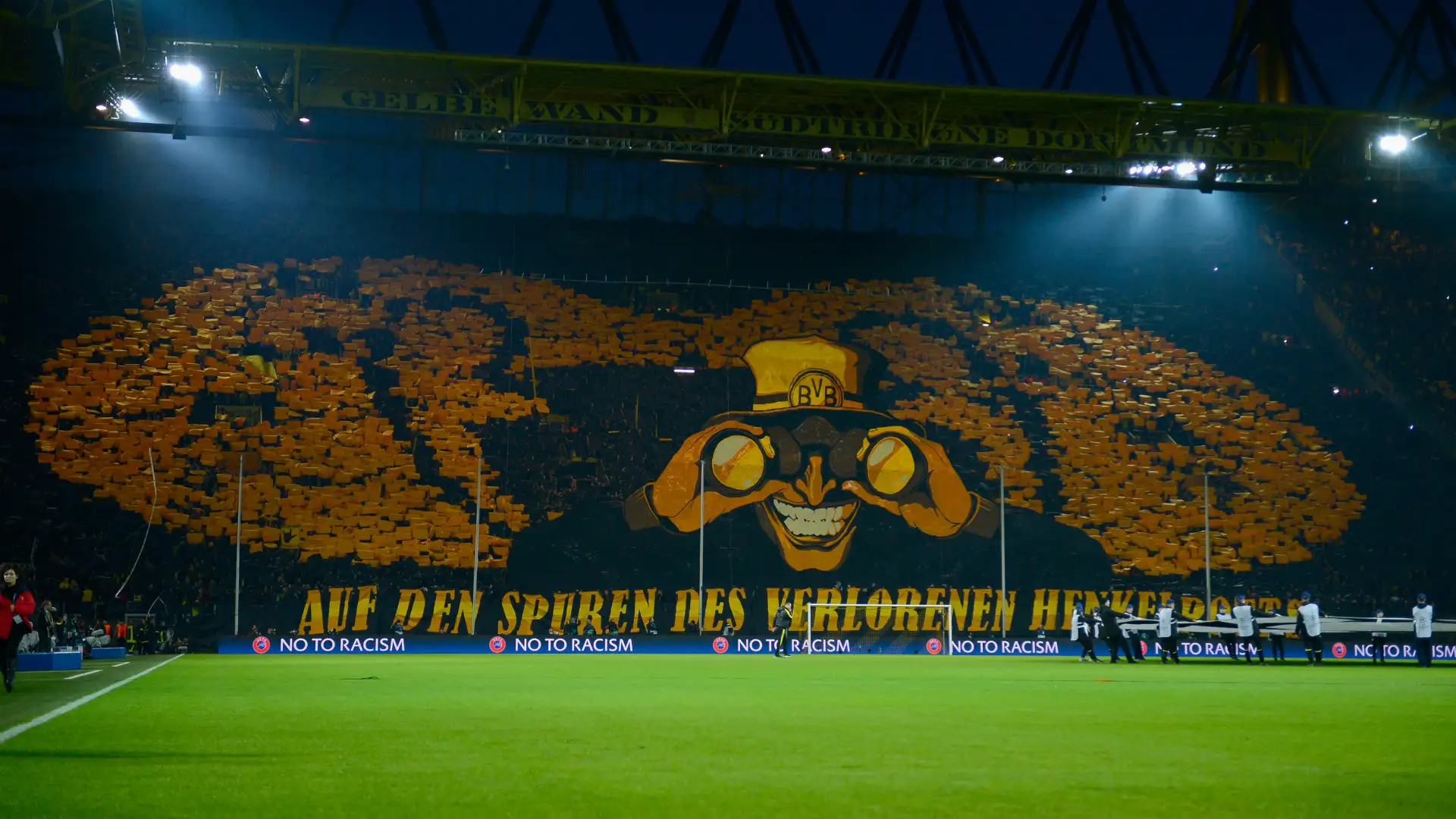
Südtribüne · Signal Iduna Park · 24,454 standing
The Yellow Wall: the largest standing terrace in European football
Any account of Borussia Dortmund that leads with trophies misses the point. The Südtribüne is the visual shorthand for the club: 24,454 standing fans packed into a single end, creating a wall of yellow and noise that visiting players and managers consistently describe as unlike anything else in the game.
Signal Iduna Park holds 81,365 for Bundesliga matches, making it the largest club stadium in Germany. The average Bundesliga attendance is routinely among the highest in European football. This is not a club that fills stadiums because of what it has won. It fills them because of what it represents: a working-class city, a genuine relationship between club and supporter, and the ethos the club calls Echte Liebe, true love.
1909: Borsigplatz, Dortmund
Founded 19 December 1909 · Catholic youth · Borsigplatz district
Borussia Dortmund was founded on 19 December 1909 by a group of young men from the Borsigplatz district, a working-class neighbourhood in the north of Dortmund shaped by the steel and coal industries that dominated the Ruhr region. The club's founding was in part an act of defiance: the young men had previously played for a church youth group and left to form their own club when the local priest tried to restrict their involvement with a rival team.
The yellow and black colours were adopted from the start, though the early kits were simple and inconsistent by modern standards. The identity of the club has always been rooted in Dortmund itself: a post-industrial city that lost its heavy industry in the 1980s and found, in its football club, something the city could organise around.
Early titles · 1956 · 1957 · 1963
BVB won three German championships in the late 1950s and early 1960s, establishing themselves as one of the country's leading clubs in the pre-Bundesliga era. BVB's third title, in 1962/63, was the last won under the old regional championship system; the professional Bundesliga's first season began in 1963/64. After that, a long period without major domestic success followed: more than three decades before the next Bundesliga title arrived in 1995.
The Westfalenstadion, later renamed Signal Iduna Park, opened in 1974 and was built for the World Cup hosted in West Germany. It became BVB's permanent home and has been expanded several times since, with the Südtribüne terrace developed into the form that now defines the club's image worldwide.
Three titles in three years: Hitzfeld's BVB
1995 · 1996 Bundesliga · 1997 Champions League · Nike · Möller · Riedle · Chapuisat
Ottmar Hitzfeld arrived as head coach in 1991 and built the squad that ended BVB's 32-year wait for a Bundesliga title. In 1994/95 and 1995/96, they won back-to-back championships with a squad that combined German organisation with quality imported from across Europe. Andreas Möller, the playmaker, set the tempo. Stéphane Chapuisat, the Swiss striker, provided the goals. Karl-Heinz Riedle and Flemming Povlsen gave them attacking options that could hurt any defence in Europe.
The peak came in May 1997 at Munich's Olympiastadion. BVB faced Juventus in the Champions League final, the Italian side widely expected to win. Riedle headed BVB in front on 29 minutes, and added a second five minutes later. Alessandro Del Piero pulled one back for Juventus in the second half. Substitute Lars Ricken, on the pitch for less than a minute, lobbed the goalkeeper from 30 metres to seal a 3–1 win. It remains the only Champions League title in the club's history.
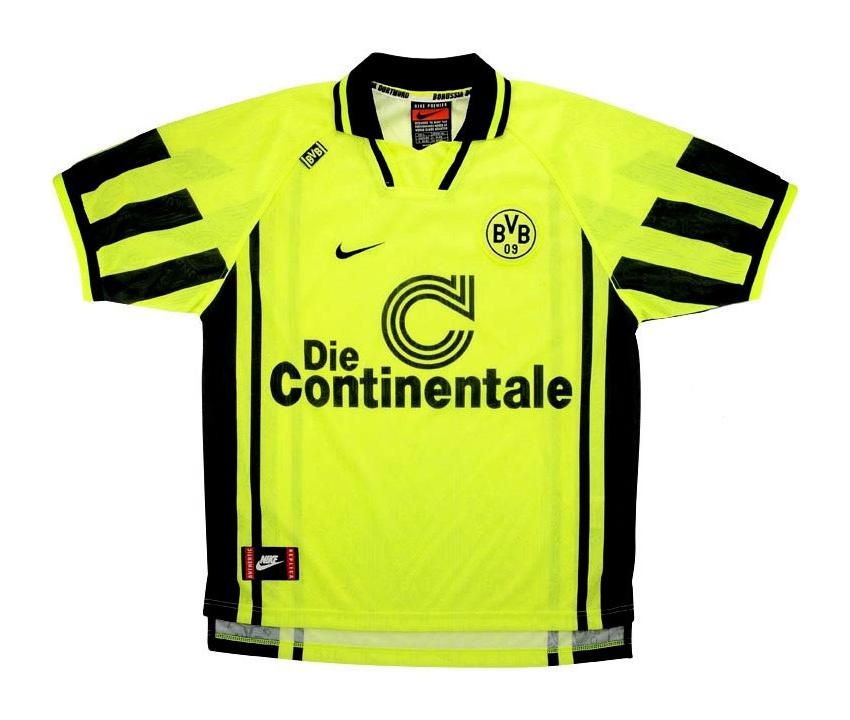
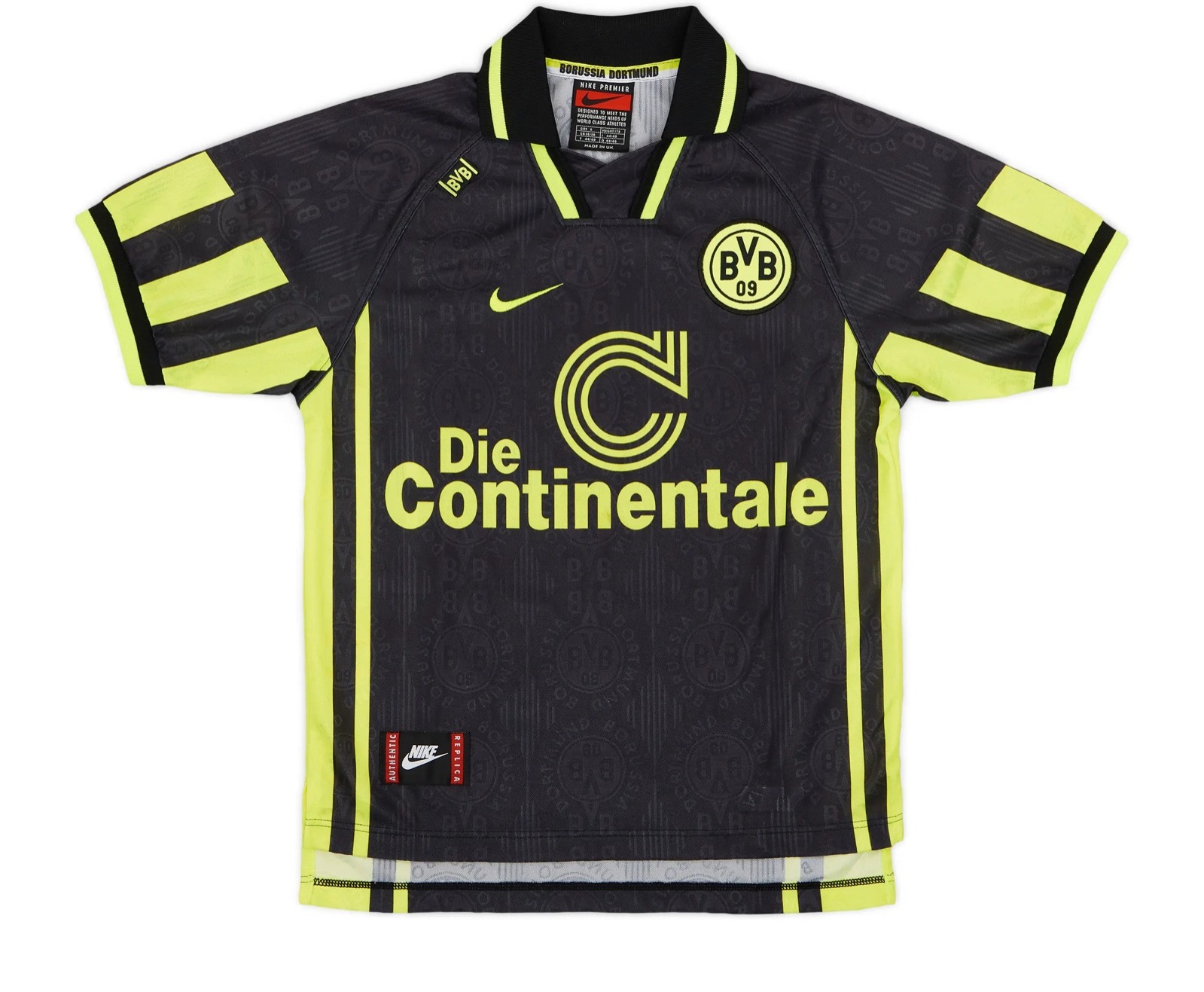
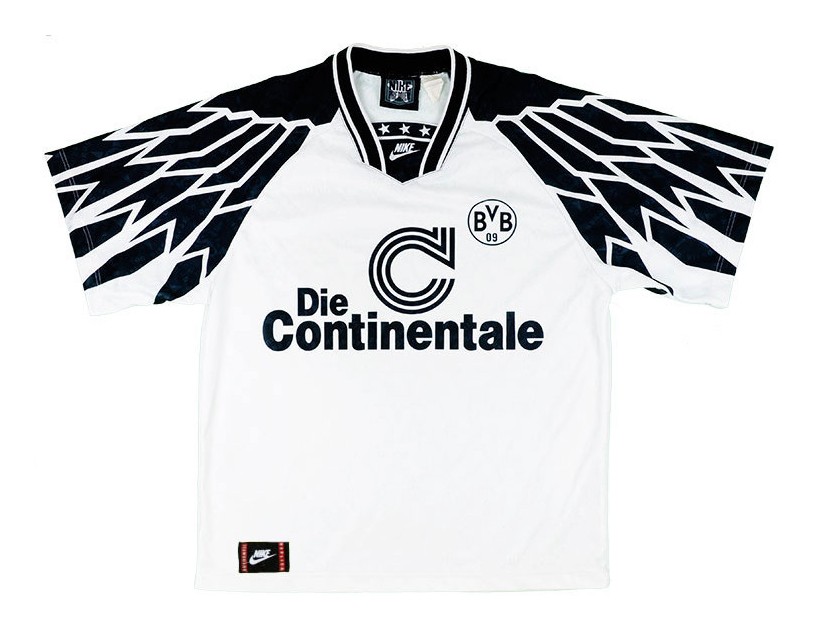
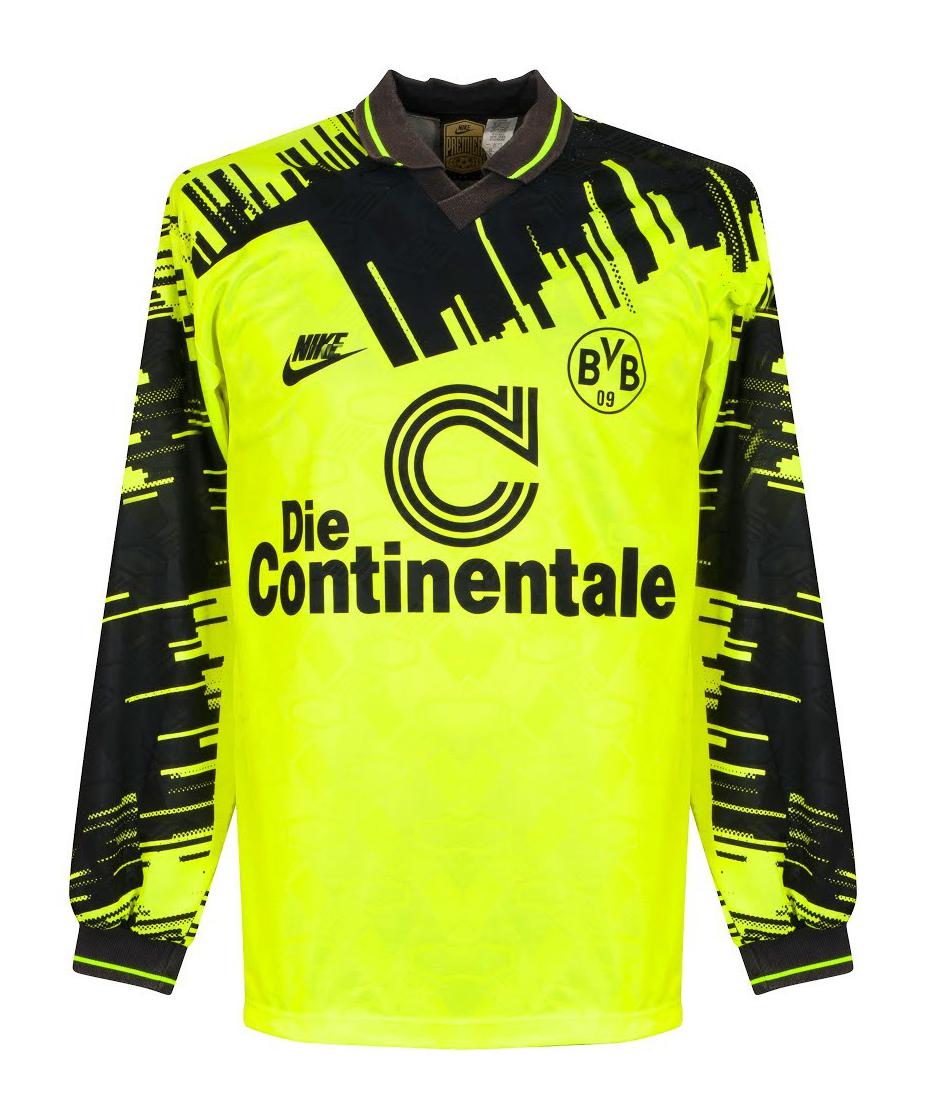
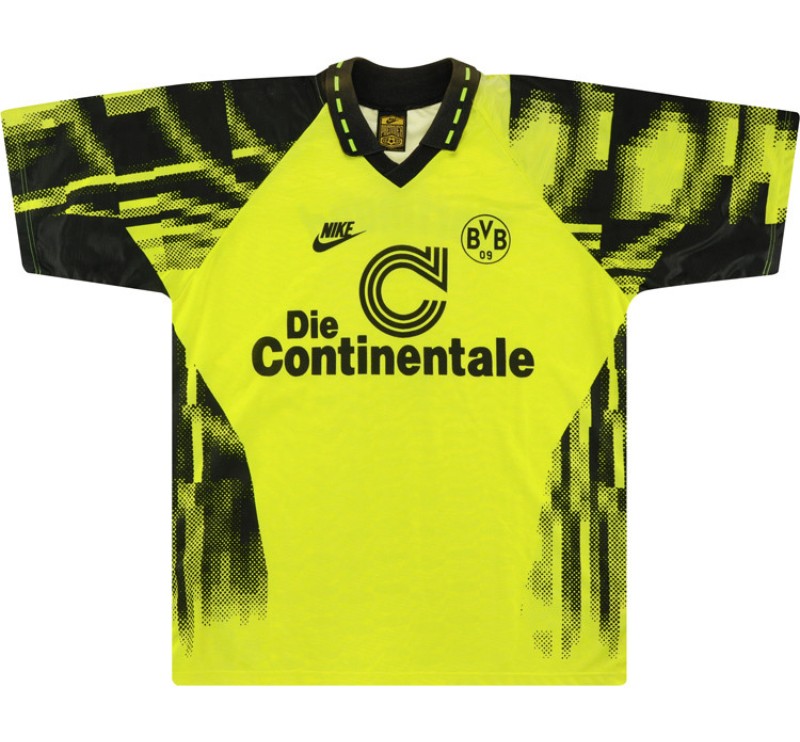
The Nike shirts of this era are the most historically significant in the BVB archive. The 1996/97 Champions League final kit is the starting point for any serious BVB collection.
Browse Nike BVB kits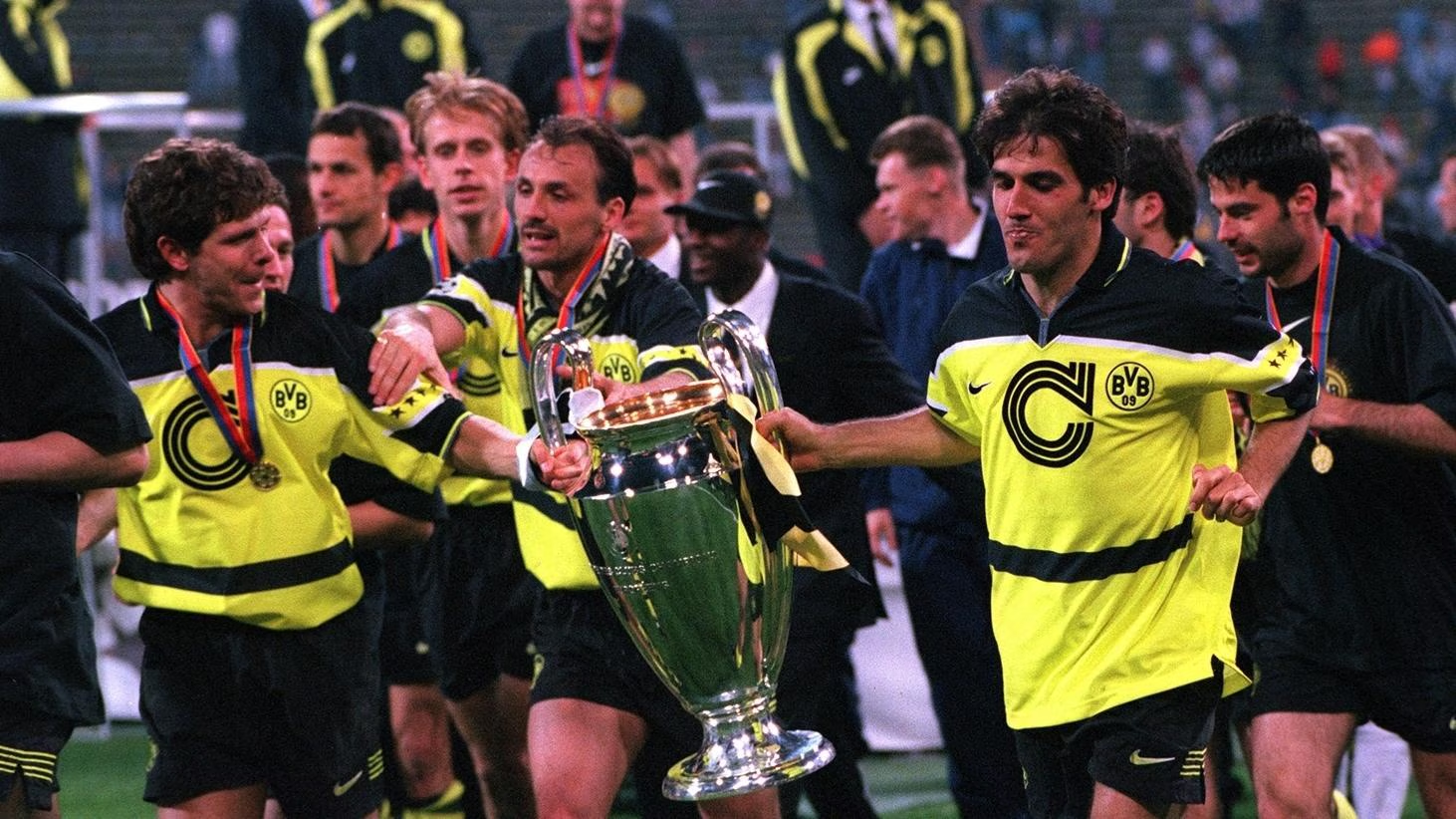
2003 to 2005: the club nearly ceased to exist
Financial crisis · Debt · Survival · The bond that held
In the years after the 1997 Champions League win, Borussia Dortmund spent heavily trying to remain competitive at the top of European football. By 2003, those decisions had created a financial crisis serious enough to threaten the club's existence. The debt accumulated through transfer fees, wages, and a large stadium expansion loan brought BVB to the edge of insolvency.
The club was forced to sell key players, cut costs, and restructure its finances entirely. In 2005, BVB narrowly avoided bankruptcy and finished seventh in the Bundesliga. The years between 2002 and 2008 produced no major trophies and tested the loyalty of supporters in a way that winning rarely does.
What the crisis produced, perhaps paradoxically, was a stronger bond between club and city. The Südtribüne did not empty. Supporters continued to show up in the numbers that had made the stadium famous. The relationship was tested and held.
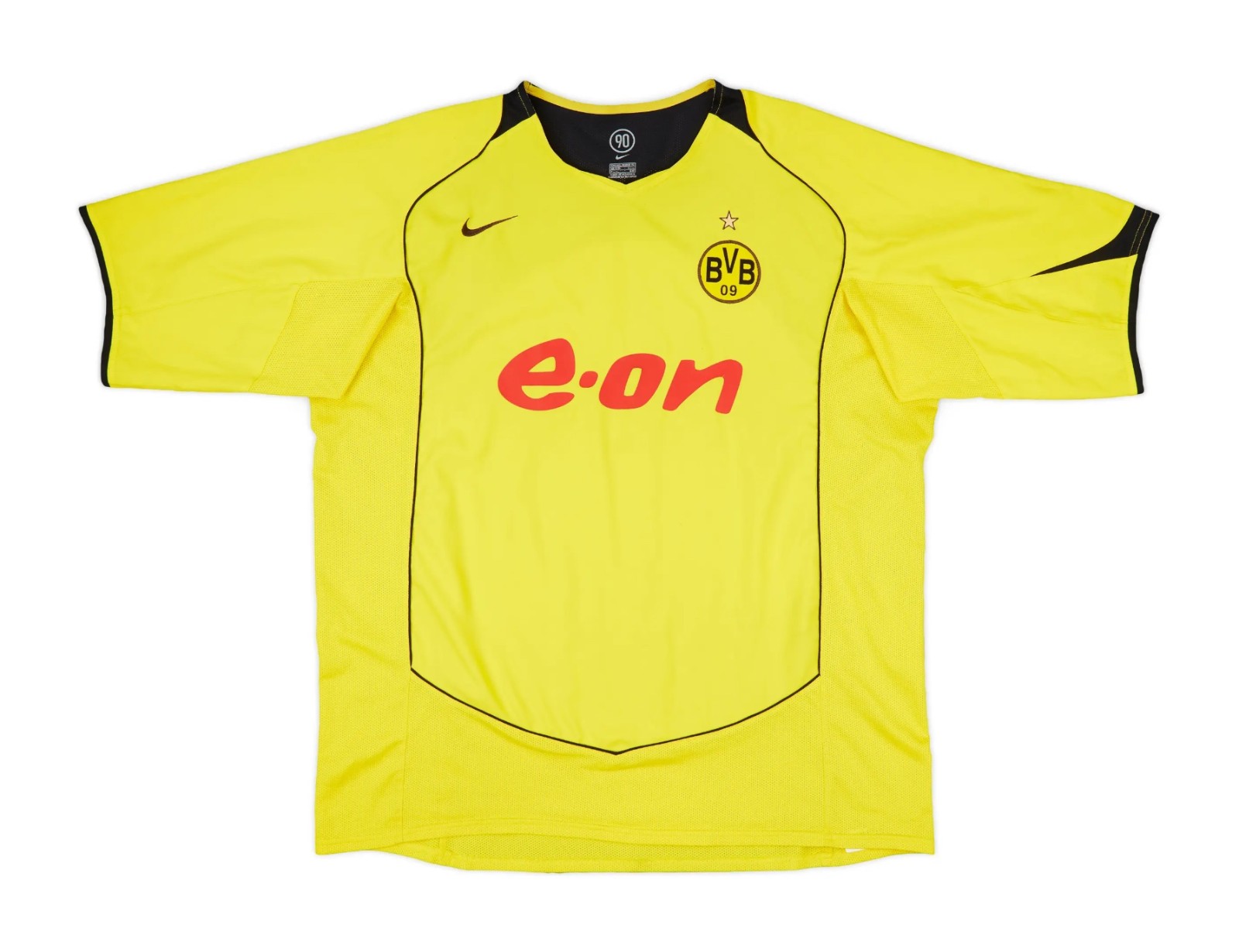
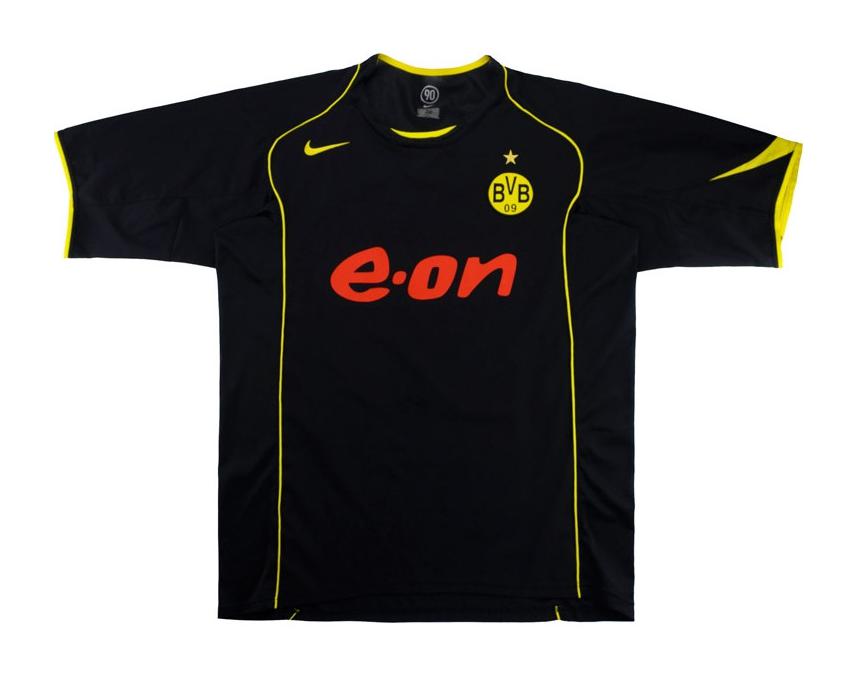
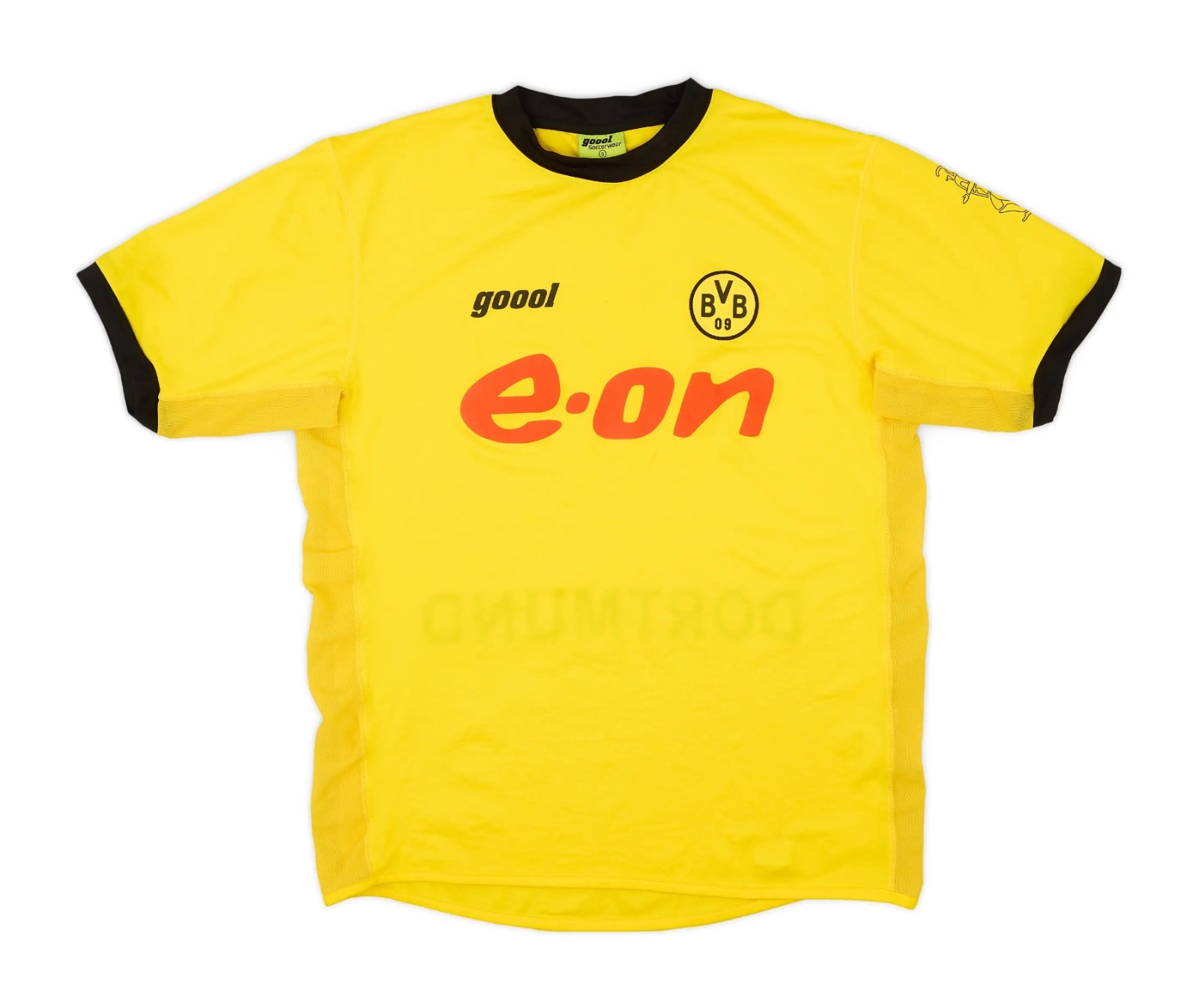
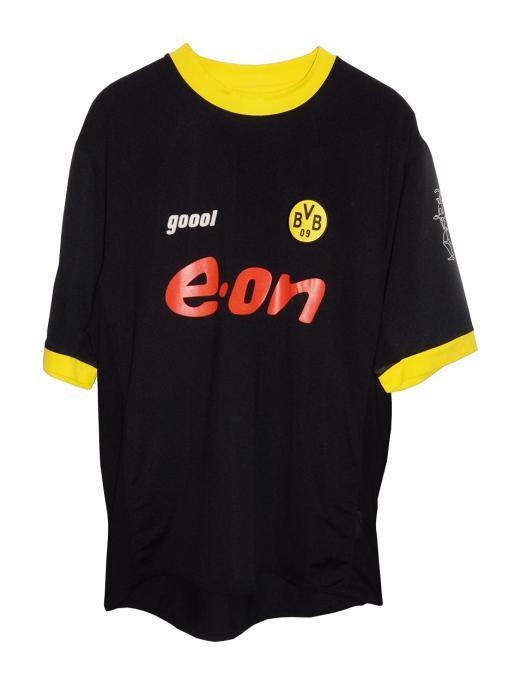
For collectors, the kits from this period, primarily Nike and later Kappa, represent the overlooked chapter of the BVB archive. The shirts from 2003 to 2008 are priced well below equivalent product from the 1990s or the Klopp era, and carry the story of a club that came closer to the end than most supporters like to remember.
Klopp: seven years that changed everything
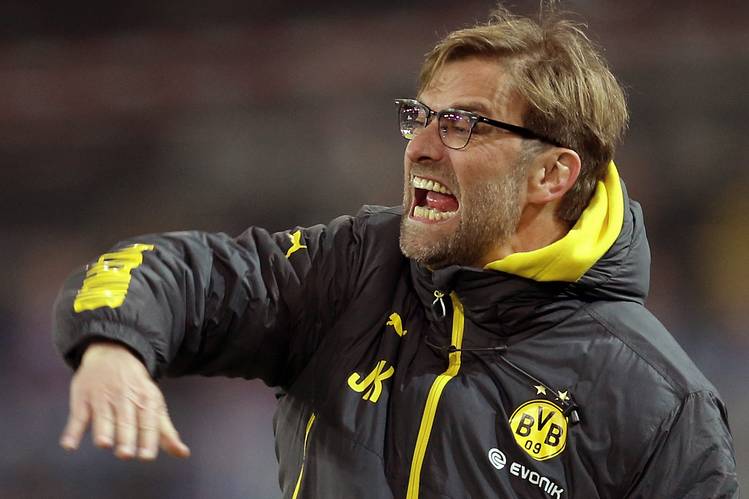
2008–2015 · Kappa then Puma · Lewandowski · Reus · Götze · Hummels · Kagawa
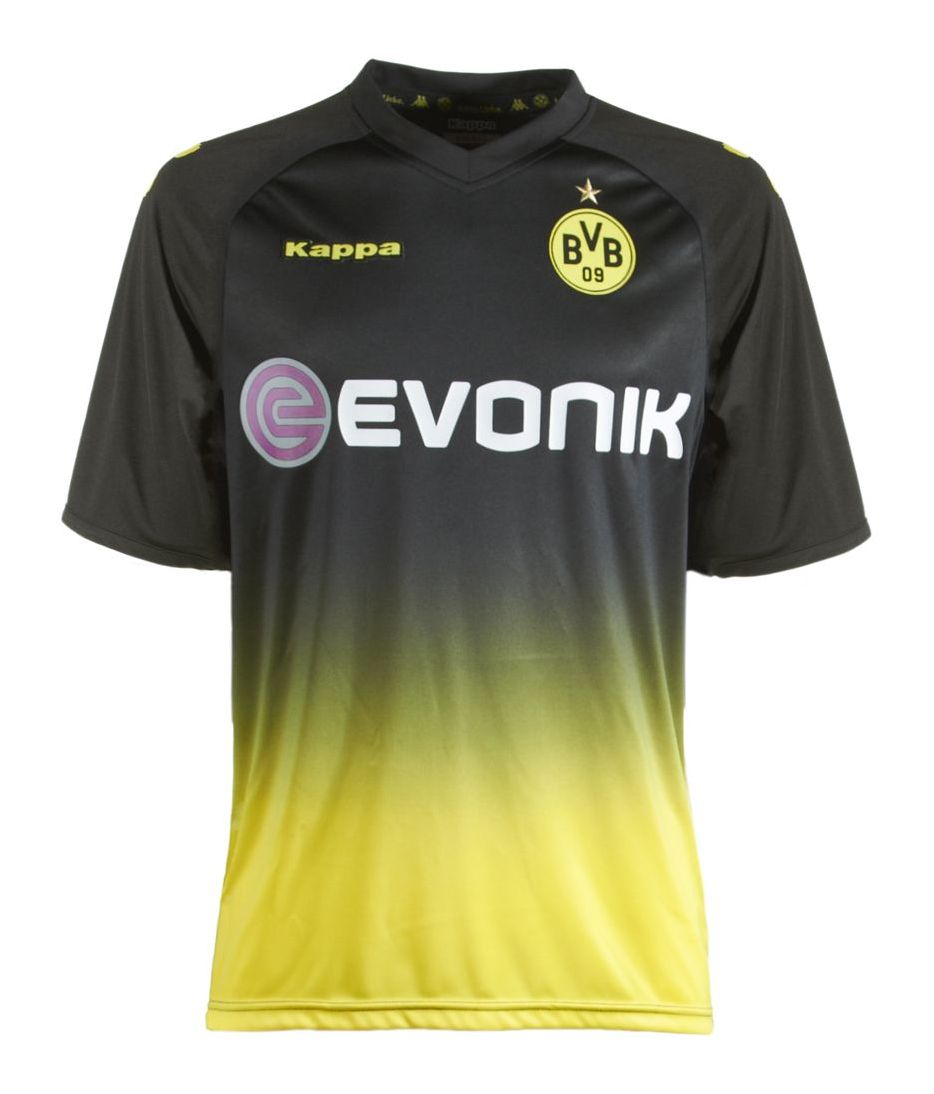
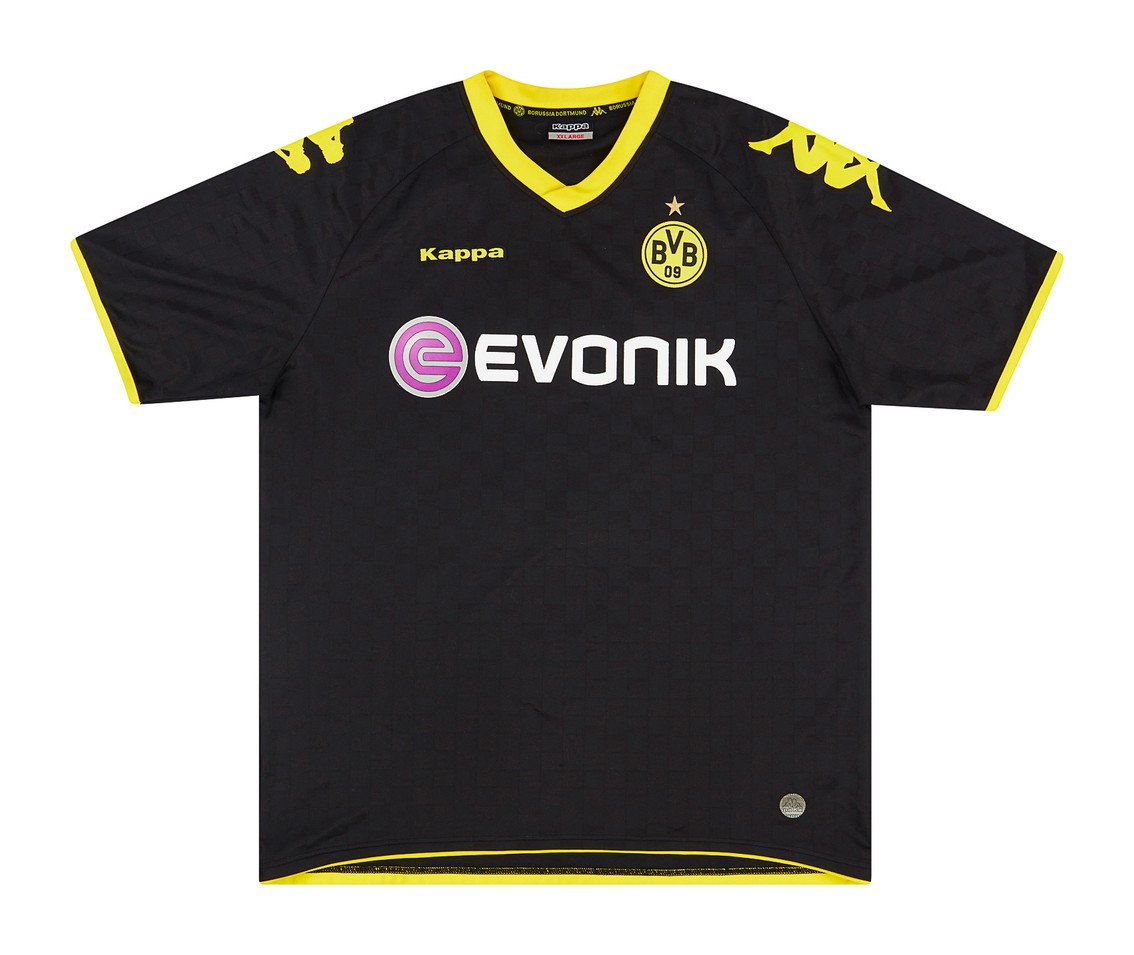
Jürgen Klopp arrived in summer 2008 with a squad that had finished thirteenth the season before. By 2010/11, BVB were Bundesliga champions. By 2011/12, they had retained the title and added the DFB-Pokal, completing a domestic double in Kappa shirts. The football was built on relentless pressing, high intensity, and a collective identity that the squad embodied from the first whistle.
The squad Klopp built during those years contained some of the most sought-after players in Europe: Robert Lewandowski, who scored all four goals in the 4–1 first-leg semi-final win over Real Madrid in 2013 and then left for Bayern Munich on a free transfer. Mario Götze, sold to Bayern, with the transfer announced days before the Champions League semi-final return leg. Mats Hummels and Shinji Kagawa. The tension between the squad's quality and the club's inability to retain it became part of BVB's modern identity: a club that develops exceptional players and sells them to the clubs that BVB are trying to compete against.
The 2012/13 season, in Puma shirts for the first time, brought the Champions League final. Klopp left in 2015, having spent seven years reshaping what BVB meant to supporters who had watched the club nearly disappear a decade earlier.
Wembley, twice
BVB have reached the Champions League final twice since 1997. Both times at Wembley. Both times they lost.
25 May 2013 · Wembley · Bayern Munich 2–1 BVB
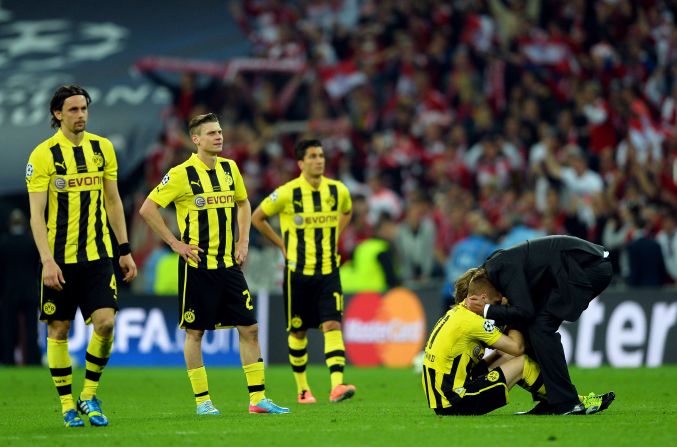
The 2012/13 Champions League final was the first all-German final in the competition's history and the first time the two clubs had met at that stage. BVB reached it having beaten Real Madrid across two legs, with Lewandowski scoring all four goals in the 4–1 first-leg win. Ilkay Gündogan converted a penalty to put BVB ahead. Mario Mandzukic equalised for Bayern. In the 89th minute, Arjen Robben won it for Bayern.
The Puma home shirt worn that night, with the Champions League final badge, is the most sought-after kit in the Klopp archive. Lewandowski, Reus, Götze, Hummels — several of those players left in the years that followed, many of them to Bayern. The shirt is a record of a team that may have been the best BVB assembled since 1997, caught at the moment they came closest.
1 June 2024 · Wembley · Real Madrid 2–0 BVB
Eleven years later, BVB returned to Wembley for a second Champions League final, this time against Real Madrid. They held firm through the first half and into the second, but two goals in the final quarter of an hour — from Dani Carvajal and Vinicius Jr — gave Real their fifteenth European title.
The 2023/24 Puma final kit carries a different weight to the 2013 version: there is no Klopp on the touchline, no Lewandowski in the squad. The core of the side is younger and the narrative of near-miss is different. But the shirt sits alongside the 2013 final kit as the two closest BVB have come to a second European title since Munich in 1997.
Key milestones
Founded in Borsigplatz, Dortmund
A group of young men from the working-class north of Dortmund form the club on 19 December 1909. Three German championships follow in 1956, 1957, and 1963. The Bundesliga's first season begins in 1963/64. A 32-year wait for the next title follows.
First Bundesliga title since 1963
Under Ottmar Hitzfeld, BVB end a 32-year title drought. They retain the Bundesliga in 1995/96. The squad, built around Möller, Chapuisat, and Riedle in Nike shirts, is the most complete BVB have fielded since the 1960s.
Champions League: Riedle and Ricken beat Juventus
BVB beat Juventus 3–1 in the Champions League final in Munich. Riedle scores twice in the first half. Ricken, on as a substitute for less than a minute, lobs the goalkeeper from 30 metres to seal it. The Nike final kit from that night is the most historically significant shirt in the BVB archive.
Near-bankruptcy: the club survives
Years of financial overextension bring BVB to the edge of insolvency. They finish seventh in the Bundesliga, sell key players, and restructure entirely. The crisis shapes the club's identity and the intensity of the bond between supporters and institution in a way that success alone cannot.
Klopp wins the Bundesliga, then does it again
After three years of building, Klopp's BVB win the Bundesliga in 2010/11 and retain it in 2011/12. The 2011/12 season also produces a DFB-Pokal, completing a domestic double. The Kappa kits of both seasons are the defining shirts of the Klopp era's peak.
Champions League final: Robben in the 89th minute
BVB reach the Champions League final at Wembley and lead through a Gündogan penalty. Bayern equalise and win with a Robben goal two minutes from time. Lewandowski, Götze, and Hummels all leave in subsequent seasons. It is the closest the Klopp-era side comes to a European title.
Wembley again: 0–2 to Real Madrid
BVB return to Wembley for a second Champions League final, 27 years after the first. They hold Real goalless for over 70 minutes before conceding twice in the final quarter of an hour. The Puma final kit from that night completes the pair of BVB final shirts at English football's national stadium.
342
Kits in ShirtSociety
8
German championships
1
Champions League
81,365
Signal Iduna Park
Iconic BVB kits
The most significant black and yellow shirts across the Nike, Kappa, and Puma eras.
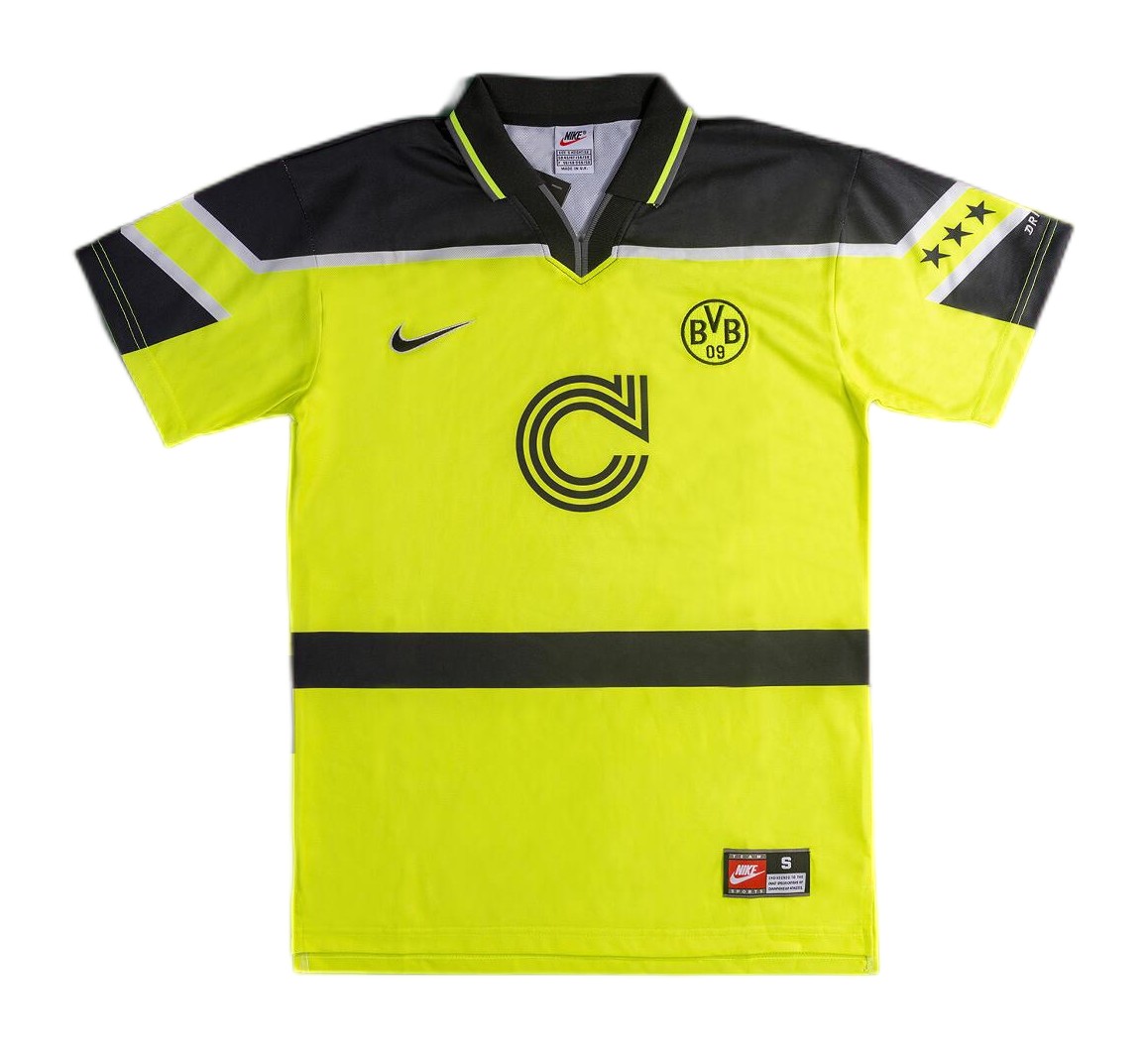
The shirt worn when Riedle and Ricken beat Juventus 3–1 in Munich. The only Champions League BVB have won. The Nike template is clean and the final badge placement makes it immediately identifiable. No BVB kit carries more historical weight, and the market reflects that.
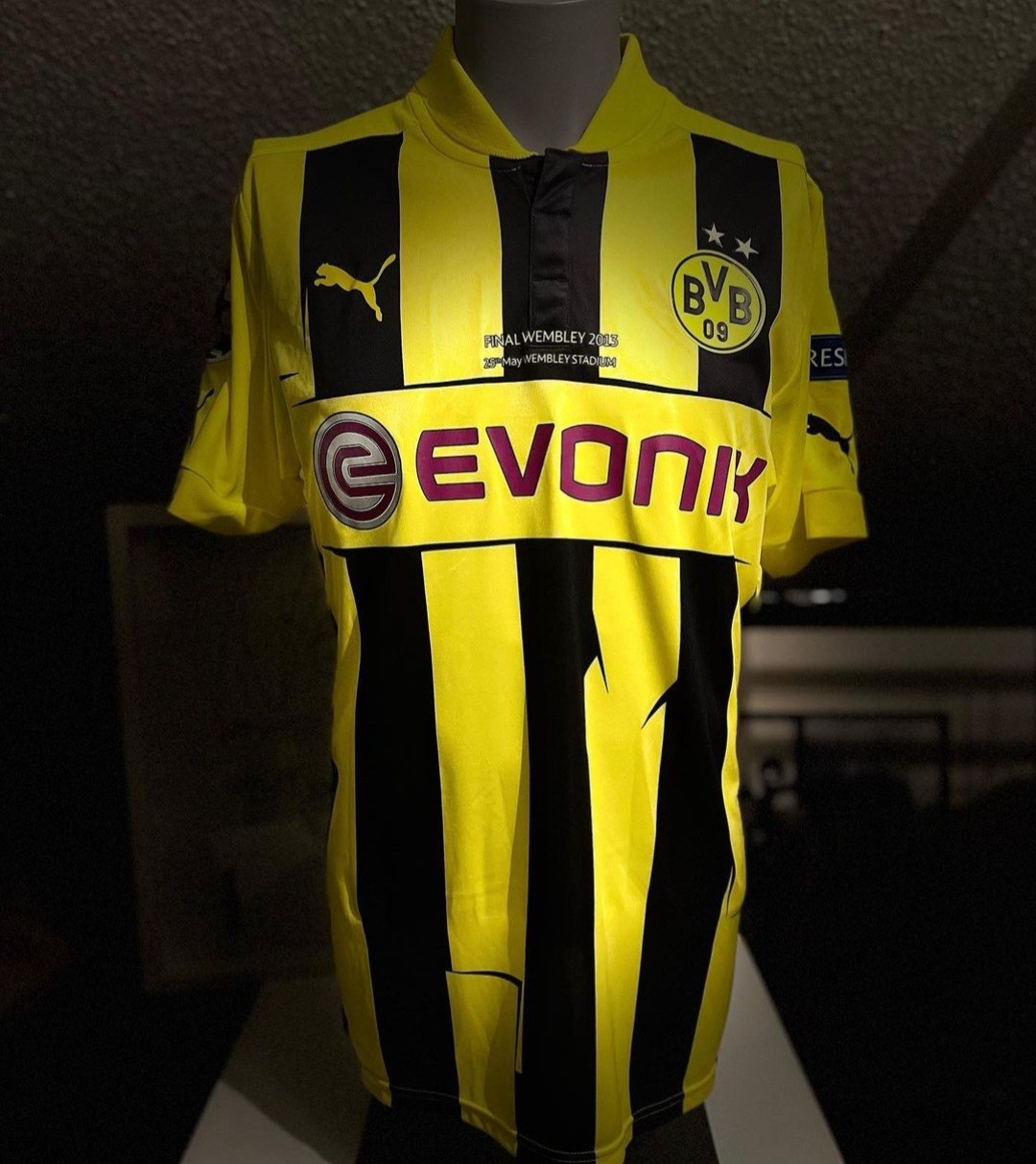
Klopp's Wembley final. Lewandowski, Reus, Götze, Hummels: a squad that may have been the most talented BVB fielded since the 1990s, in the first season of the Puma partnership. Lost 2–1 to Bayern in the 89th minute. The definitive kit of the Klopp era for collectors.
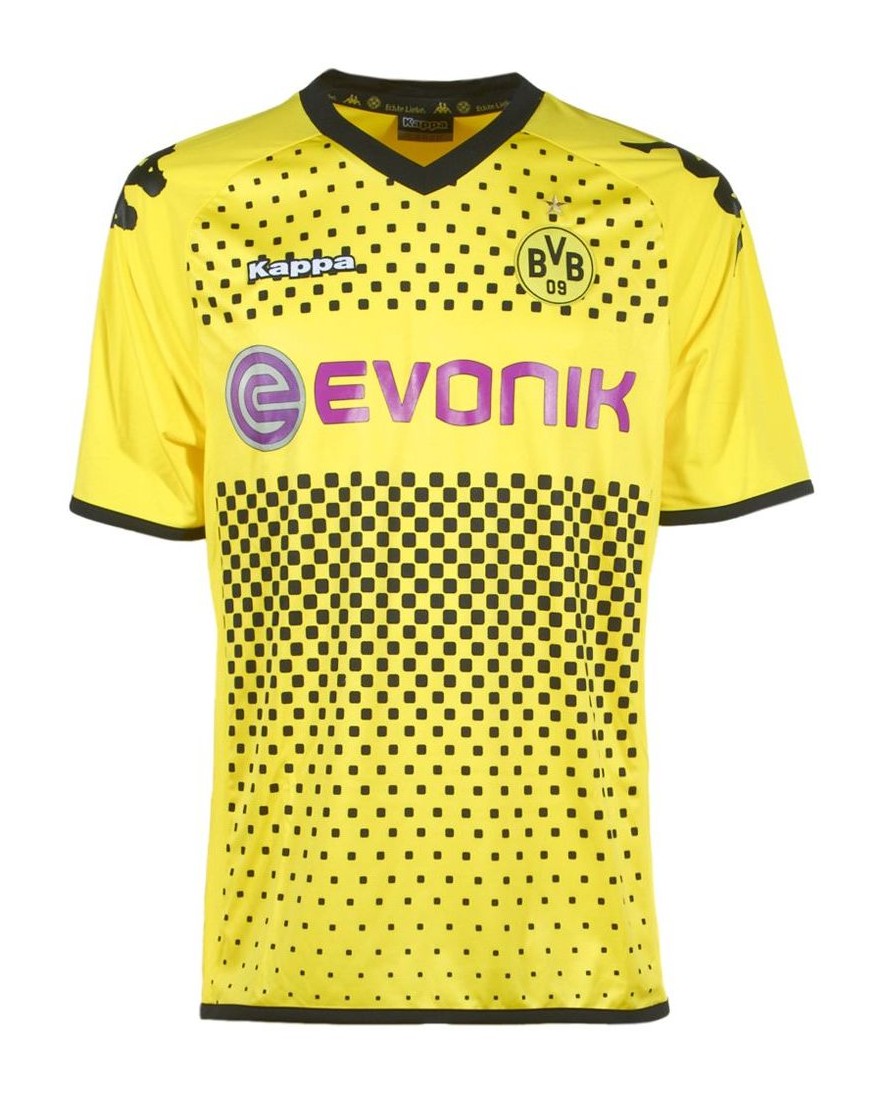
The double season. Back-to-back Bundesliga and a DFB-Pokal, completed in the last full season before Puma arrived. The Kappa design is one of the sharper in the BVB catalogue of that era: clean yellow and black with a vertical structure that photographs well. The standard home shirt from the most successful domestic season in the Klopp years.
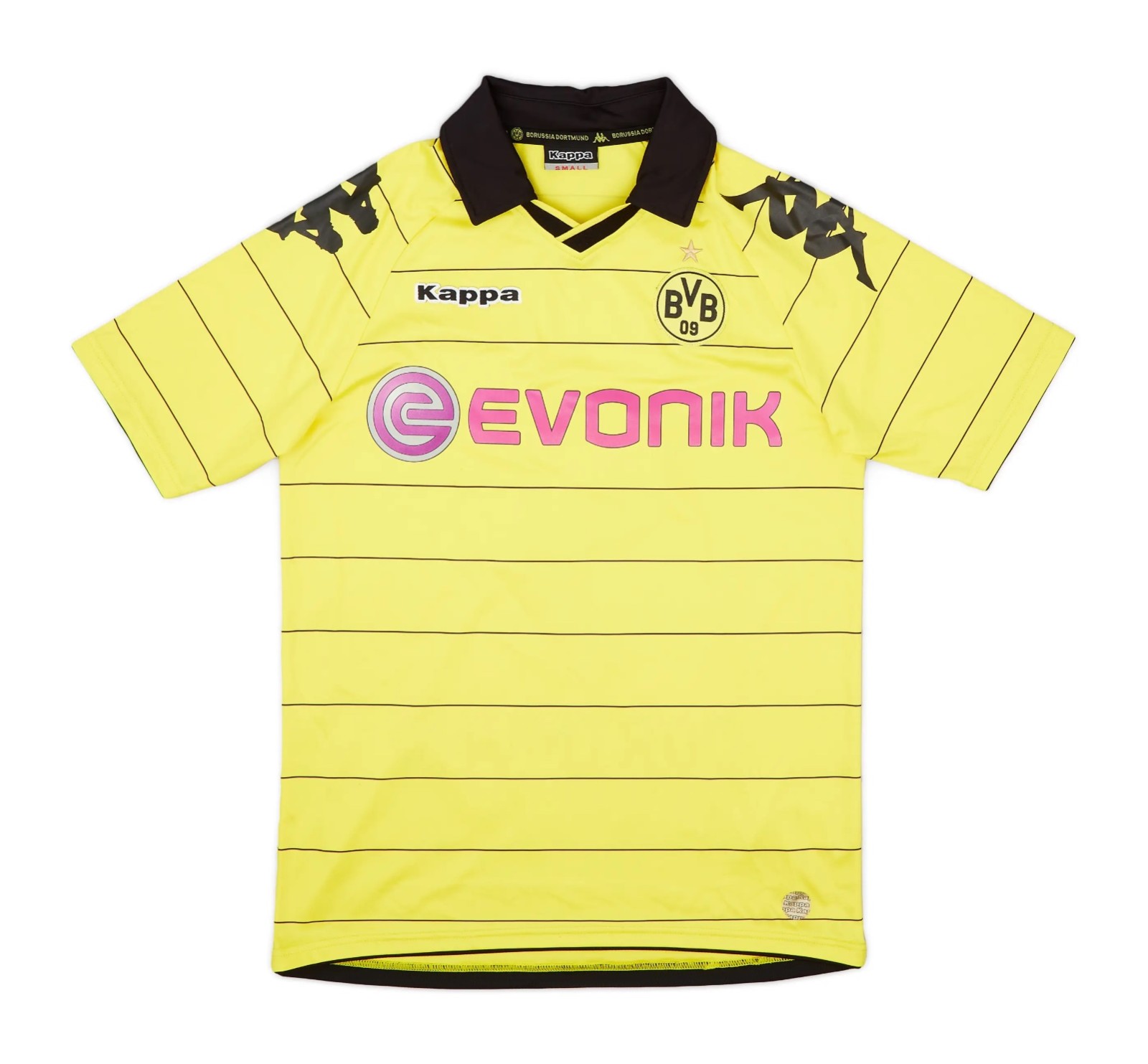
The shirt that ended the title drought. Klopp's third season, the first Bundesliga in nine years. The Kappa home kit is the companion piece to the 2011/12 version — slightly different template, same era, same squad building toward the European campaign that ended at Wembley two years later.
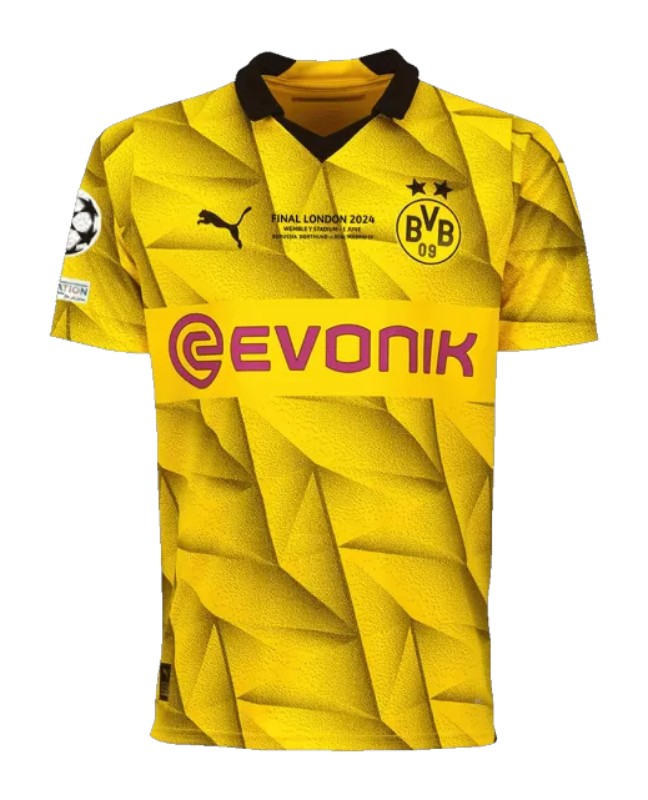
The second Wembley final shirt. Different squad, different era, same result. Puma's 2023/24 design is one of the stronger modern BVB kits. The final badge makes it a distinct collector item and the natural companion to the 2012/13 version for anyone building a complete BVB European archive.
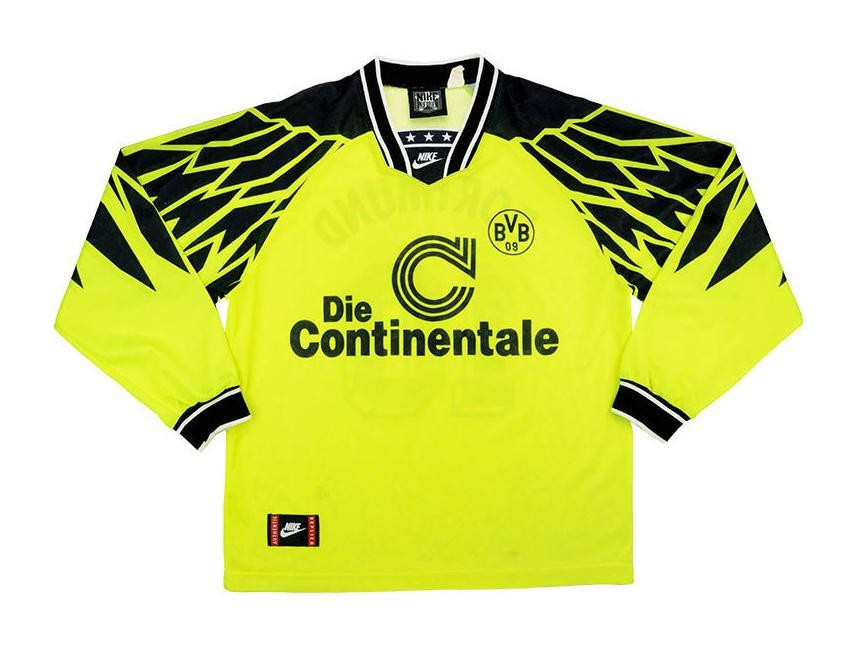
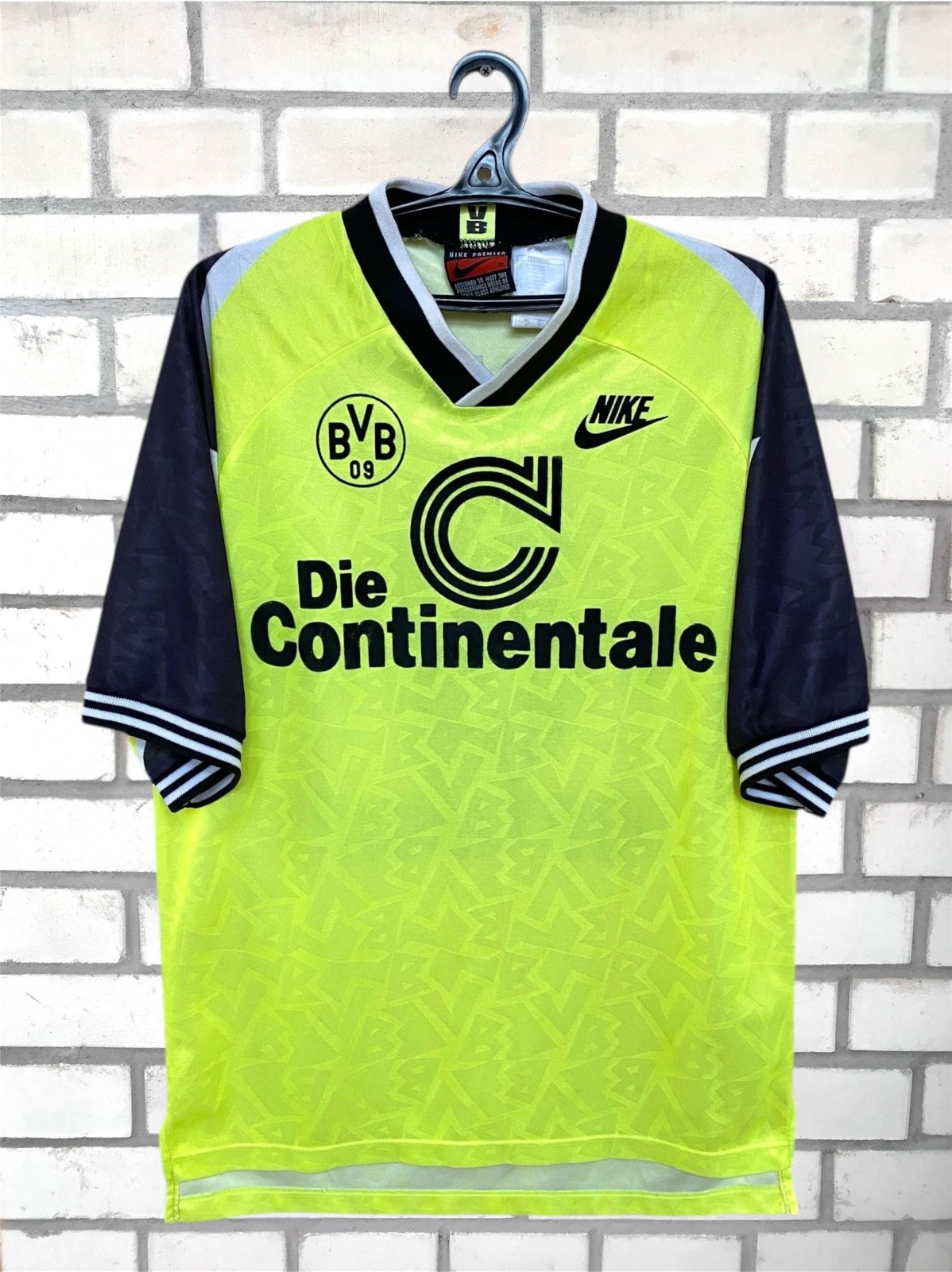
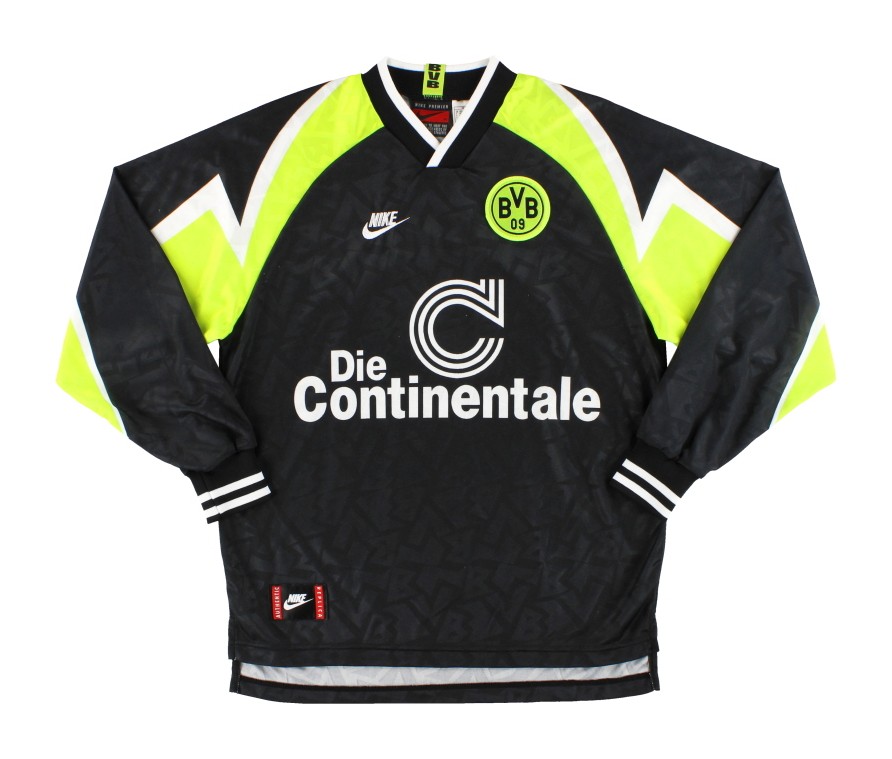
The shirt that ended a 32-year title drought. The first of back-to-back Bundesliga wins under Hitzfeld, two seasons before the Champions League. The Nike design is of its era and holds up well: the yellow is sharp and the template is uncluttered. A natural entry point into the 1990s BVB archive at a more accessible price point than the 1997 final kit.
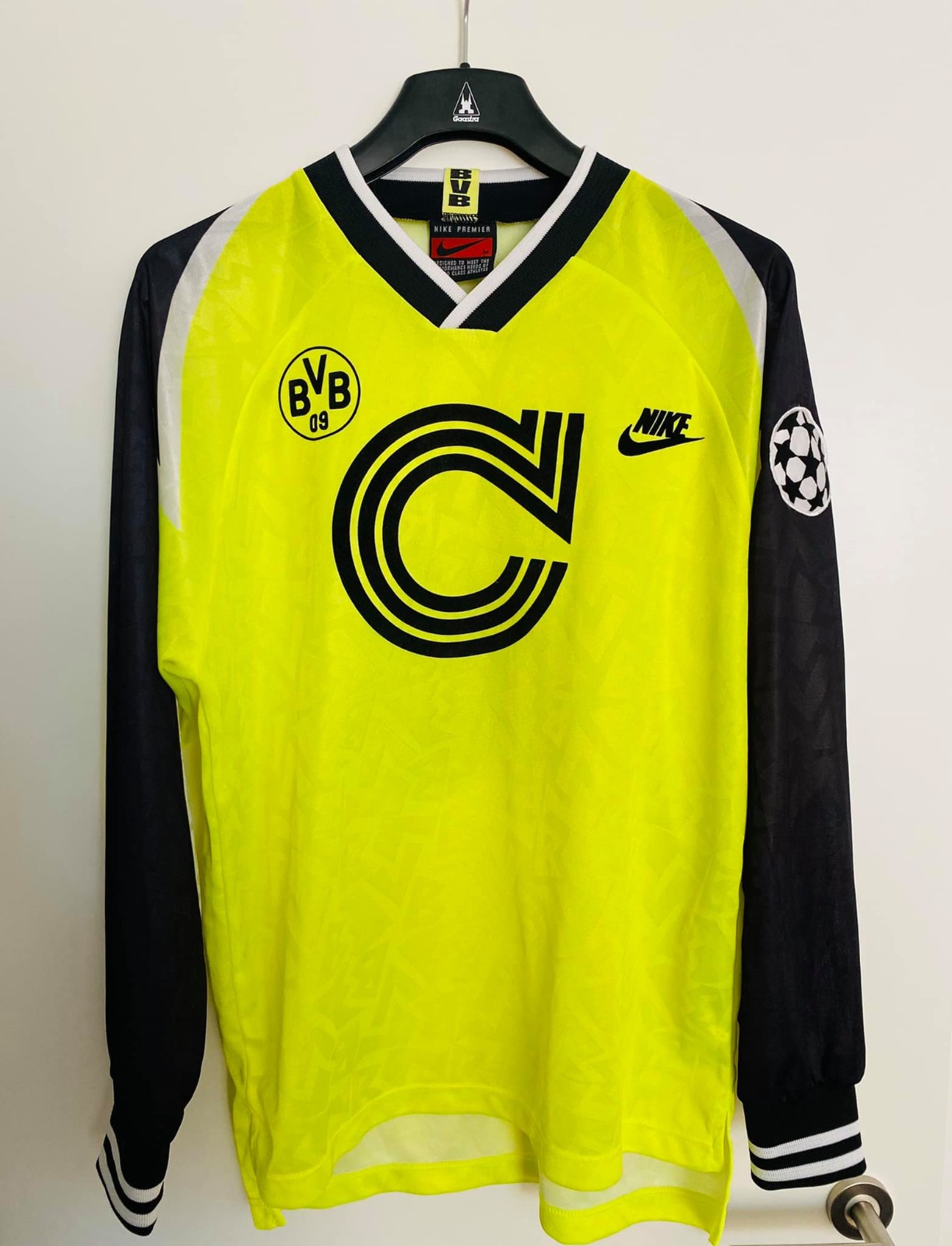
The second Bundesliga season and the year BVB progressed deep into the Champions League ahead of their 1997 title. The Nike Champions League-specific home shirt is distinct from the standard Bundesliga version and sits at the bridge between the two title-winning seasons and the European peak that followed.
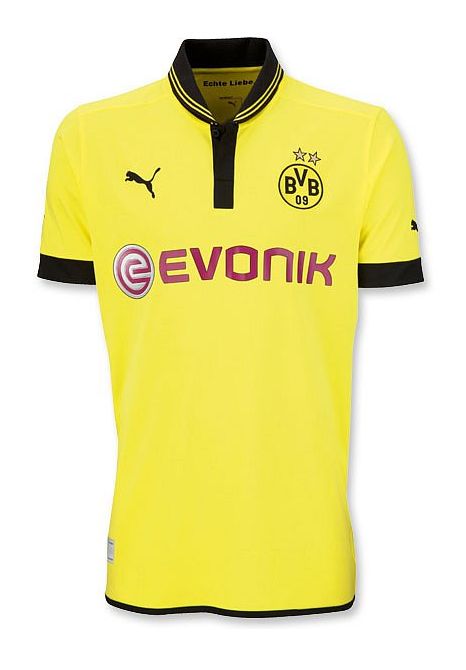
Puma's debut season with BVB. The standard home shirt worn across the Bundesliga campaign that also produced the Champions League final. A clean, well-proportioned design that launched the partnership which has now run over a decade. More accessible than the final-specific kit from the same season.
Collector notes: what to look for
Three distinct manufacturer eras, two Champions League finals, and a crisis era that produced undervalued shirts. Here is what to focus on.
The 1997 Nike final kit: no substitute
The 1996/97 Champions League final kit is the benchmark for BVB collecting. Original examples are increasingly scarce, and the market reflects the shirt's significance. Player-issue versions from the final surface occasionally and carry a substantial premium. If the final badge is missing or faded on a supposed original, verify carefully — reproduction badges have been added to standard home shirts to pass them off as final versions. Check stitching, flock quality, and badge placement against verified examples before paying a premium.
The crisis era: undervalued by the market
Kits from 2003 to 2008 — the near-bankruptcy years — trade well below their historical context. These shirts represent the period that tested the club most and produced the loyalty that defines the current relationship between BVB and its supporters. For collectors interested in club history rather than purely trophy shirts, this era is worth exploring at prices that reflect market indifference rather than the shirts' actual story.
Two final kits, one incomplete
The 2012/13 and 2023/24 Puma Champions League final kits are natural companions. Both Wembley. Both lost. The 2012/13 version is the more collected of the two, partly because the Klopp-era squad is more associated with that particular moment in the club's history. The 2023/24 kit is newer and currently available at a lower price point, which makes it a reasonable entry for collectors building a BVB European archive on a budget.
Sizing and fading
BVB yellow fades noticeably with washing and UV exposure, particularly on shirts from the 1990s Nike era. When buying vintage BVB product, check the yellow carefully against reference images. A shirt that has faded to a pale or greenish yellow is harder to wear and worth less. The Kappa-era yellow tends to hold colour better. Puma product from 2012 onwards uses modern dyeing processes that are more stable, though heat drying will accelerate fade on any yellow shirt.
Featured articles

2026/27
LiveHome
Away
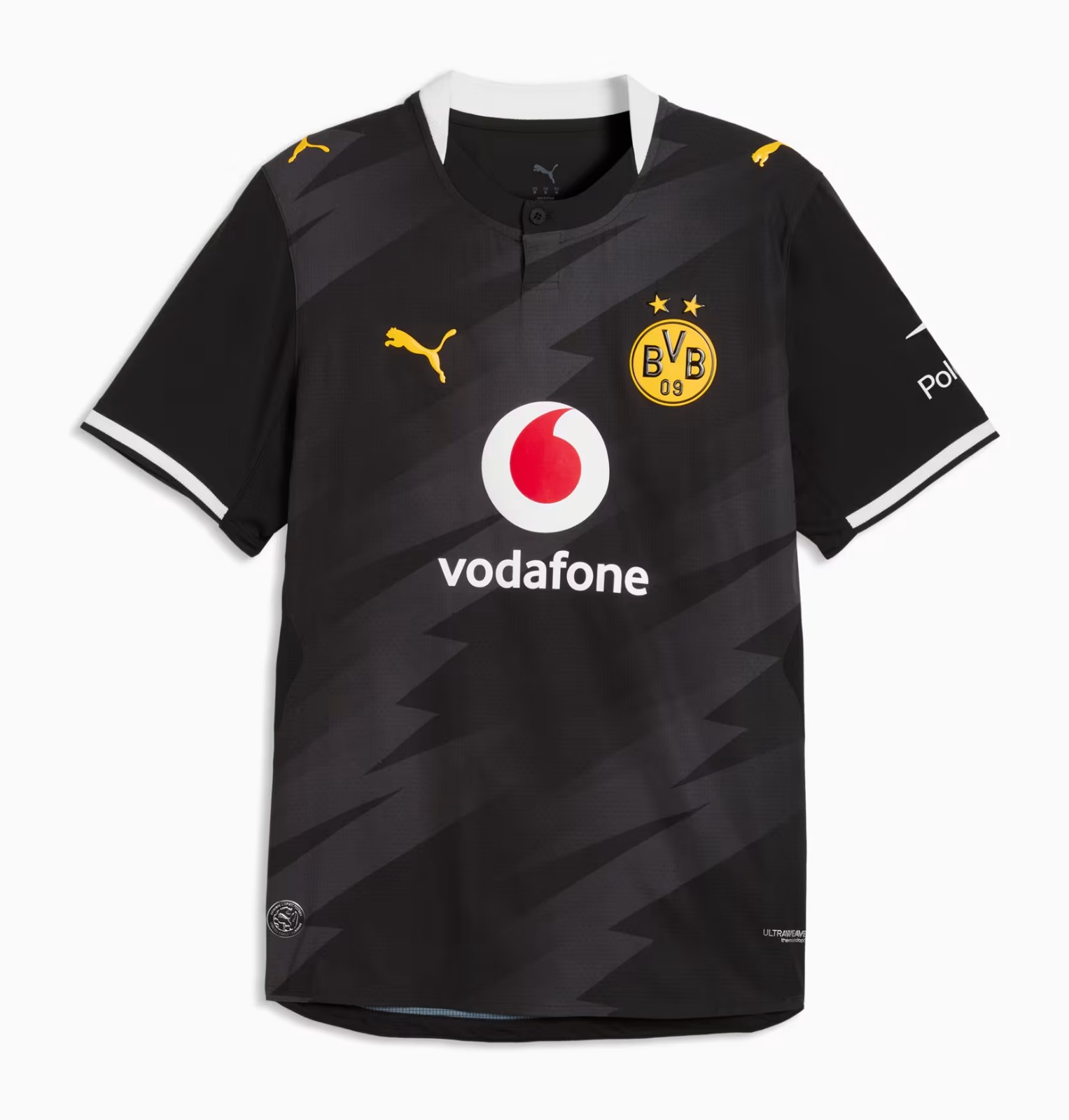
2025/26
FinishedAug 2025 – May 2026
Home
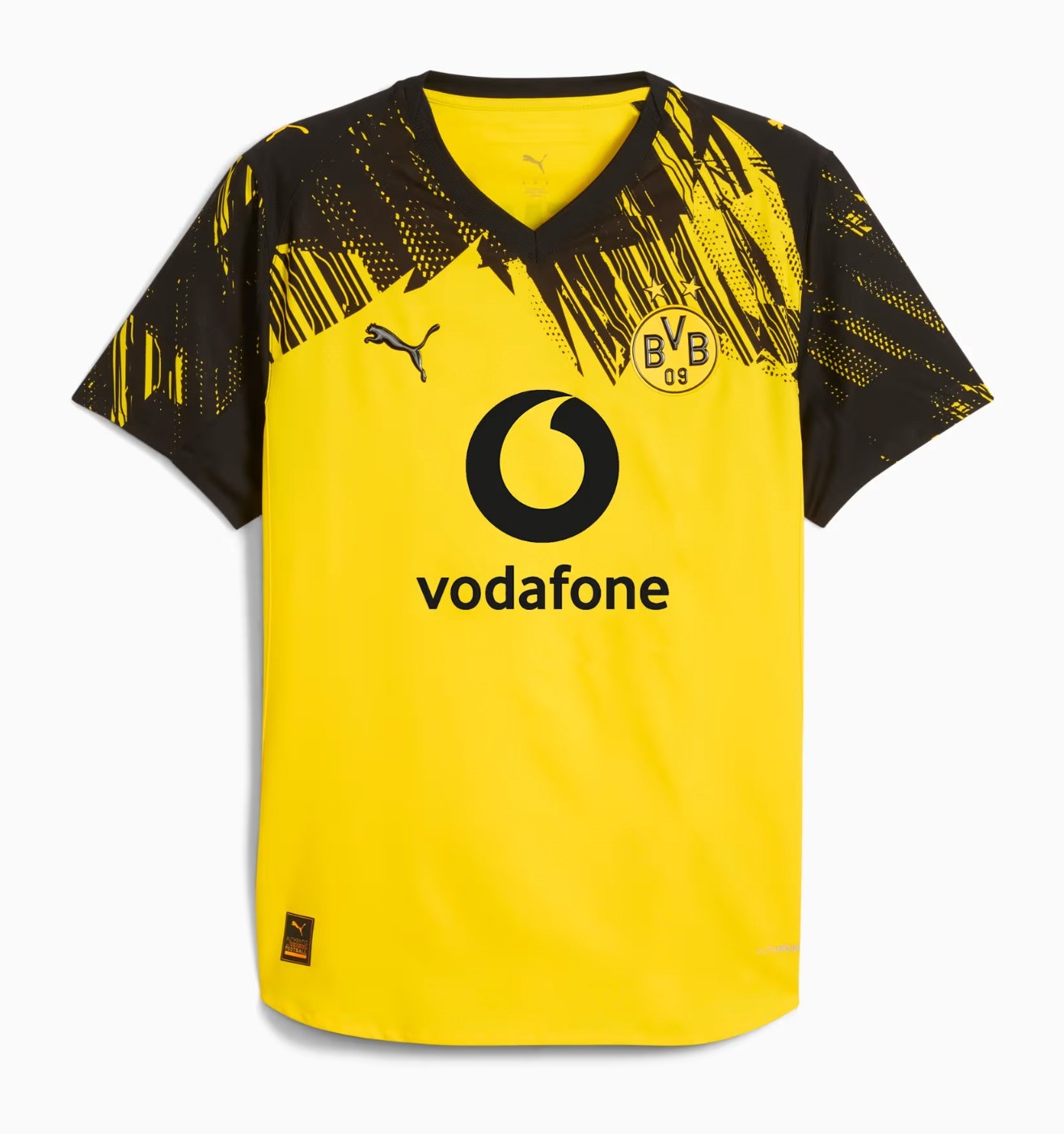
Away
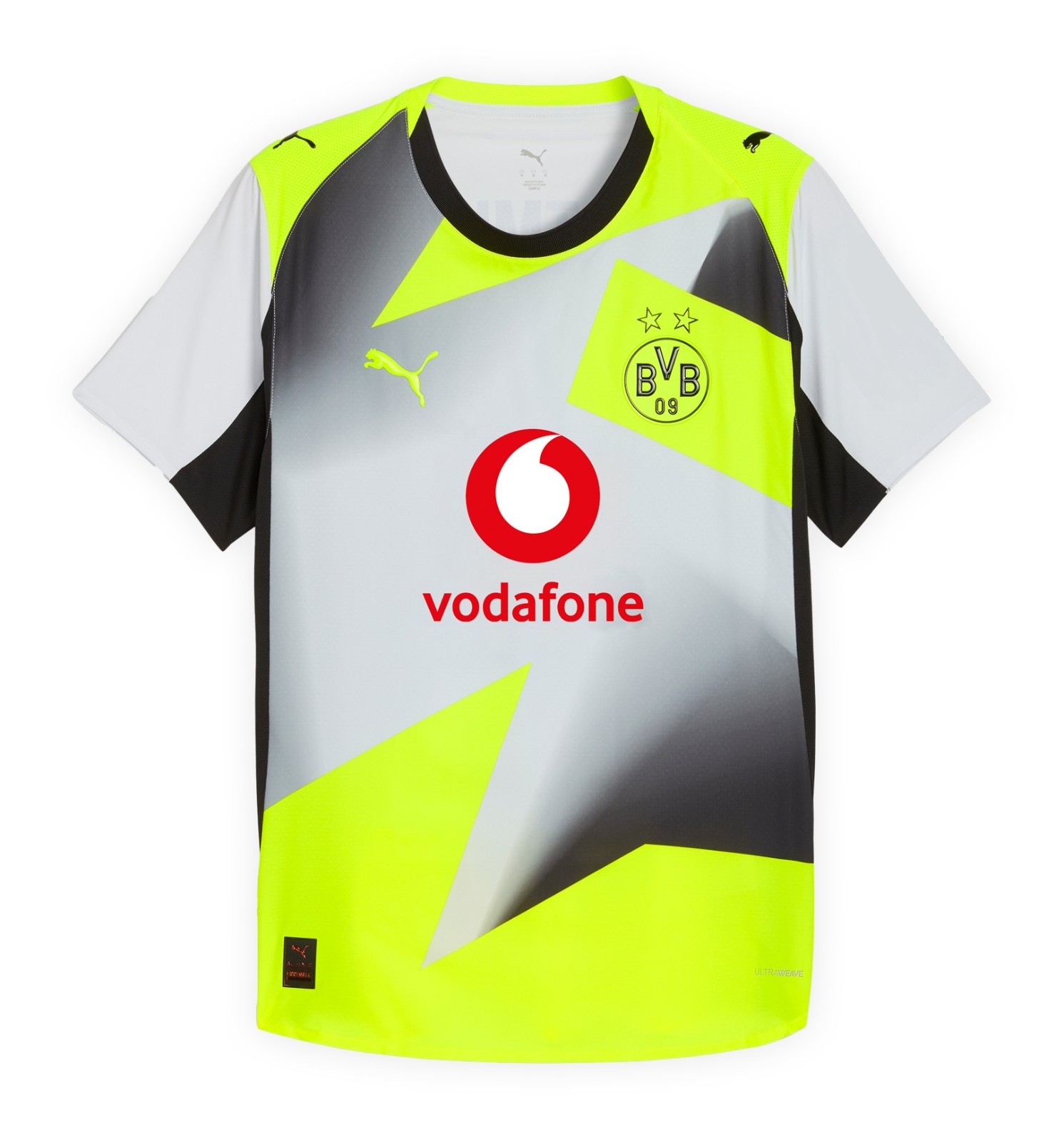
place
2024/25
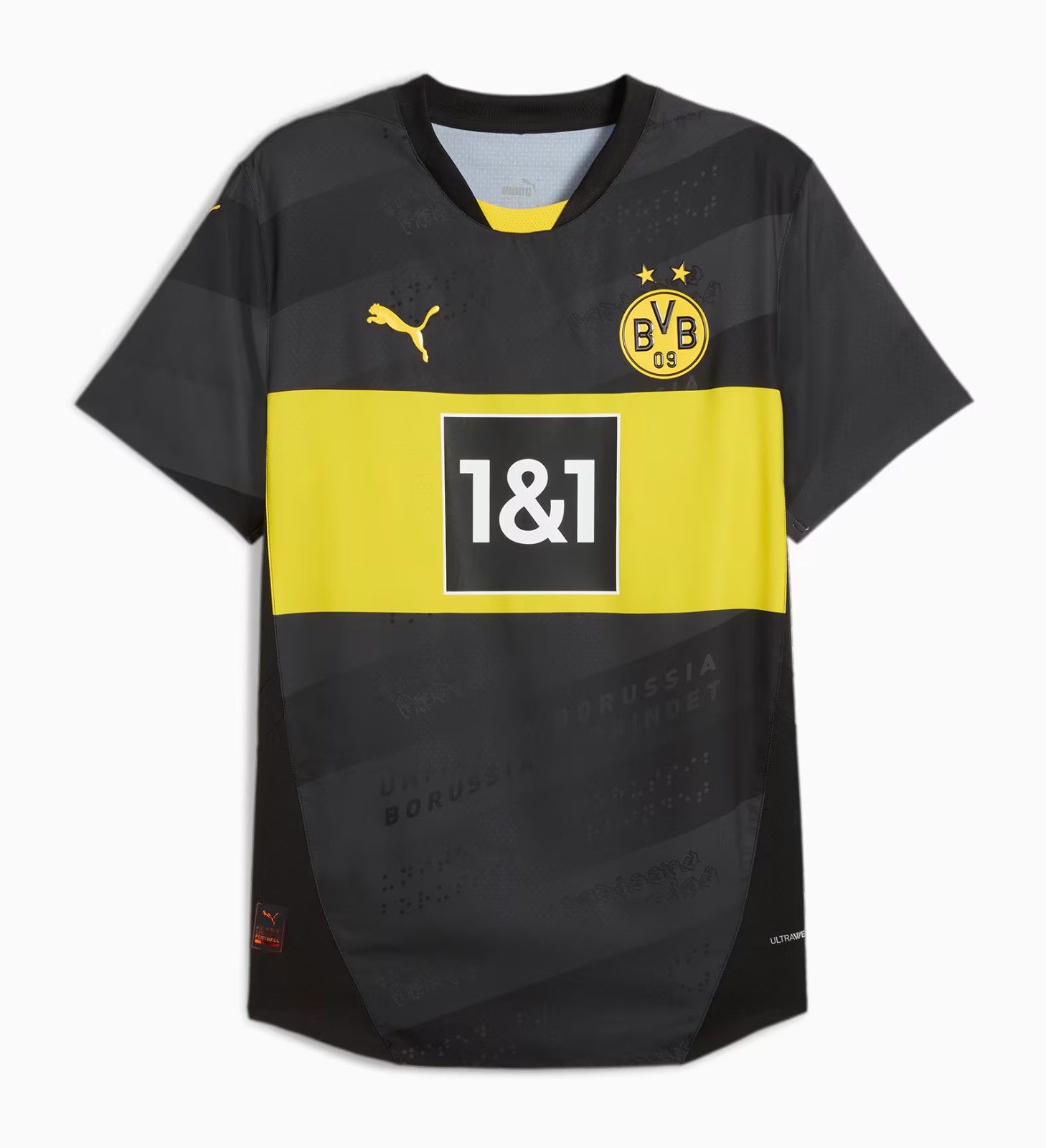
FinishedJul 2024 – May 2025
Home
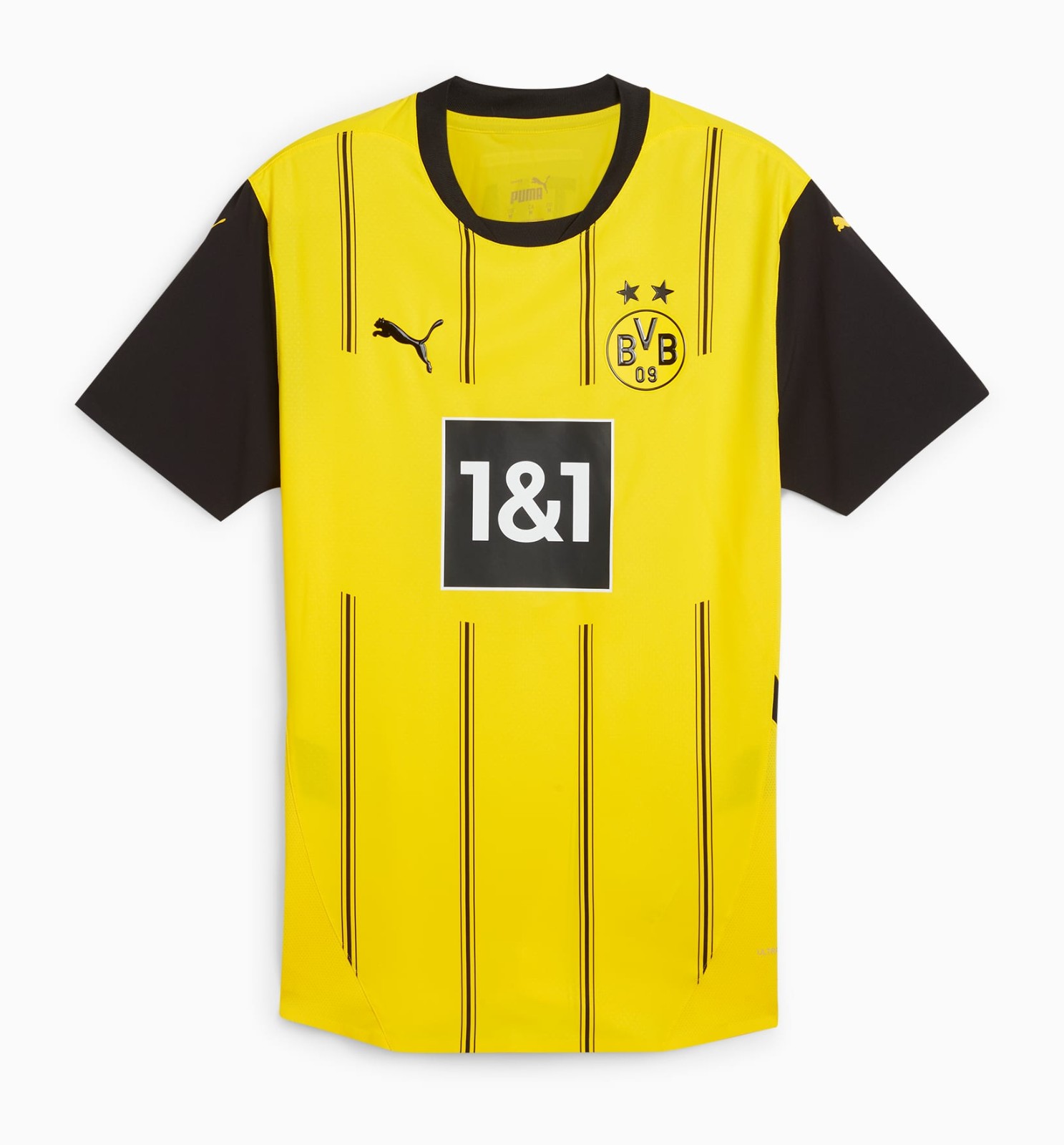
Away
place
2023/24
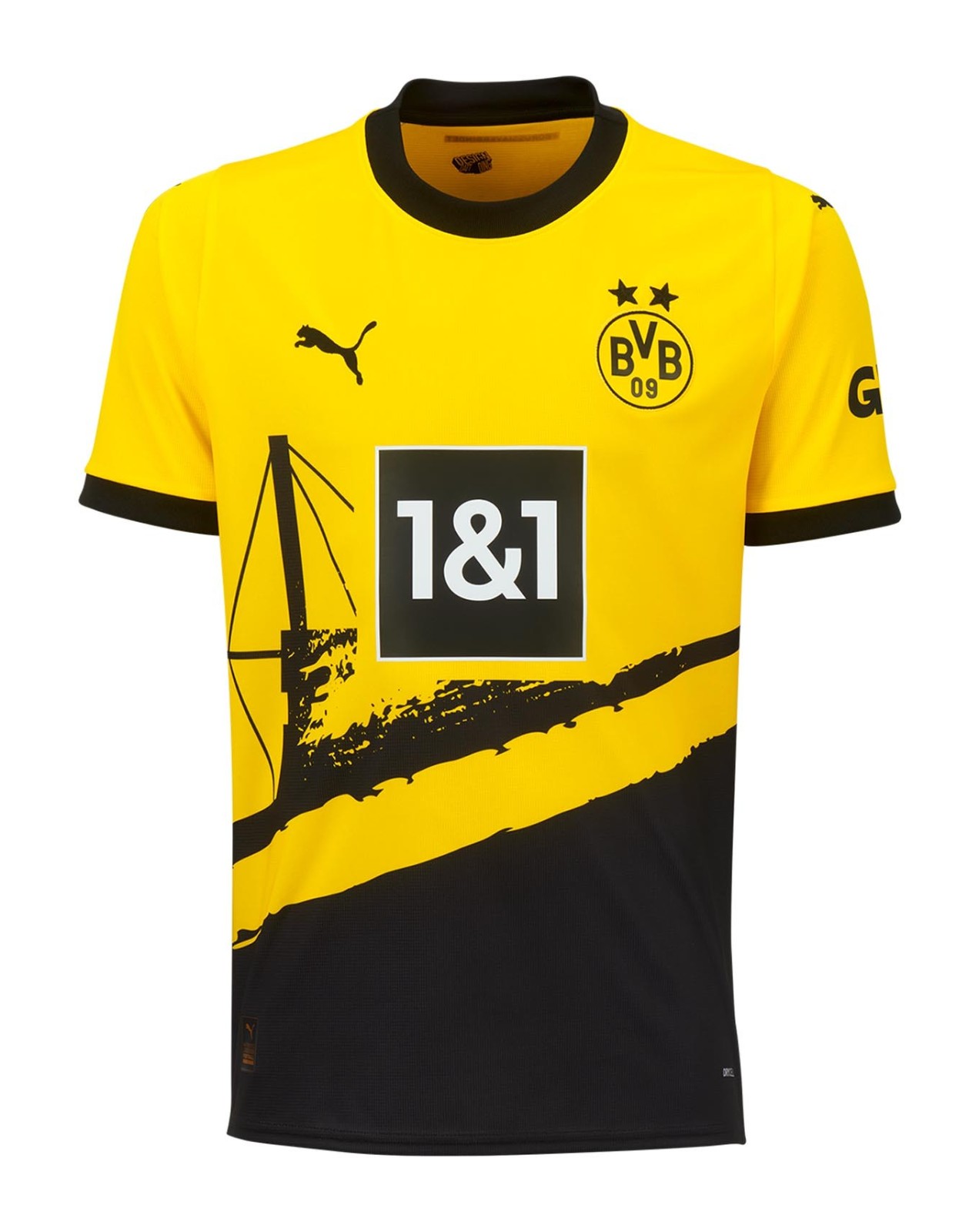
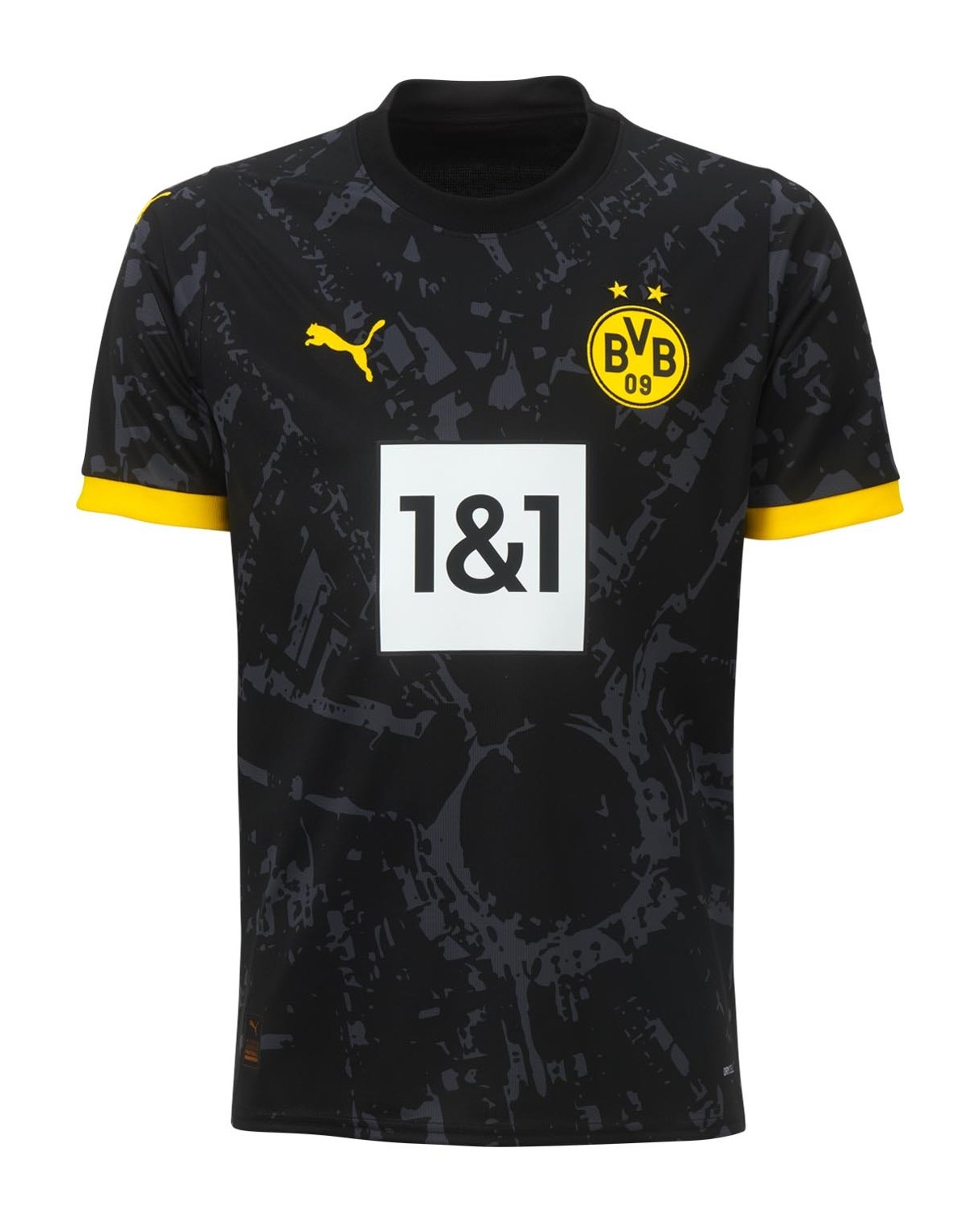
FinishedJul 2023 – May 2024
Home
Away
place
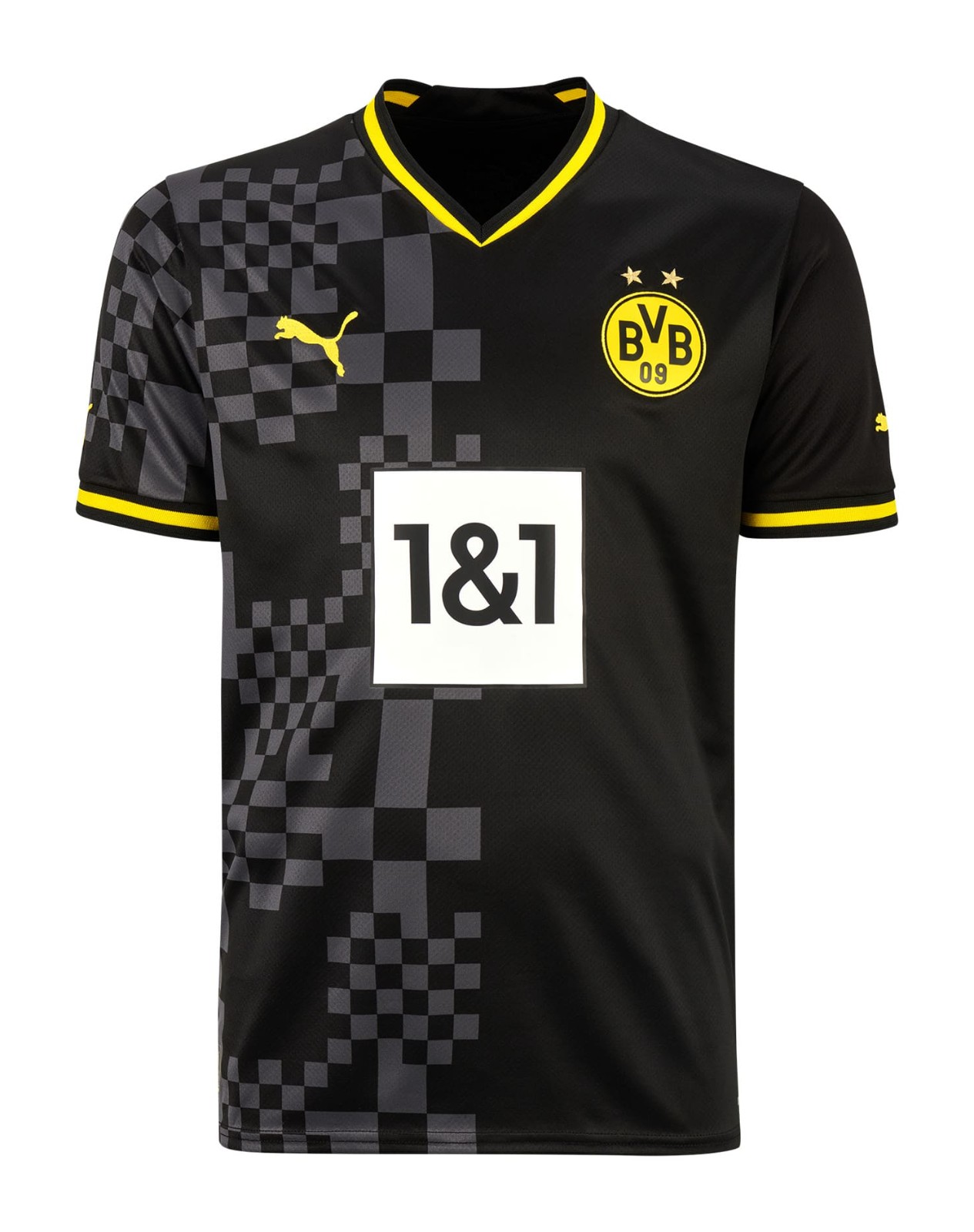
2022/23
FinishedJul 2022 – Jun 2023
Home
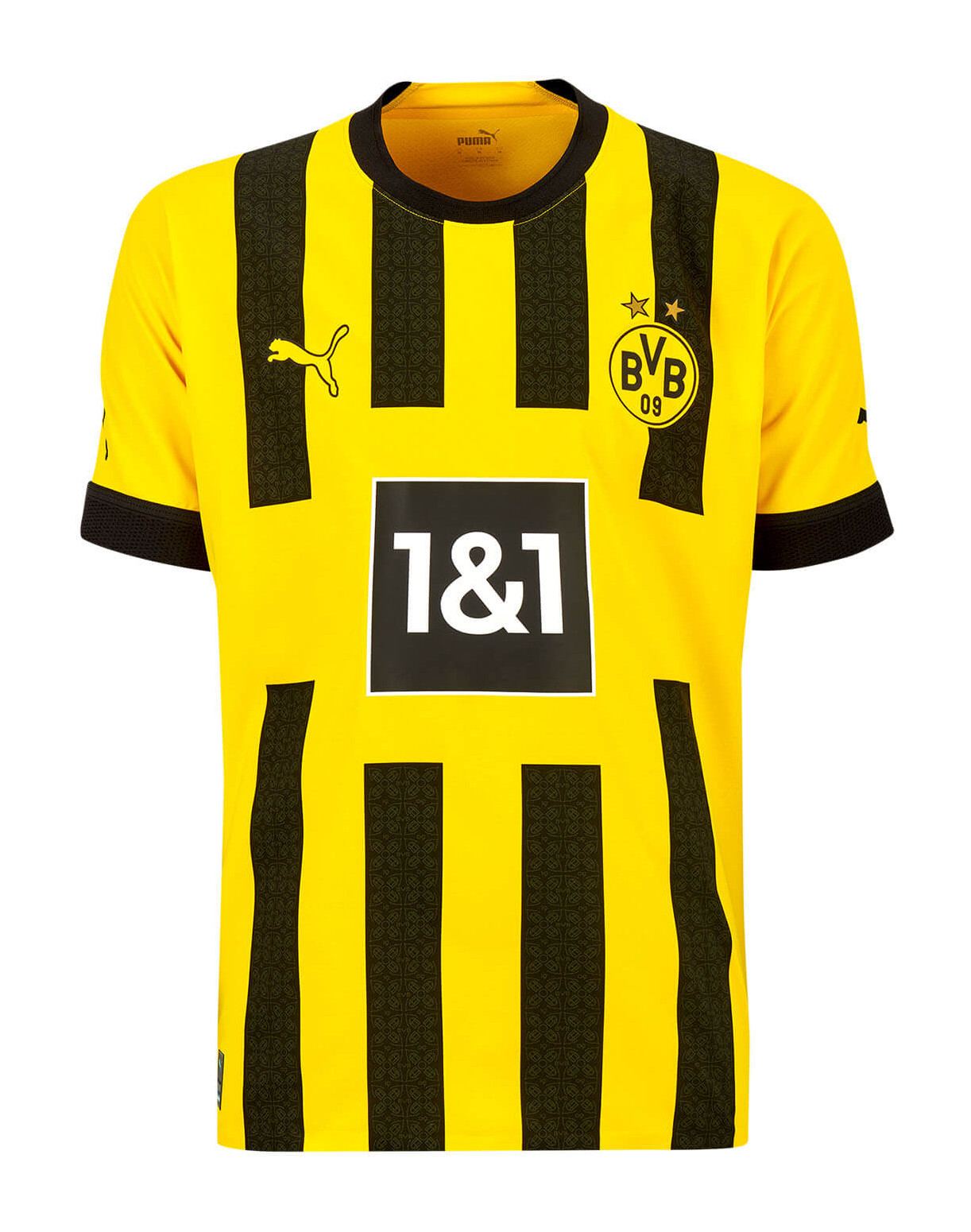
Away
place
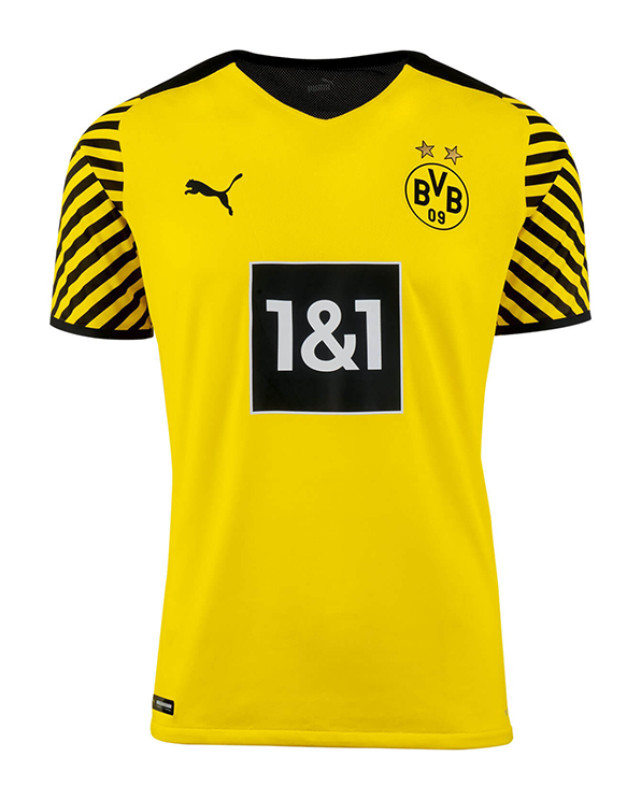
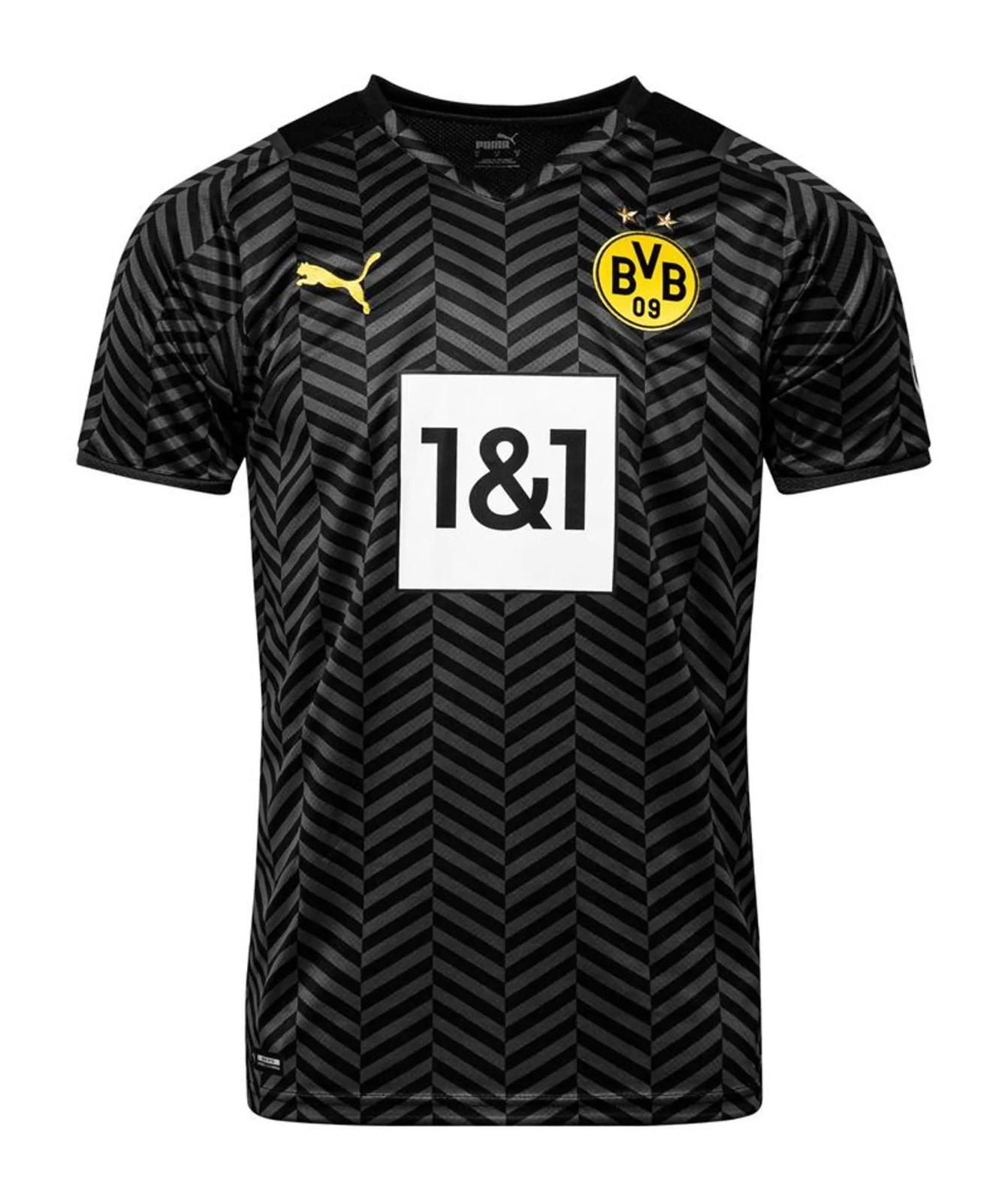
2021/22
FinishedJul 2021 – May 2022
Home
Away
place
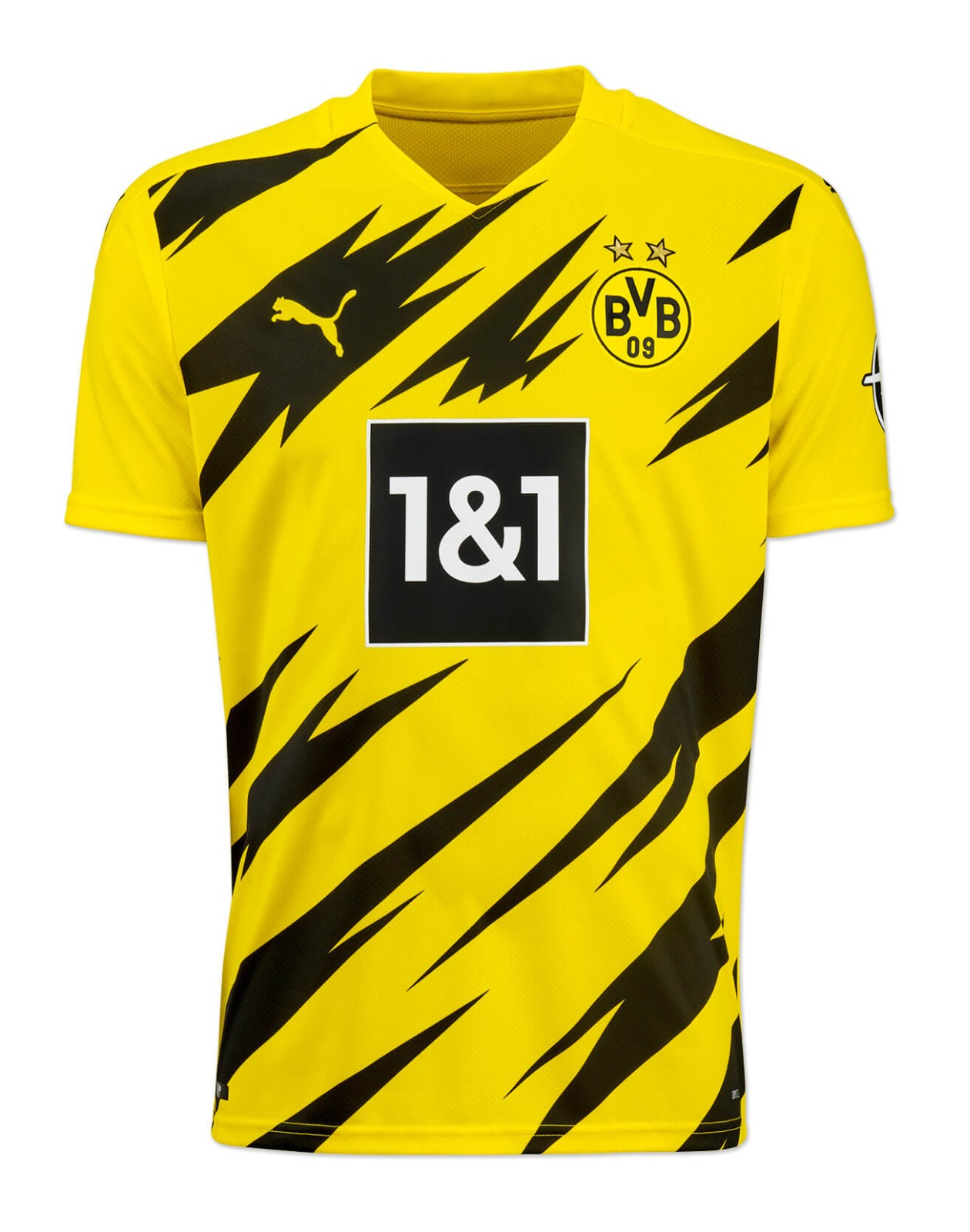
2020/21
FinishedAug 2020 – May 2021
Home
Away
place
2019/20
FinishedJul 2019 – Jul 2020
Home
Away
place
2018/19
FinishedJul 2018 – May 2019
Home
Away
place
2017/18
FinishedJul 2017 – May 2018
Home
Away
place
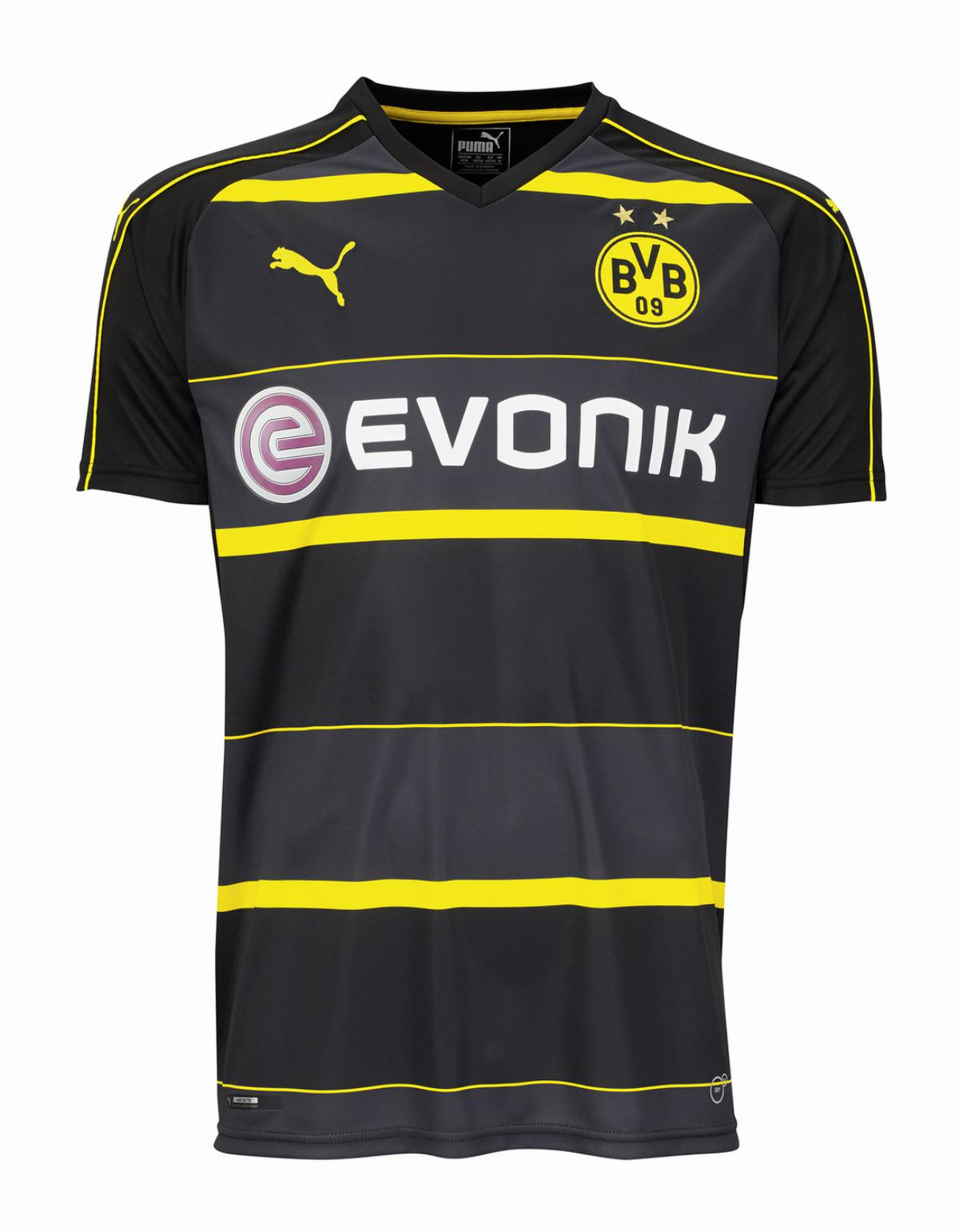
2016/17
FinishedJul 2016 – May 2017
Home
Away
place
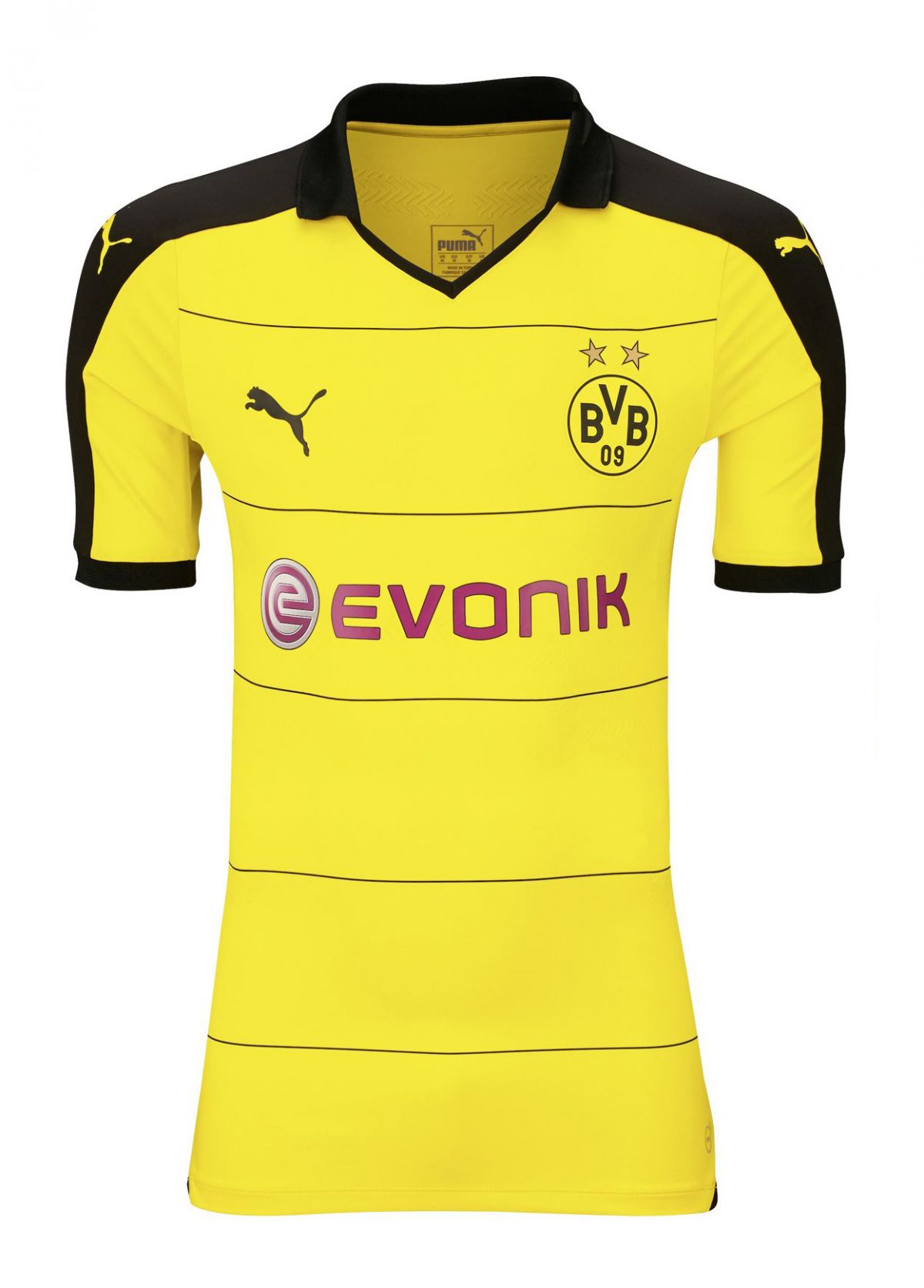
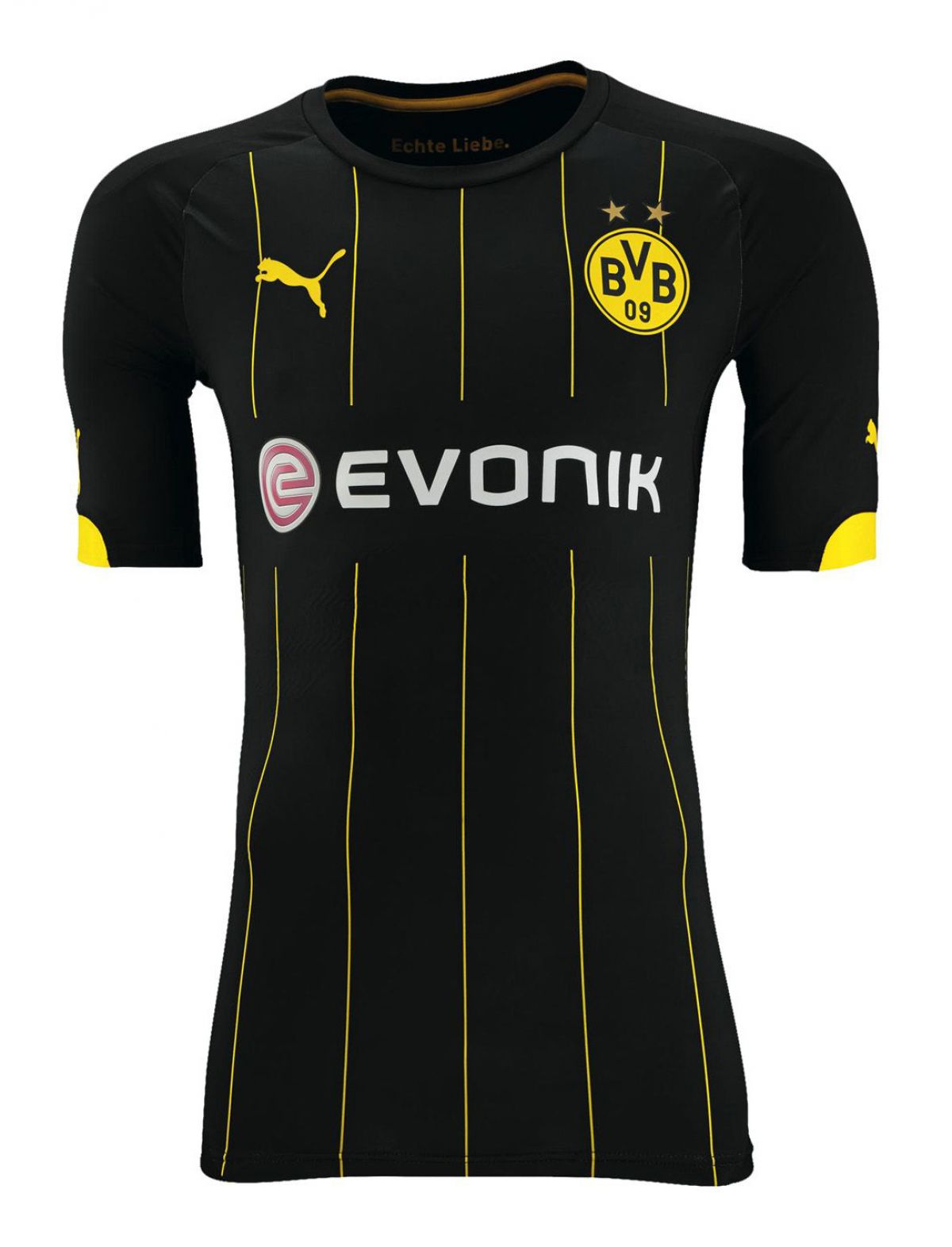
2015/16
FinishedJul 2015 – May 2016
Home
Away
place
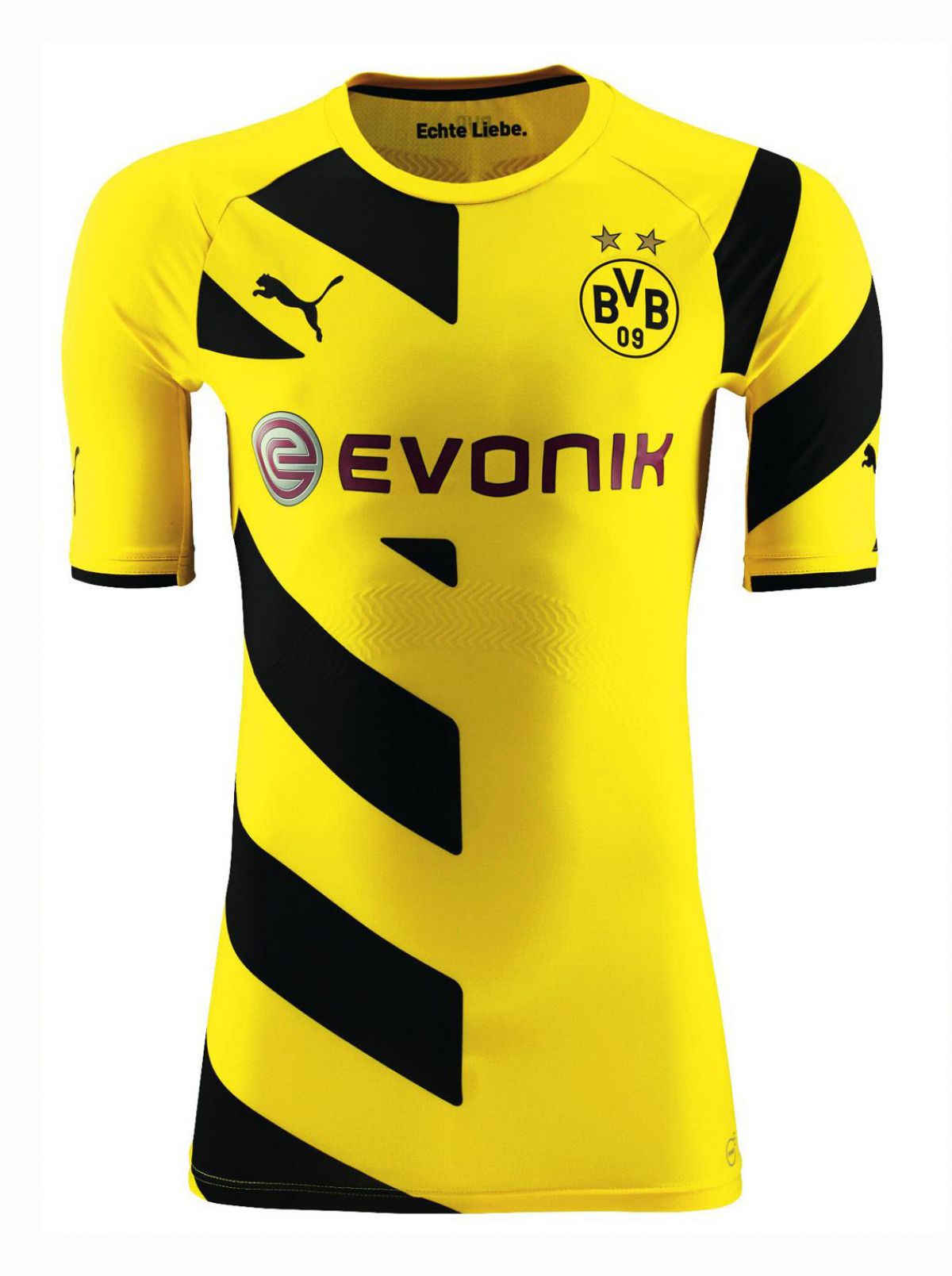
2014/15
FinishedJul 2014 – May 2015
Home
Away
place
2013/14
FinishedJul 2013 – May 2014
Home
Away
place
2012/13
FinishedJul 2012 – May 2013
Home
Away
place
2011/12
FinishedJul 2011 – May 2012
Home
Away
Champions
2010/11
FinishedJul 2010 – May 2011
Home
Away
Champions
2009/10
FinishedHome
Away
place
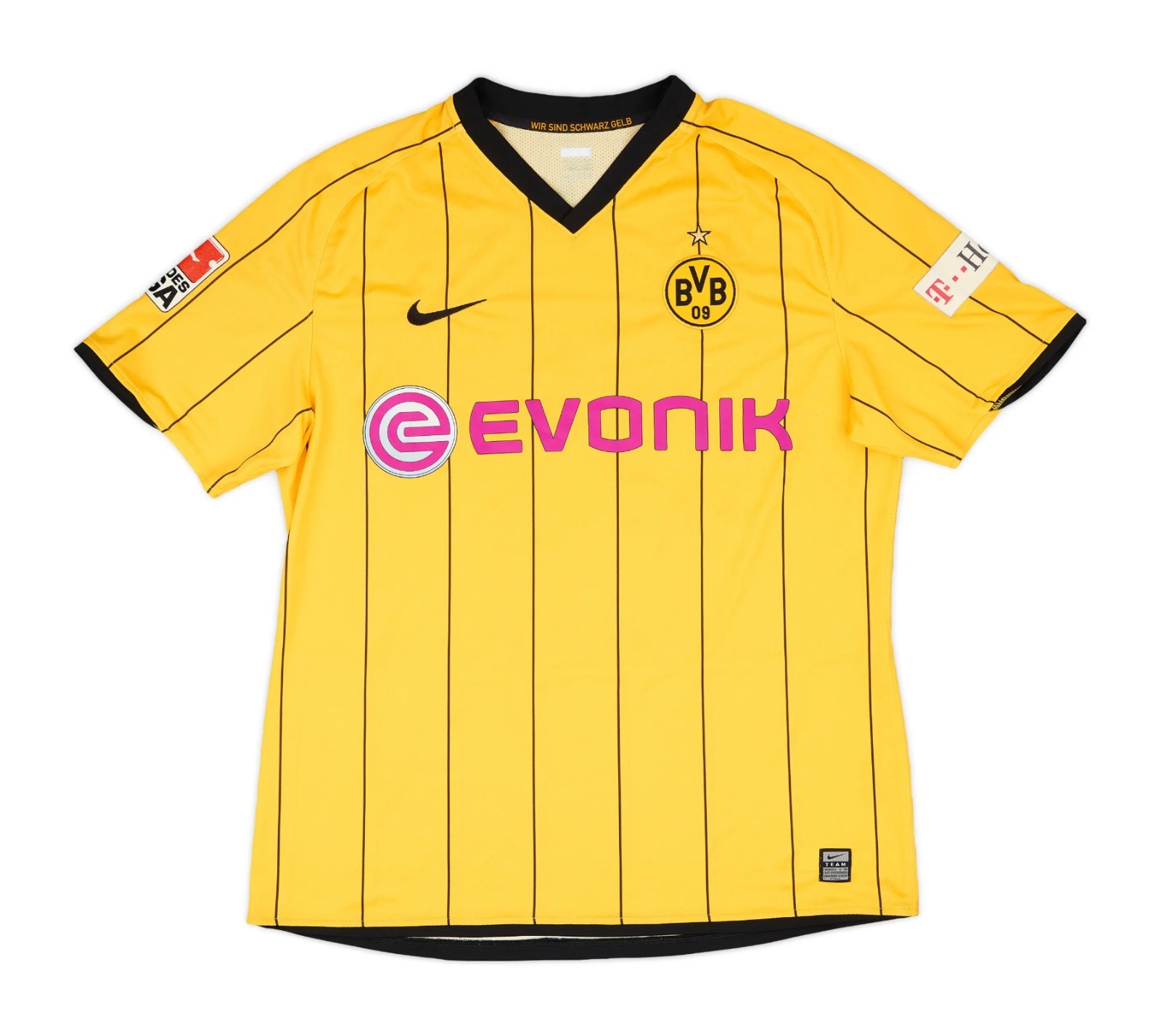
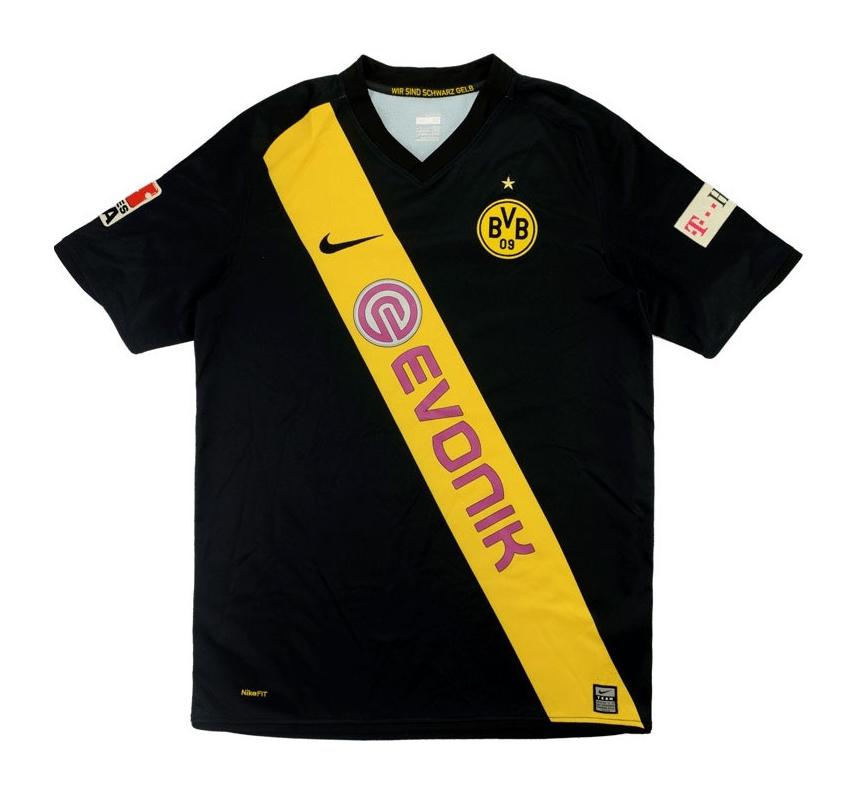
2008/09
FinishedHome
Away
place
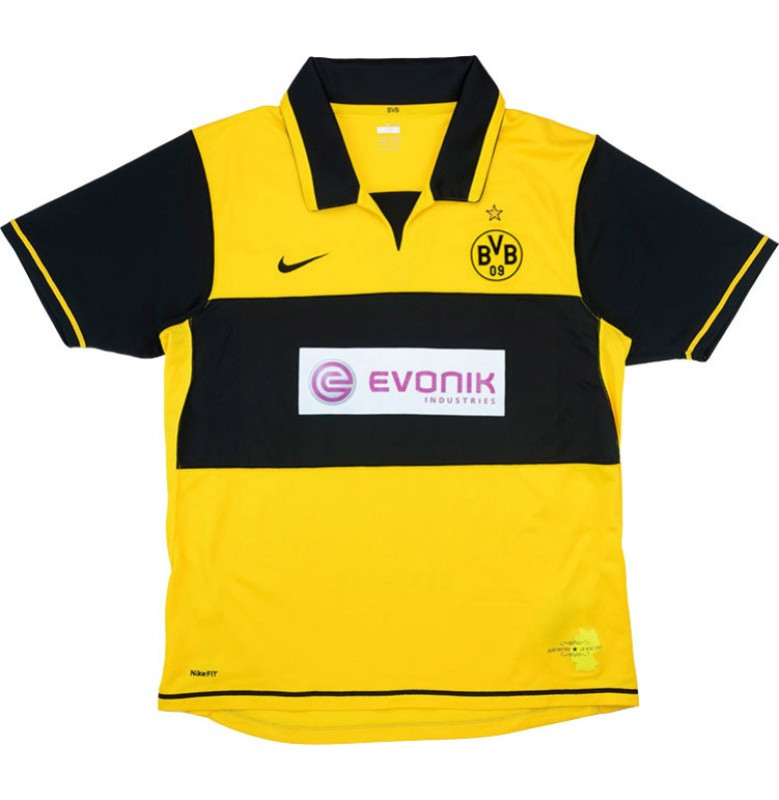
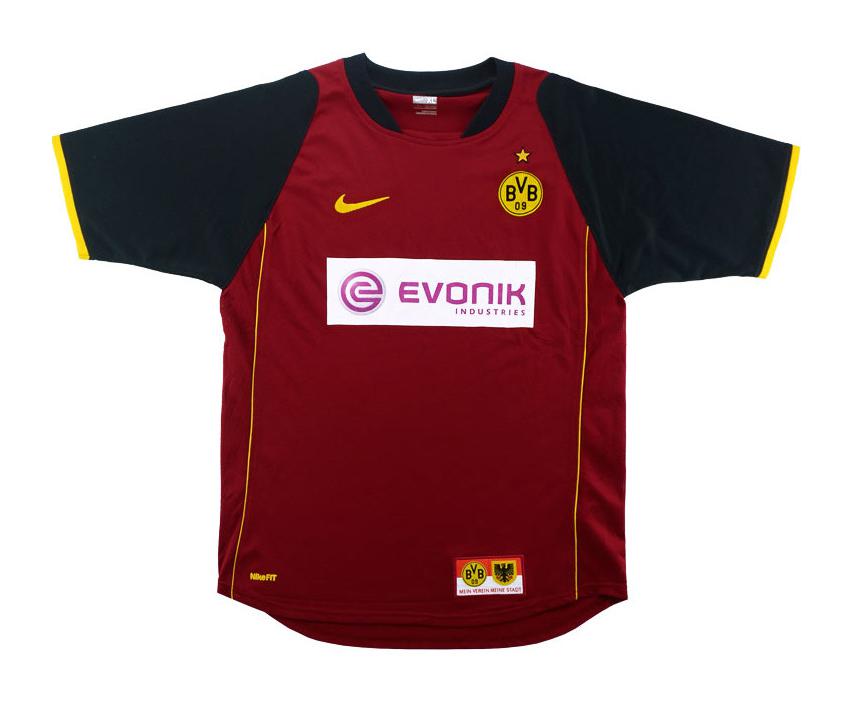
2007/08
FinishedHome
Away
place
2006/07
FinishedHome
Away
place
2005/06
FinishedHome
Away
place
2004/05
FinishedHome
Away
place
2003/04
FinishedHome
Away
place
2002/03
FinishedHome
Away
place
2001/02
FinishedHome
Away
Champions
2000/01
FinishedHome
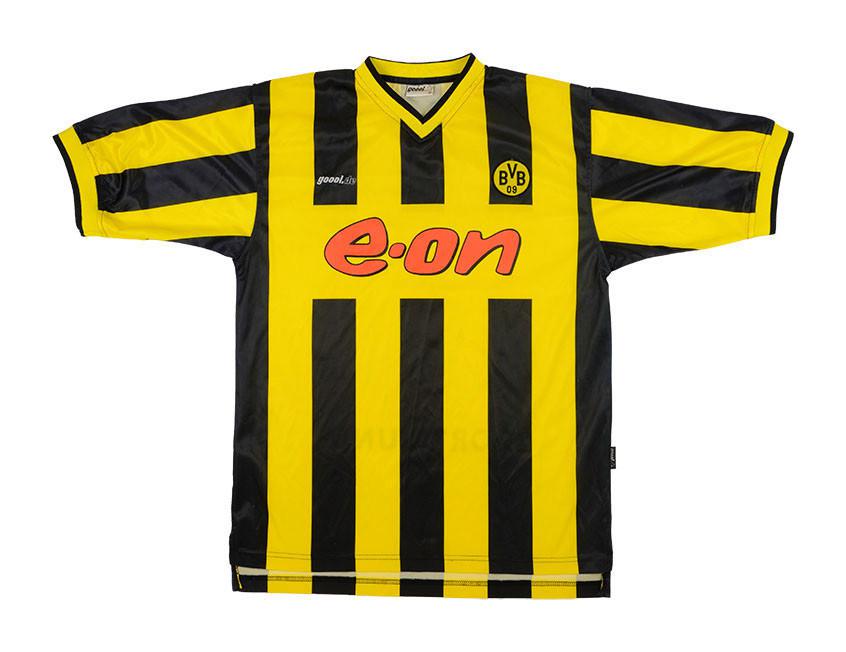
Away
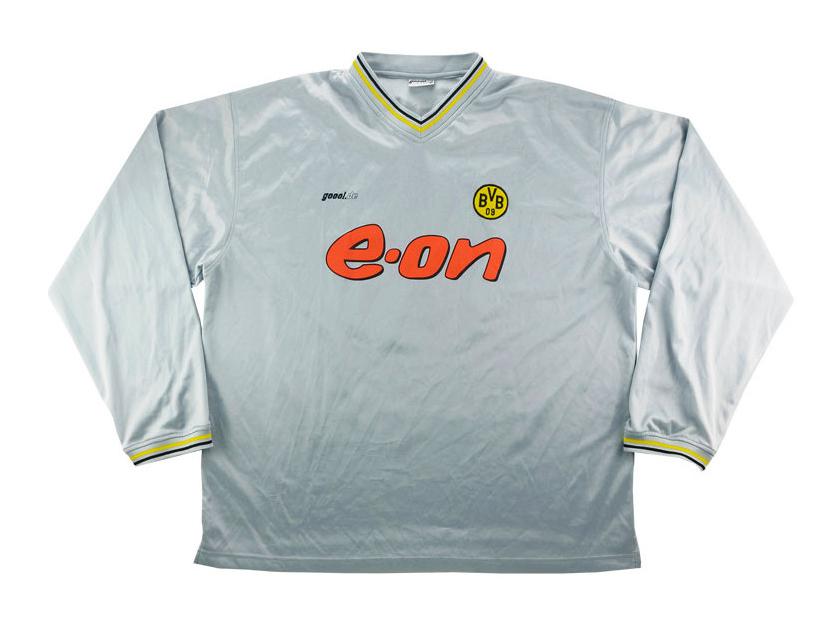
place
1999/00
FinishedHome
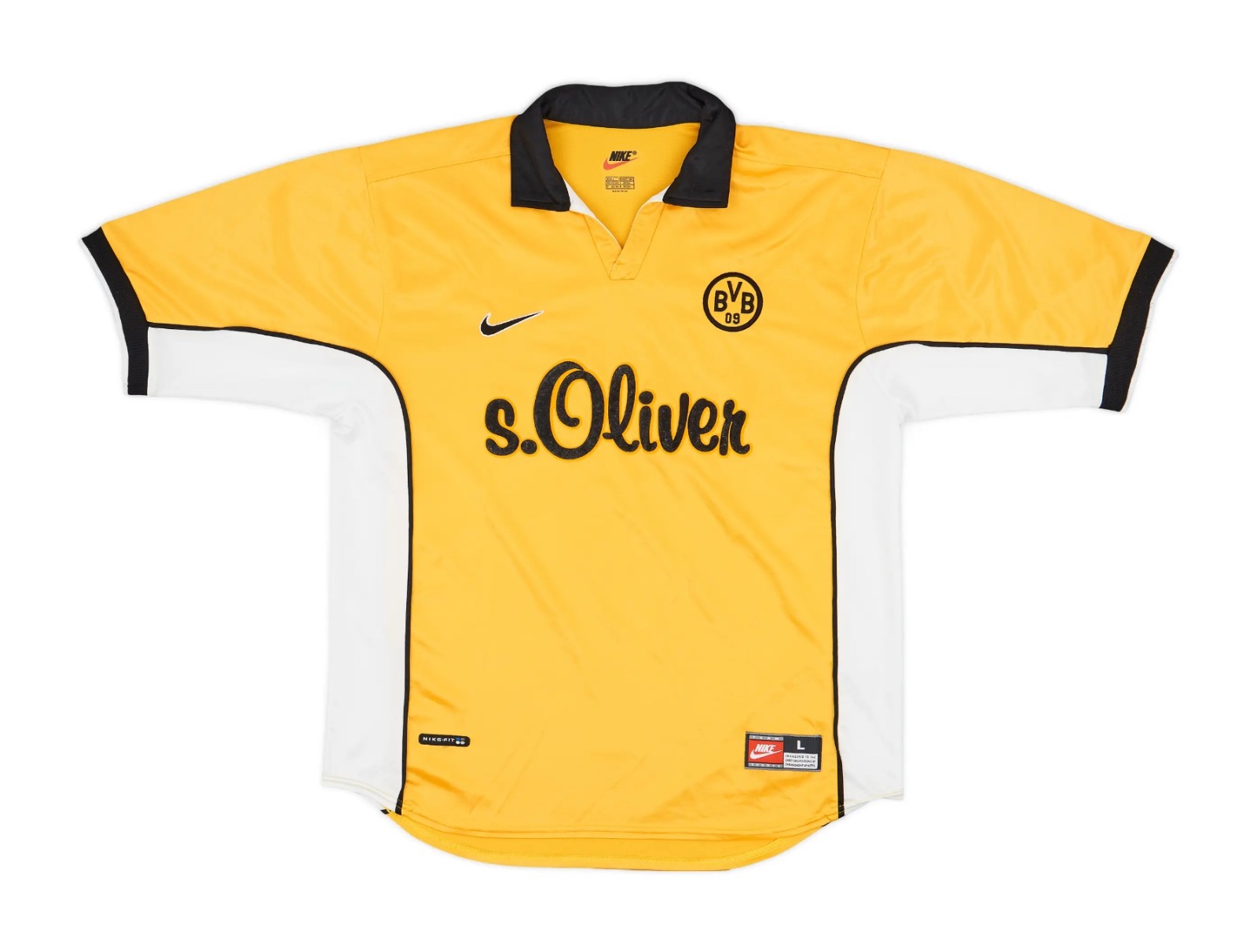
Away
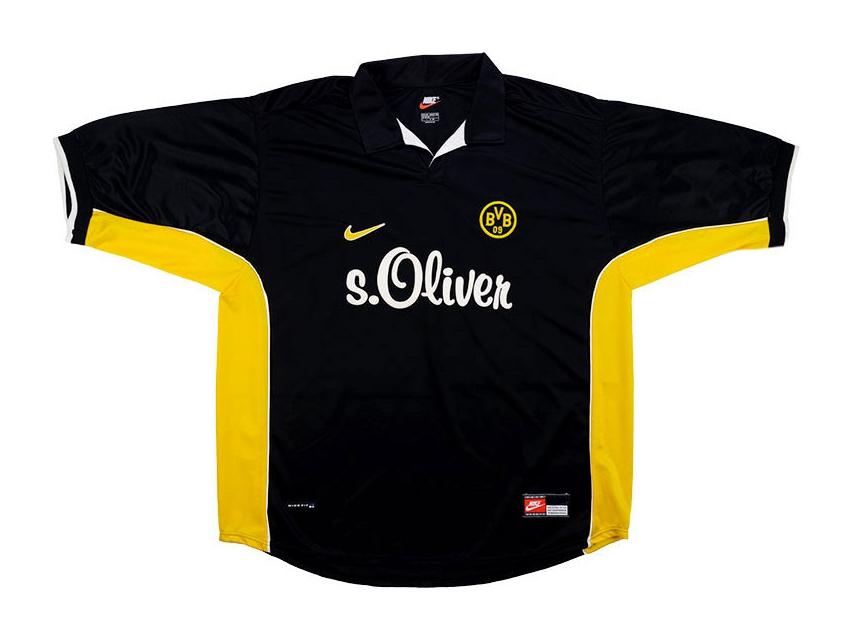
place
1998/99
FinishedHome
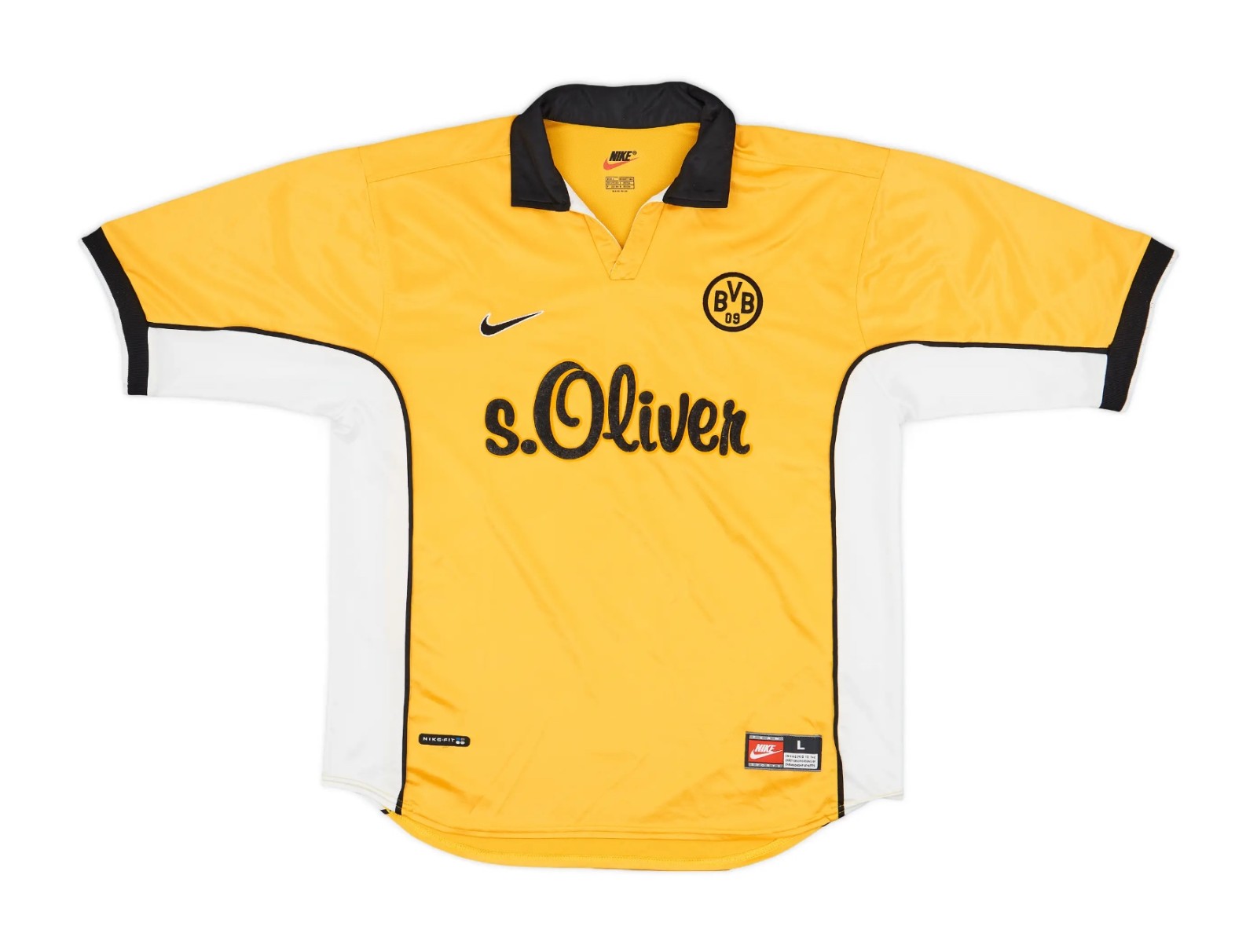
Away
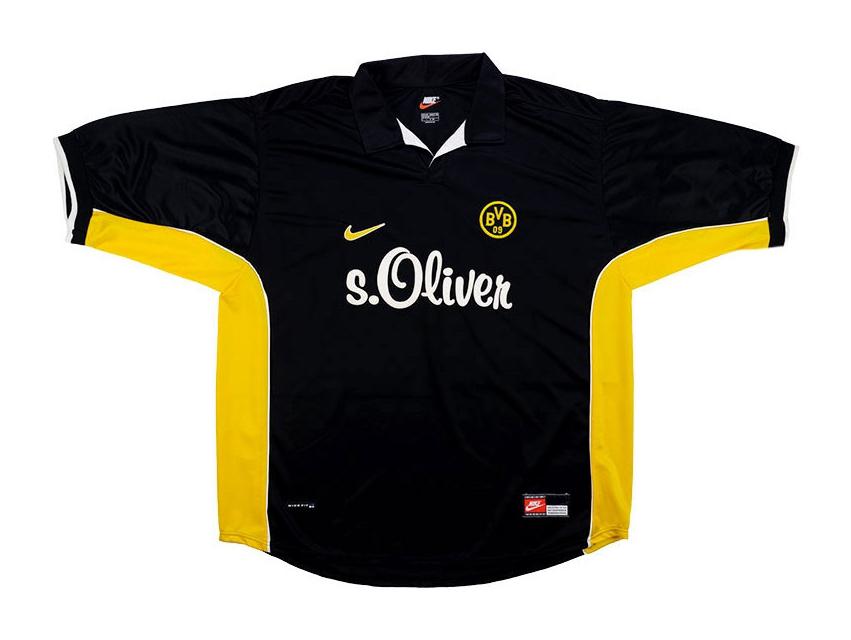
place
1997/98
FinishedHome
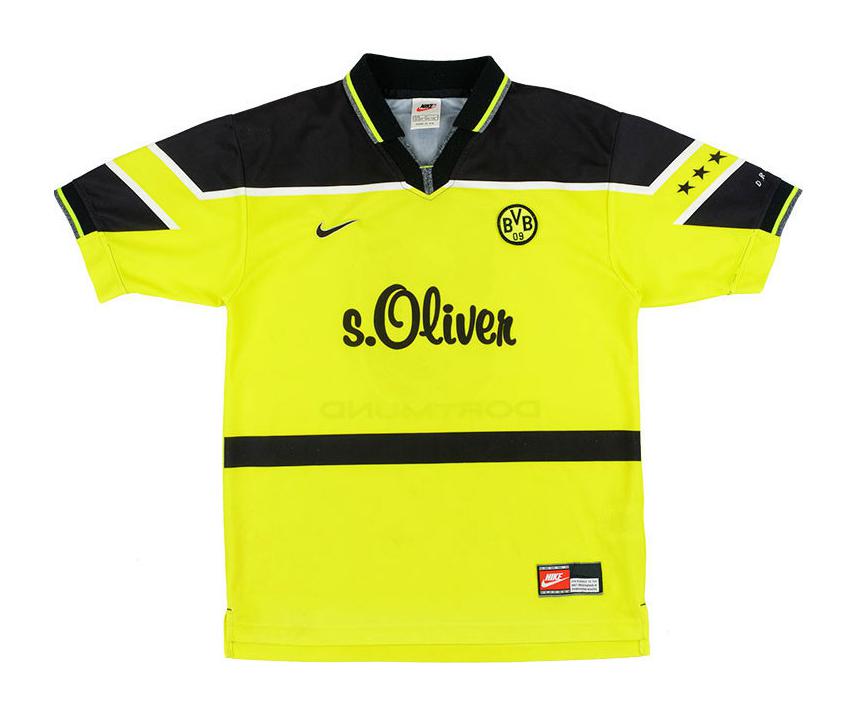
Away
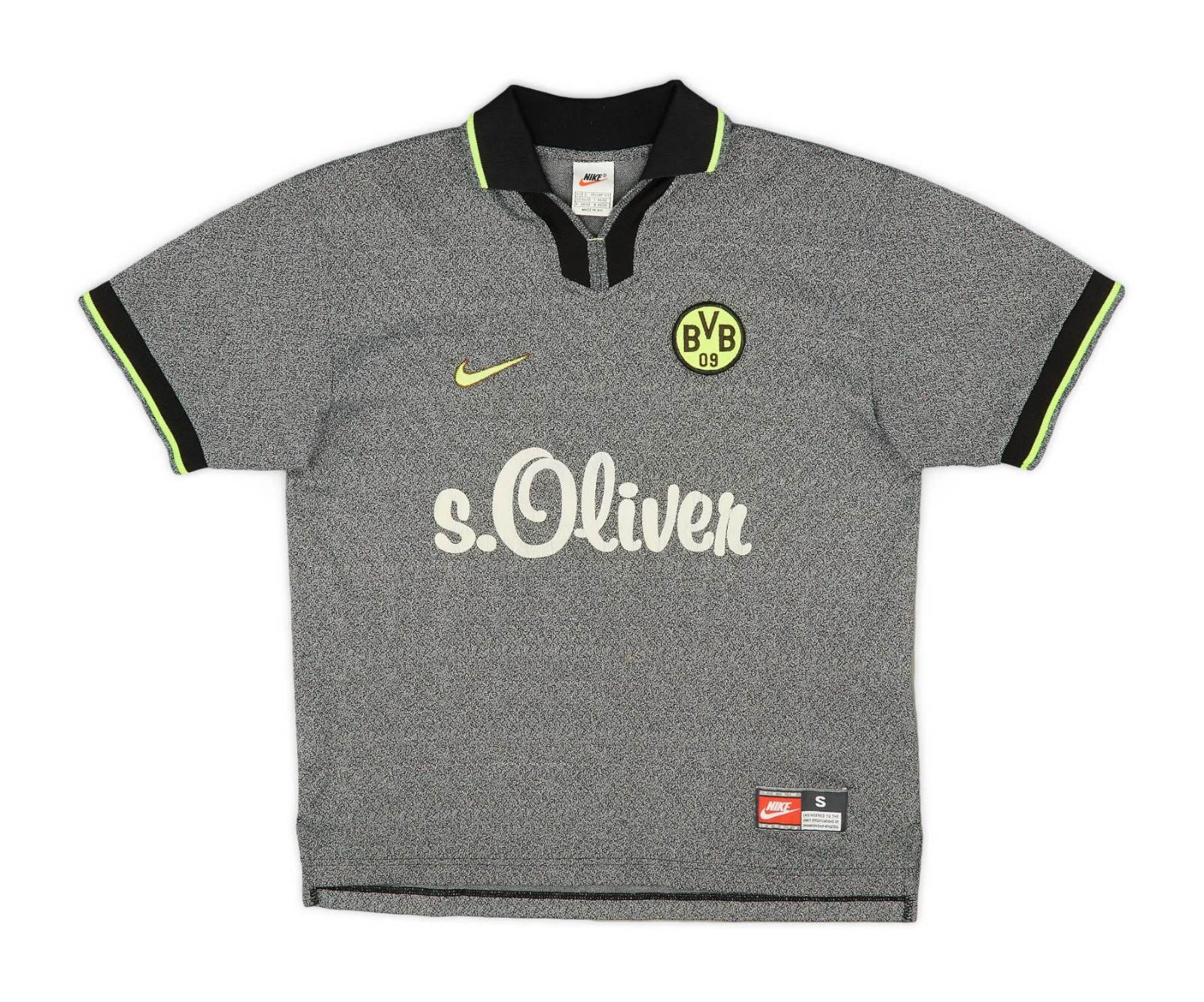
place
1996/97
FinishedHome
Away
place
1995/96
FinishedHome
Away
Champions
1994/95
FinishedHome
Away
Champions
1993/94
FinishedHome
Away
place
1992/93
FinishedHome
Away
place
1991/92
FinishedHome
Away
place
1990/91
FinishedHome
Away
place
1989/90
FinishedHome
Away
place
1988/89
FinishedHome
Away
place
1987/88
FinishedHome
Away
place
1986/87
FinishedHome
Away
place
1985/86
FinishedHome
Away
place
1984/85
FinishedHome
Away
place
1983/84
FinishedHome
Away
place
1982/83
FinishedHome
Away
place
1981/82
FinishedHome
Away
place
1980/81
FinishedHome
Away
place
1979/80
FinishedHome
Away
place
1978/79
FinishedHome
Away
place
1977/78
FinishedHome
Away
place
1976/77
FinishedHome
Away
place
1971/72
FinishedHome
Away
place
1970/71
FinishedHome
Away
place