The story of Adidas in football starts not with a kit, but with a boot. Adolf Dassler set up his first workshop in Herzogenaurach, Bavaria, in 1920. By 1924 his brother Rudolf had joined and the Dassler Brothers Shoe Factory employed twelve workers. In 1925, Adi Dassler filed patents for running shoes with spikes and football boots with studs. Those patents established the technical foundation for everything that followed.
Jesse Owens and the road to adidas
The Dassler brothers supplied shoes to athletes at the 1928 Amsterdam Olympics. In 1932 Arthur Jonath won a bronze medal in the 100 metres wearing Dassler shoes. At the 1936 Berlin Games, Jesse Owens won four gold medals in Dassler footwear.
The brothers split after the Second World War. In 1948 Adi Dassler renamed his company adidas, combining the first letters of his name and surname. The three-stripe design was introduced at the same time. Rudolf formed Puma across town, and the rivalry between the two factories defined Herzogenaurach for decades.
In 1949 the German national team became an official adidas client. That relationship would shape the brand's connection to football for the rest of the century.
1954: The studs that won a World Cup
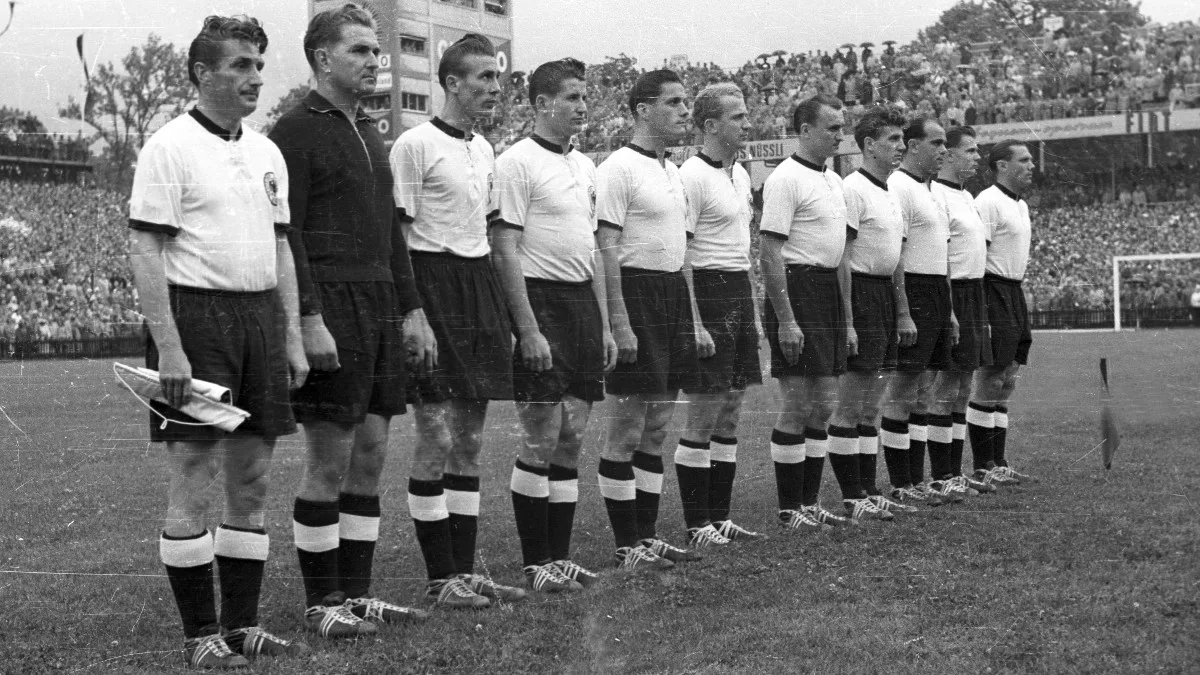
The 1954 FIFA World Cup in Switzerland is the starting point for adidas's football mythology. Germany won the tournament wearing adidas boots, and Adi Dassler's contribution went beyond the supply deal. He adjusted the players' boots at half-time based on ground conditions, switching stud lengths for the wet final against Hungary. Germany won 3-2.
Building the wardrobe
Adidas entered football clothing later than footwear. At a meeting ahead of the 1962 FIFA World Cup, Adolf Dassler requested that tracksuits be made with three stripes down the side of the trousers and sleeves with tight-fitting bottoms. Bayern München became the first club to wear them.
By the 1972 European Championship, the brand had extended its dominance from boots to the full kit. Germany won the tournament fully equipped in adidas. The trefoil logo was introduced that same year, a design that would become one of the most recognised marks in sport.
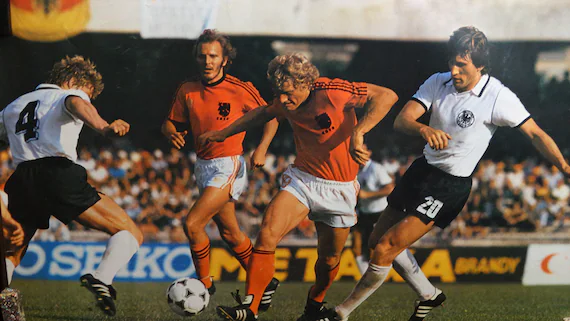
The 1974 World Cup, held in Germany, confirmed the scale of the brand's position. Germany won the tournament again. The brand's dominance at the tournament was significant enough that adidas cited it as a defining moment in their growth.
The World Cup decades
The pattern of adidas-clad sides winning major tournaments continued through the following two decades.
In 1978 Argentina won the World Cup wearing adidas. The runners-up, Netherlands, were also in adidas. At EURO 1980 the German team won the European Championship wearing adidas head to toe. In 1986 Argentina won the World Cup again in adidas; West Germany reached the final in the same brand.
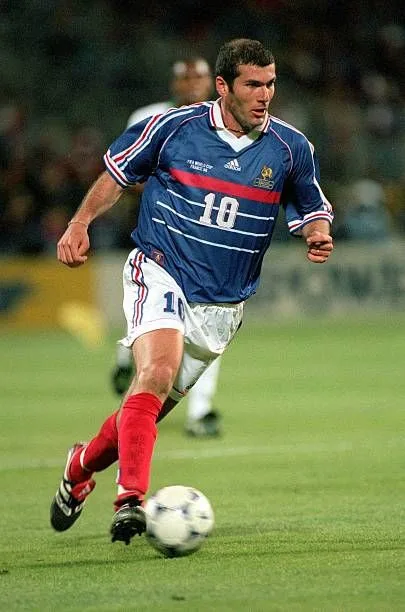
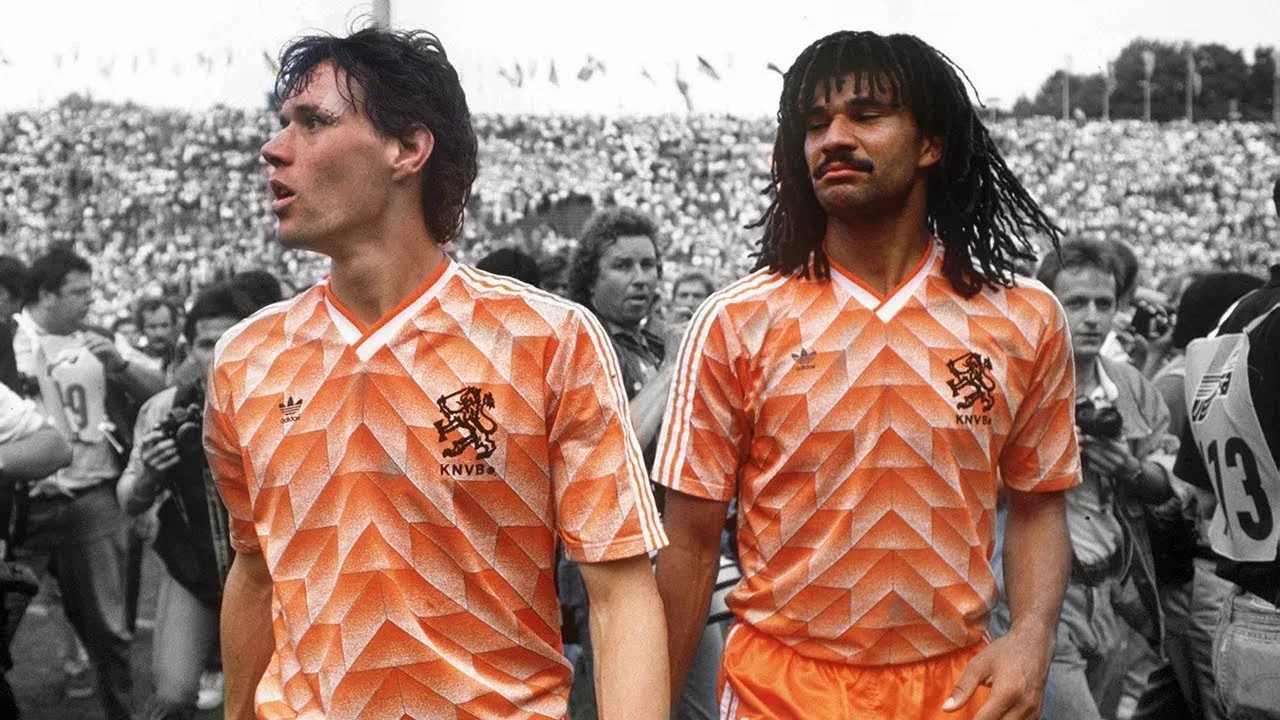
Netherlands won EURO 1988 wearing adidas. France won the 1998 World Cup as hosts wearing adidas; the brand also supplied the official tournament ball, the Tricolore. Zinedine Zidane wore adidas Predator boots at EURO 2000 as France won that tournament too.
Near-collapse and recovery
Adolf Dassler died in 1978. By the mid-1980s, adidas's global market share had fallen from 70% to 2% as Nike expanded aggressively in North America. In 1989 Horst Dassler's sisters sold the company to Bernard Tapie for $320 million.
By 1993, when Robert Louis-Dreyfus became president, the company was losing $100 million a year. The recovery under Louis-Dreyfus involved a return to the brand's sporting heritage and a focus on elite football. Adidas acquired a 10% stake in FC Bayern München in 2001. The same year, Herbert Hainer became CEO. In 2005 the company announced its acquisition of Reebok for $3.1 billion, completing the transaction the following year when the group formally became adidas AG with more than 17,000 employees worldwide.
Club football and the modern era
Adidas signed Chelsea from the 2006/07 season, adding to a club portfolio that already included Bayern München, Ajax, Real Madrid, Juventus, and Arsenal. The three stripes became the visual common ground across the upper half of European football.
The approach to kit design shifted in the 2010s. Adidas began treating kits as cultural artefacts rather than purely performance garments, shirts worn off the pitch as often as on it. The Ajax Amsterdam 2021/22 third shirt connected the club's identity to Bob Marley. The Leeds United 2023/24 kits were produced in collaboration with Acid FC, incorporating local visual heritage. The Jamaica national team entered a partnership with adidas under the creative direction of Wales Bonner, rooted in Caribbean cultural expression.

The trefoil logo was reintroduced on football kits as a deliberate strategic choice, reconnecting with heritage authenticity rather than as a retro gesture. The MLS became adidas's testing ground for kit culture, with all franchises operating under the same design framework.
The 2026 World Cup
For the 2026 FIFA World Cup, adidas revealed 22 federation home kits. Germany's home shirt features diamonds and chevrons echoing the early-1990s templates, with graphic references to their 2014 World Cup victory. Mexico and Japan received kits built around bold design languages. Italy's home shirt carries the word "Azzurra" in gold lettering. Saudi Arabia's kit translates architectural patterns from decorated doorways into a purple-and-green design drawing on falcons, lavender fields, and palms. Venezuela's shirt uses topographical forms inspired by the Tepui mountains.
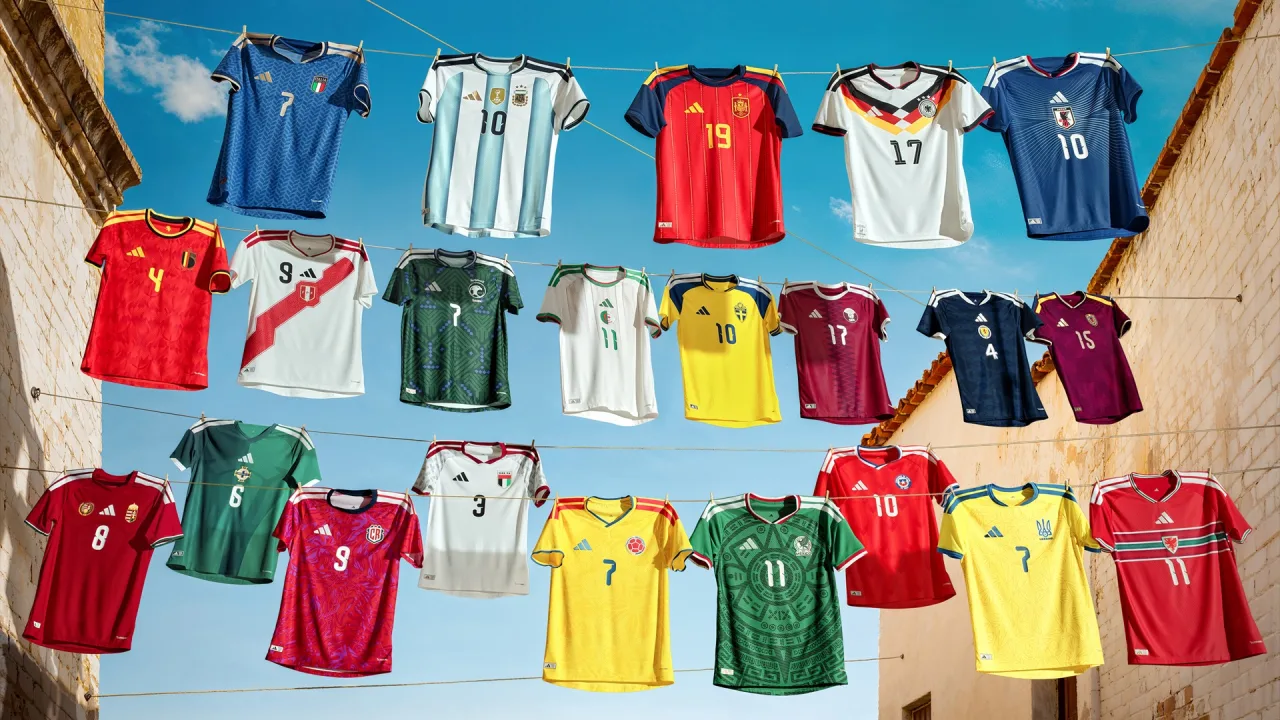
The Germany kit carries additional significance: it is the final shirt adidas will produce for the German national team under their long-standing partnership. The relationship that began with an official client agreement in 1949 ends in 2026.