
Founded 1923 · Hamburg, Germany · The Chevron // // //
hummel Football
hummel is the most beloved cult kit brand in collector culture. A German origin, a Danish rebirth, and a run of national team shirts in the 1980s and 1990s that no other manufacturer has ever matched for collector desirability. The chevron sleeve. The bee. Denmark 1986. Euro 1992. Today, 1,660 hummel kits are catalogued by collectors on ShirtSociety.
The Chevron
The Mark of hummel — Since the 1970s
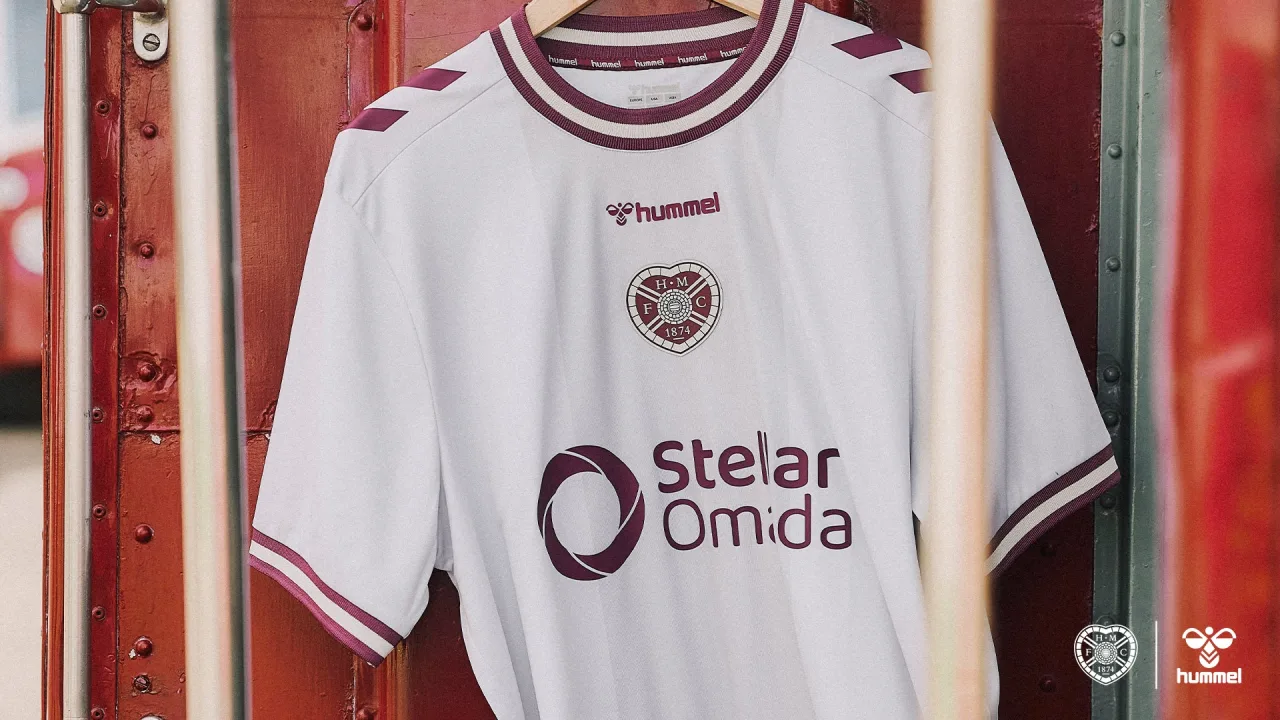
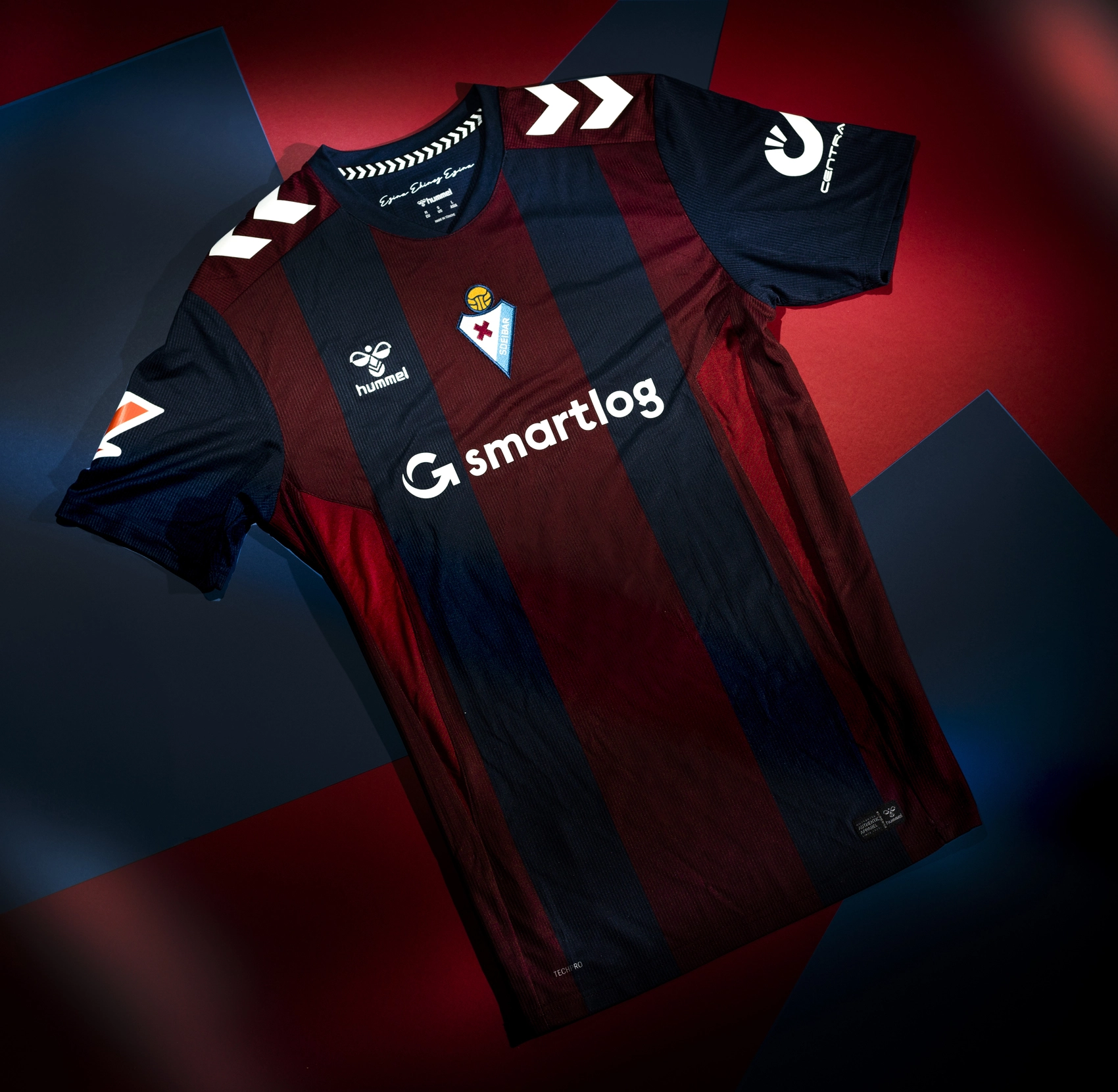
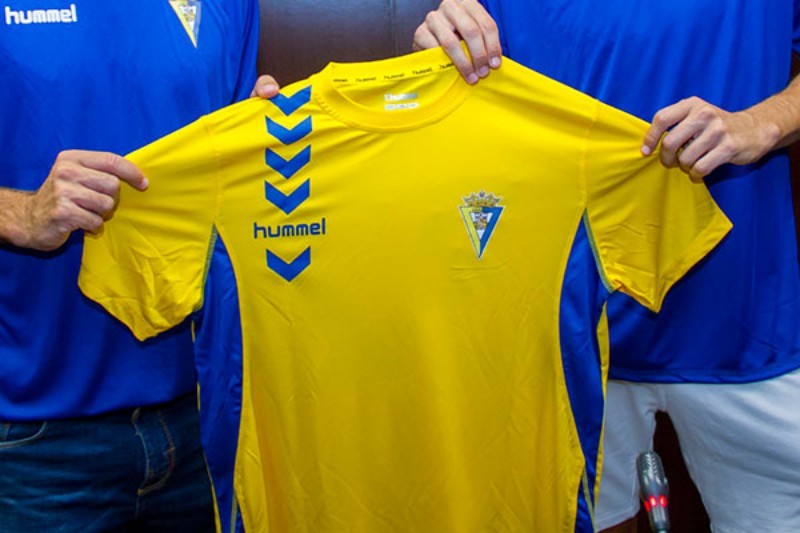
Every hummel shirt has chevrons — the angled V-shaped stripes that run down the sleeves. They are the brand's defining visual element and the first thing collectors look for when identifying a hummel shirt. The chevrons appeared in their modern form in the 1970s, after the brand's relaunched Danish operation took control of the design language.
The word "hummel" means bumblebee in German — a reference to the original logo, which depicted a bee in flight. The bee logo has appeared in several distinct forms across the brand's history, making it one of the most useful dating tools available to collectors. Early 1980s bees differ from late 1980s bees; 1990s iterations differ again. Learning the bee is learning hummel chronology.
The combination of chevron sleeves, the bee logo, and Denmark's national colours produced some of the most visually striking football shirts ever made. No other manufacturer achieved the same level of design coherence with a single national team across such a concentrated period.
Browse all Denmark hummel kitsDenmark 1986 — the half-and-half shirt
1986 · World Cup Mexico
The most collected hummel shirt ever made
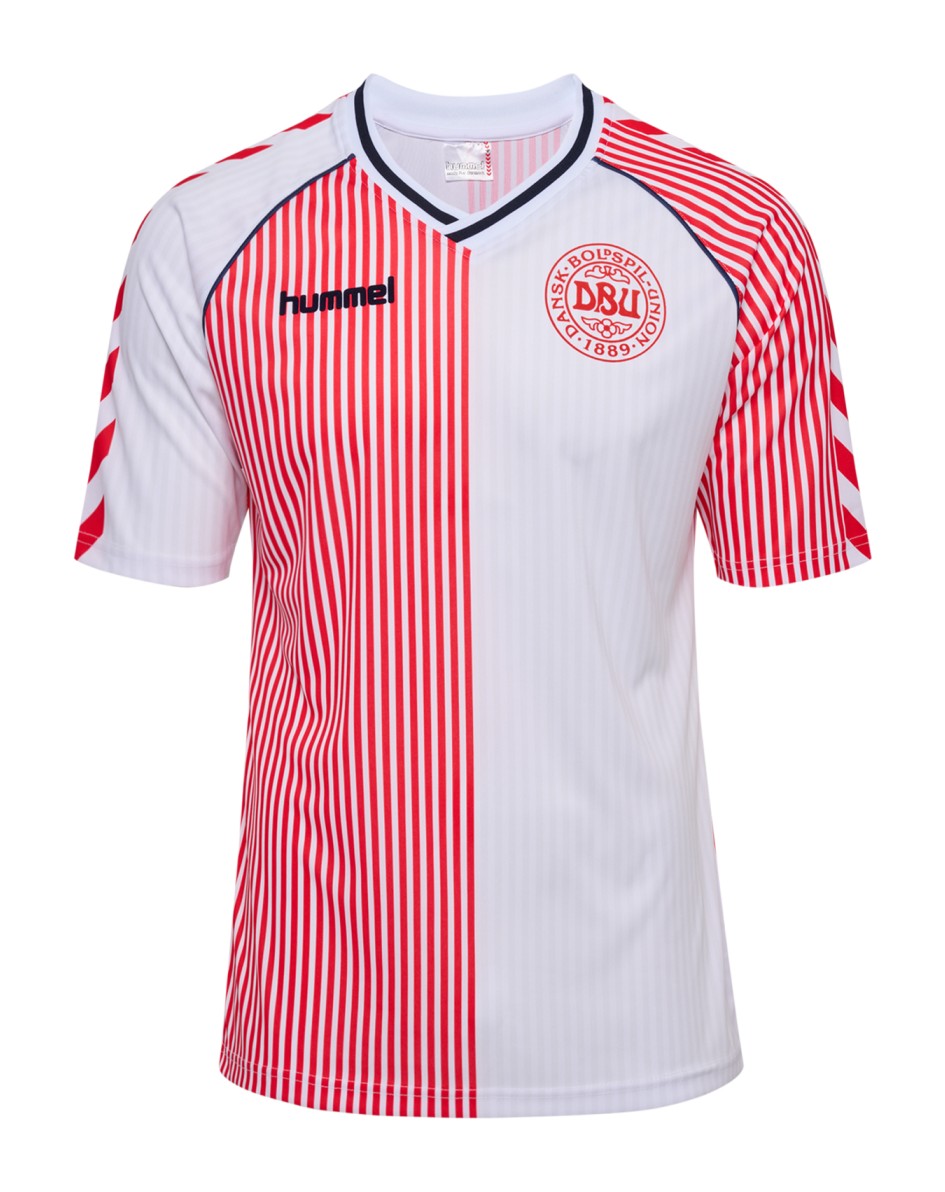
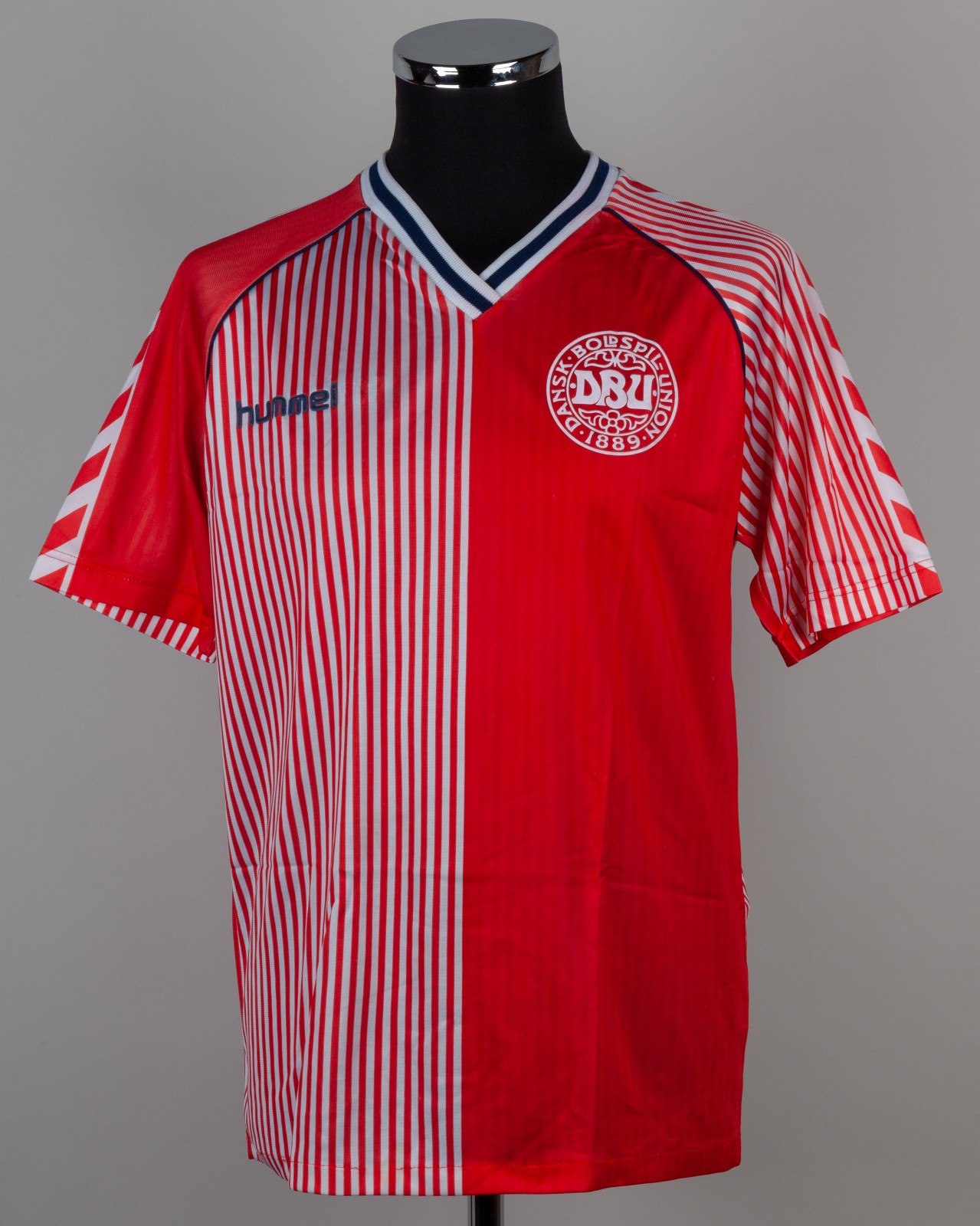
It is known simply as the half-and-half. The left half of the shirt is red, the right half white — a split down the centre that has never been replicated by any other manufacturer for any other nation. Red and white pinstripes run through both halves, and navy blue chevrons travel down both sleeves. The collar adds another layer of colour. It should not work. It is extraordinary.
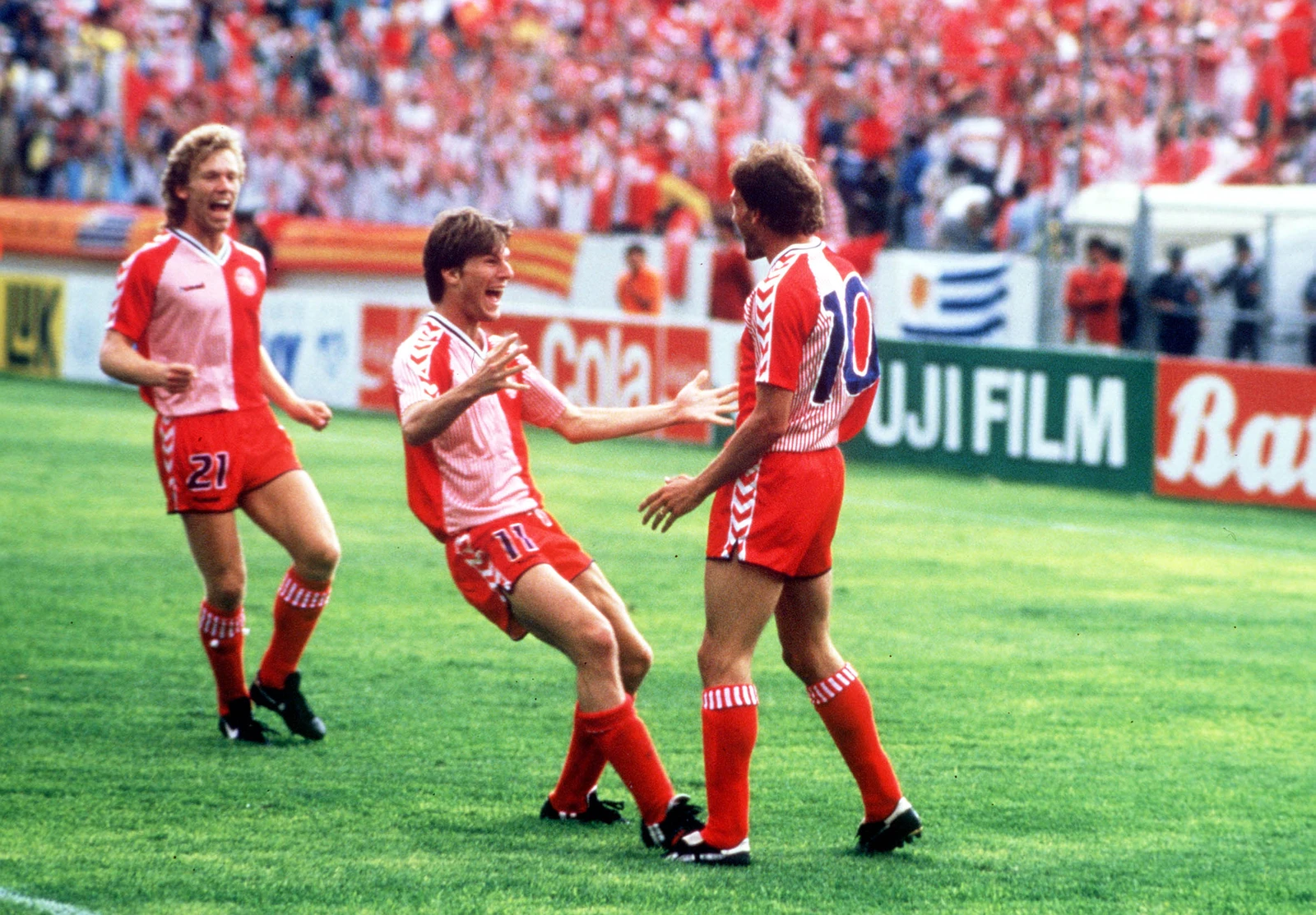
Denmark arrived at the 1986 World Cup in Mexico as an unknown quantity. They proceeded to beat Uruguay 6–1 in one of the tournament's most memorable group stage performances. Michael Laudrup. Preben Elkjær. A side that played fast, aggressive, creative football. They were knocked out by Spain in the round of sixteen but the impression they made — and the shirts they wore — has never faded.
Original 1986 match shirts are among the hardest hummel items to find. Replica versions from the period command significant prices. The hummel reissue, released in recent years, sells well — but collectors who own originals rarely sell them.
See the Denmark 1986 home kit1992 · European Championship · Sweden
Denmark shocks the world
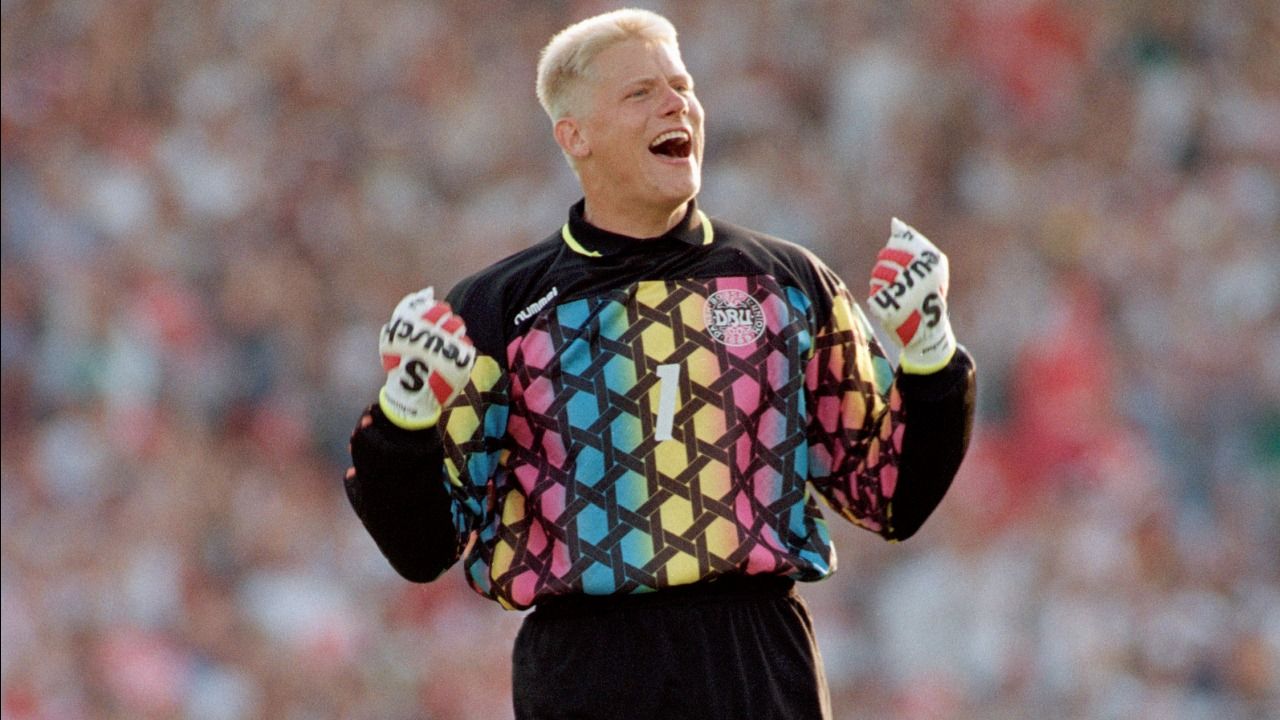
Yugoslavia had qualified for Euro 1992. Then, eleven days before the tournament began, they were expelled due to United Nations sanctions following the breakup of Yugoslavia and the outbreak of war. Denmark, who had finished second in their qualifying group, were called in as replacements. The players were reportedly recalled from their summer holidays.
Denmark defeated Germany 2–0 in the final in Gothenburg. Kim Vilfort scored the second goal. Peter Schmeichel was immense throughout. Denmark were European Champions.
Both the home shirt (red with white chevrons) and the away shirt (white with red chevrons) from that tournament are major collector items. The home shirt in particular — clean, sharp, understated compared to the 1986 design — captures a moment of pure sporting improbability. See the Euro 1992 home shirt
Key milestones
Michael Ludwig Messmer founds hummel in Hamburg
Established in Hamburg by Michael Ludwig Messmer (and his brother Ludwig) under the name "Messmer & Co." A shoe and sportswear manufacturer from the start. The name references the bumblebee — a creature that aerodynamics says should not be able to fly, but does anyway. The bee logo would become one of football's most recognisable collector markers.
Danish takeover — Thorlakur Jonsson and the chevron
Under new Danish ownership from the 1970s, hummel's design language is formalised. The chevron sleeve becomes the brand's signature. The bee evolves into the mark that collectors now use to date shirts. hummel begins supplying the Danish national team.
Denmark 1986 — the half-and-half shirt
The most famous hummel design ever made. Denmark beat Uruguay 6–1 in Mexico in a shirt that splits red and white halves down the centre. The shirt achieves a level of cultural recognition that most kit manufacturers never approach. See it.
Scandinavian dominance — Denmark, Norway, Sweden
By the late 1980s hummel is supplying multiple Scandinavian national teams simultaneously — Denmark, Norway, and Sweden among them. The chevron is the defining mark of Nordic international football. No other manufacturer holds the same grip on a single region. The shirts produced in this window are the most collected in the brand's history.
Denmark win Euro 1992 — called in from their holidays
Called up as late replacements for Yugoslavia, Denmark win the European Championship, defeating Germany in the final. Peter Schmeichel, Kim Vilfort, Brian Laudrup. Both tournament shirts are major collector items. The greatest footballing upset ever achieved in hummel.
Decline — the big brands take over
Nike and adidas pour money into football kit deals through the mid-1990s. hummel cannot compete financially. The brand loses major national team and club contracts. It retreats to smaller markets and lower divisions. For a decade, hummel is largely absent from top-level football.
The collector revival
Collector culture and vintage kit markets grow substantially from around 2010. hummel's 1980s and 1990s designs — especially the Denmark shirts — become objects of serious desire. The brand begins producing reissues of its most iconic designs. A new generation of fans discovers the chevron.
Everton and Southampton — English football returns
Everton FC sign with hummel from 2020, followed by Southampton FC in 2021. The brand's return to the Premier League era is welcomed by collectors. Both clubs' hummel kits sell well and reintroduce the chevron to English football audiences.
1,660
Kits in ShirtSociety
106
Clubs
1992
European Champions
1923
Founded
Iconic hummel kits
The most significant, most collected and most historically resonant hummel football shirts ever made.
Split red and white halves, red and white pinstripes, navy blue chevrons down the sleeves. Denmark beat Uruguay 6–1 in Mexico wearing it. The most discussed, most reissued and most coveted hummel shirt in collector history. Original match-worn shirts are extraordinarily rare.
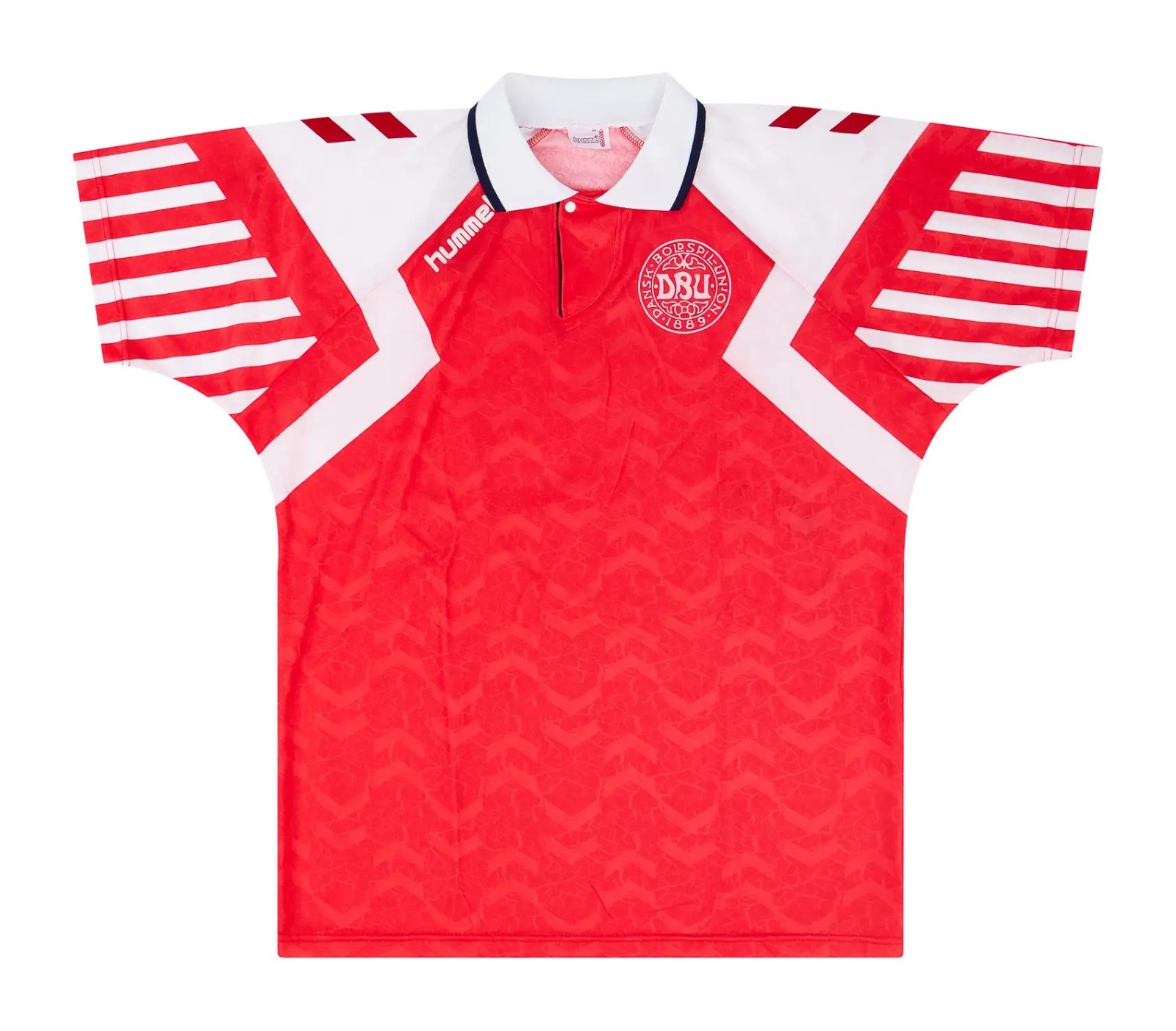
White with red chevrons. Called in from their summer holidays to replace Yugoslavia, Denmark win the European Championship. Peter Schmeichel, Kim Vilfort, Brian Laudrup. A shirt that carries one of football's greatest upsets.
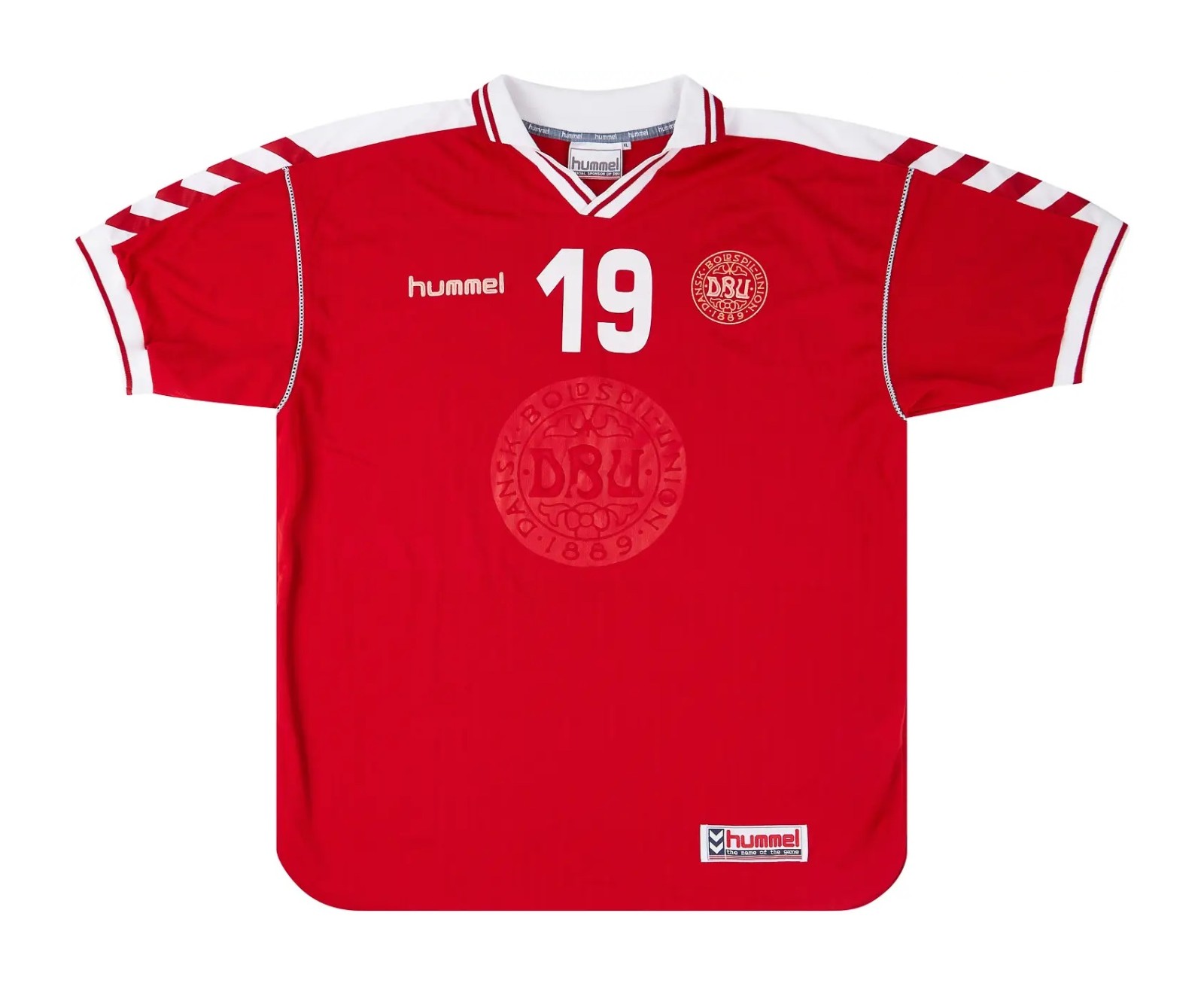
Peter Schmeichel's last World Cup. Michael Laudrup's final tournament. Denmark reach the quarter-finals in France, losing to Brazil. The shirt bridges the great 1992 generation and the end of an era. Collected heavily by Danish fans and hummel enthusiasts alike.
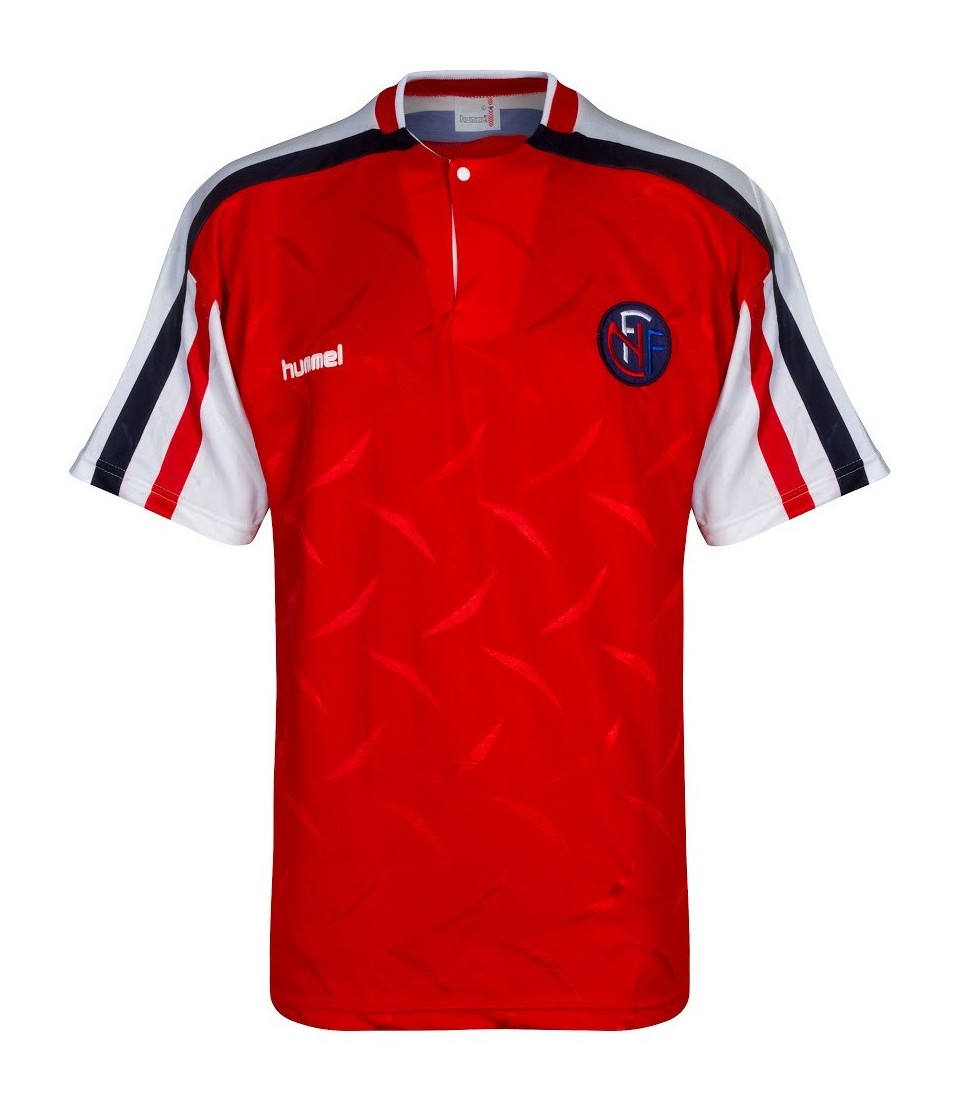
hummel's Scandinavian presence extended well beyond Denmark. The Norway shirts from this period carry the same chevron DNA as the iconic Danish designs — bold, graphic, and immediately identifiable. A collectors' favourite from the Nordic hummel golden era.
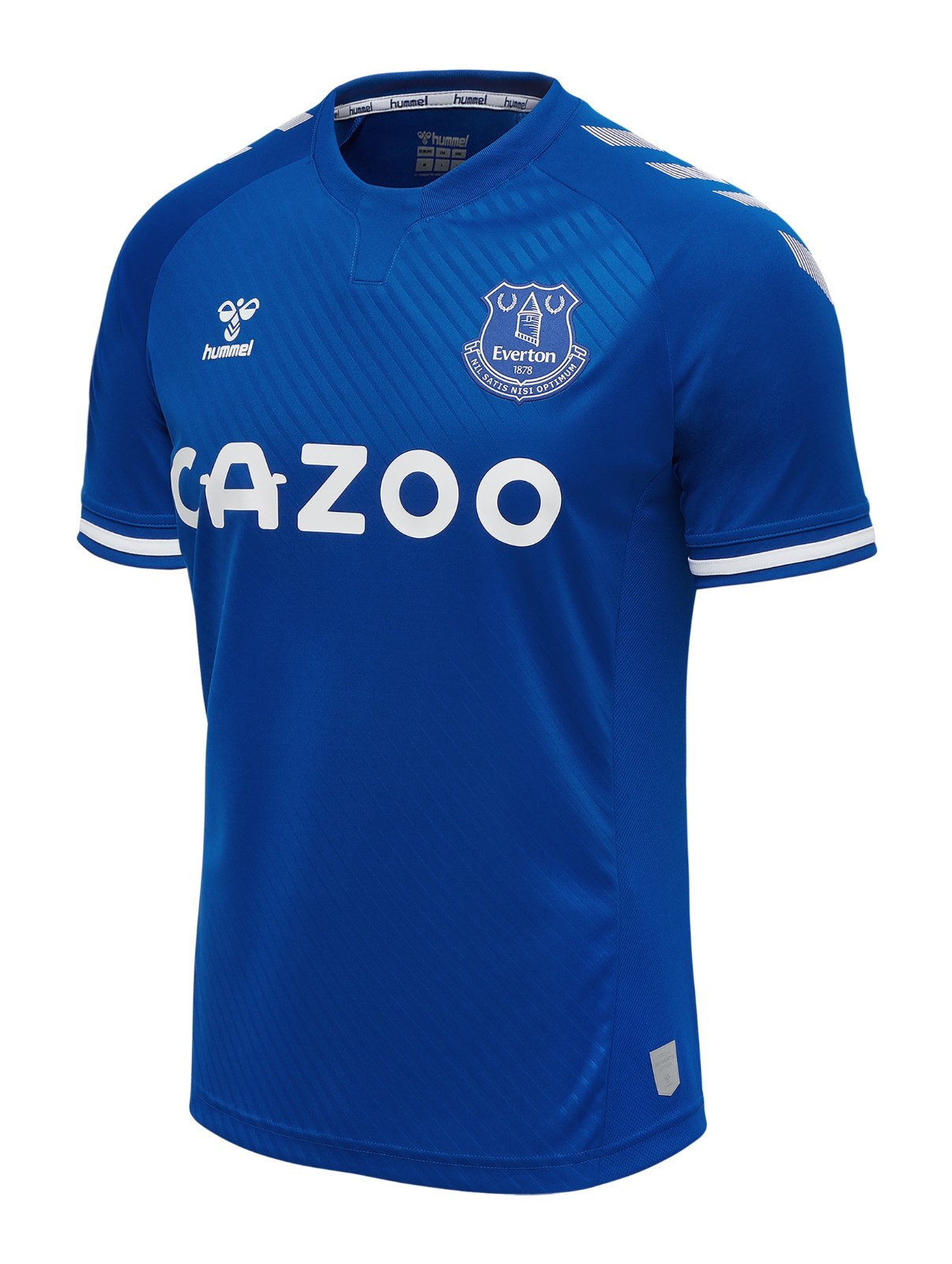
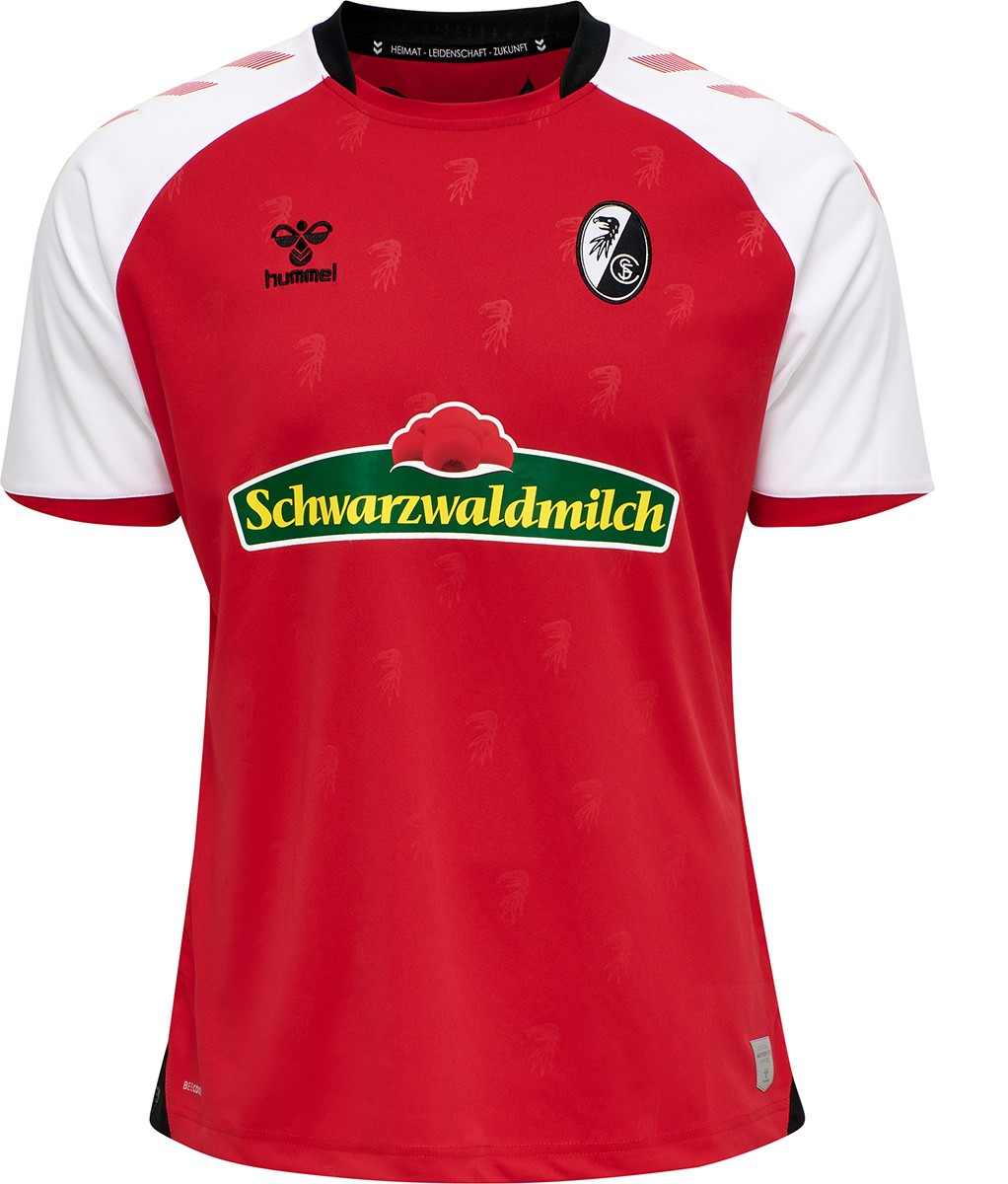
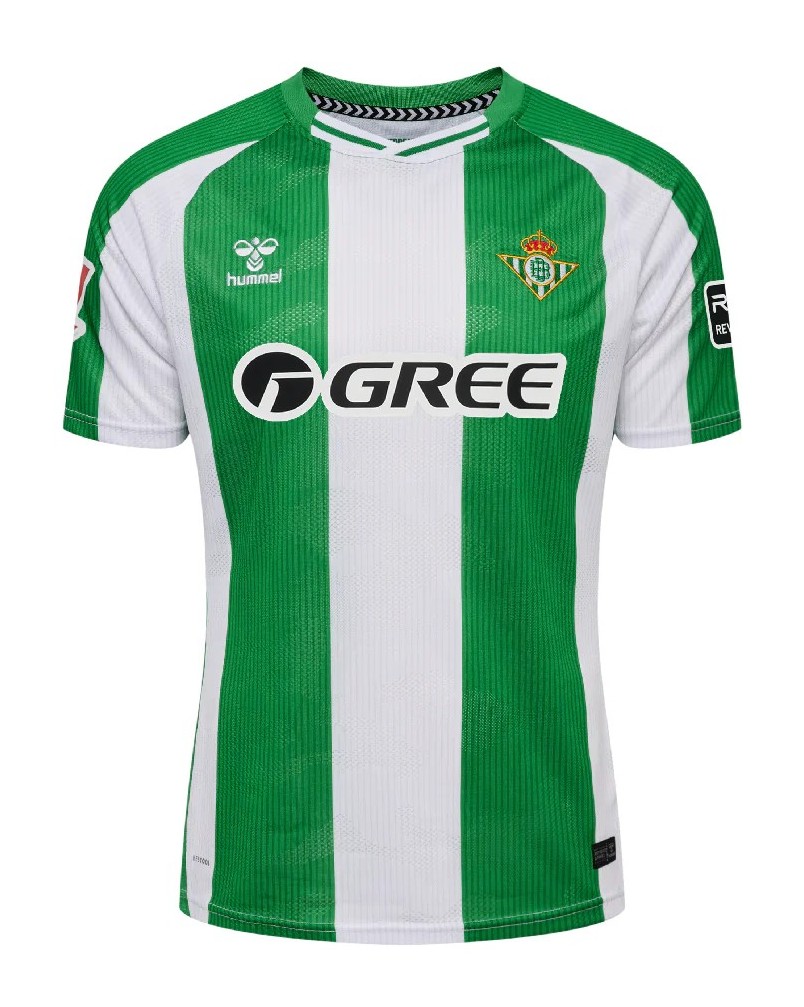
hummel's return to English Premier League football after decades away. Everton's royal blue in hummel construction — chevrons intact, bee on the chest. A reintroduction that was warmly received by both Everton supporters and kit collectors.
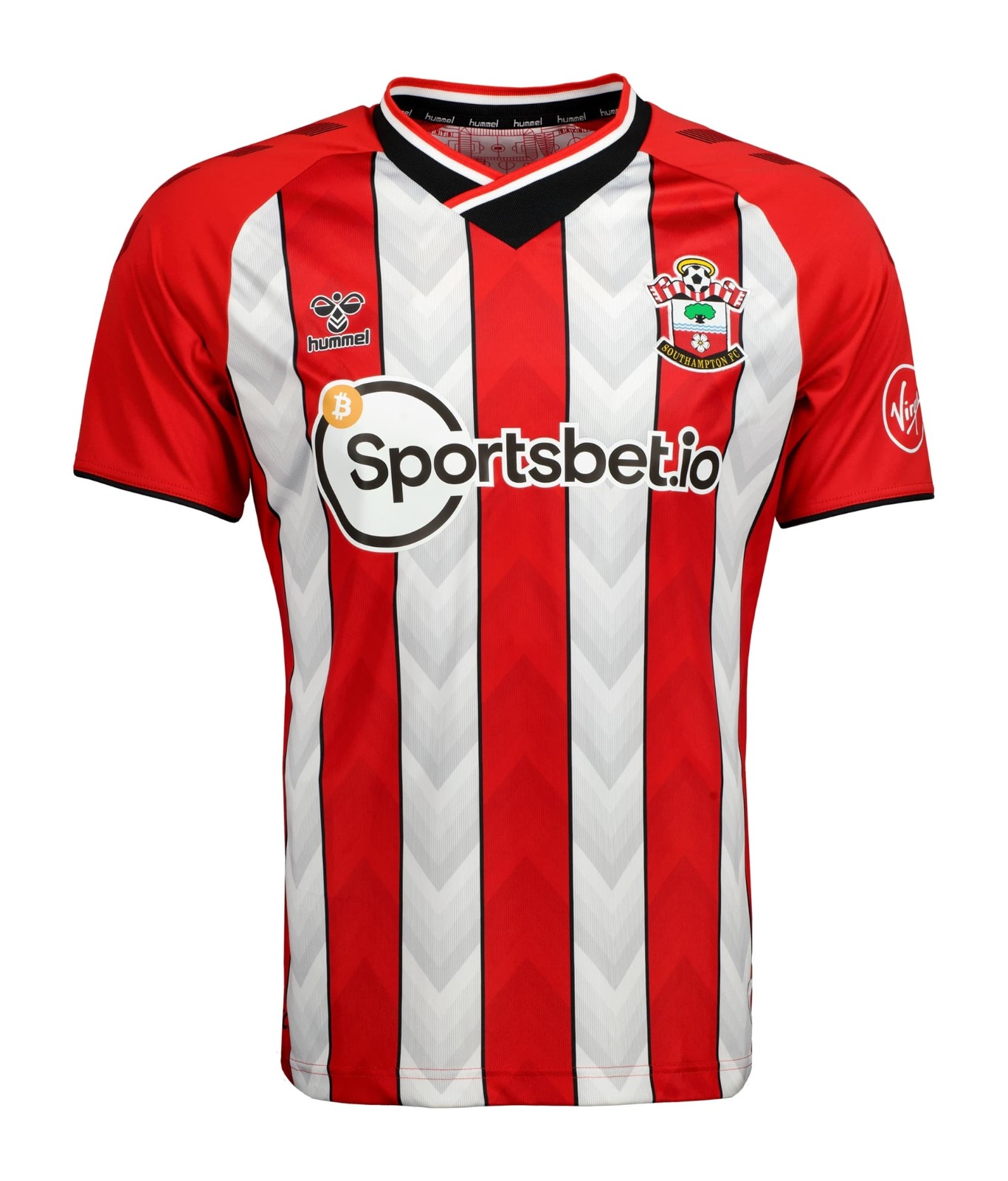
Southampton's red and white stripes in hummel's hands — a natural pairing given the brand's history with stripe-based national team designs. The chevrons appear subtly in the design. A clean, well-executed Premier League shirt from the brand's English revival period.
The collector appeal — what to look for
hummel shirts reward close examination. Here is what experienced collectors check when identifying and dating a hummel piece.
The Bee Logo — Dating by Design
The bee has appeared in multiple distinct forms. Early 1980s bees are more detailed and naturalistically drawn. Late 1980s bees are simplified and bolder. 1990s versions are more graphic. Learning the bee variants is one of the most reliable ways to date an unmarked hummel shirt.
Chevron Colours — The Sleeve Story
The chevron colour is as important as the shirt colour. On the 1986 Denmark kit the chevrons are navy blue — not the red of the shirt. Aged replicas can develop a slight violet tint over time, but on original specimens the colour is a deep, clean navy. Always check the chevron colour against the body colour. Unusual contrasting chevrons indicate earlier, more collectable production runs.
Original vs. Reissue
hummel has reissued several of its most iconic designs, including the 1986 Denmark shirt. Reissues use modern cut, modern fabric, and modern labelling. Originals have period-correct woven labels, looser cuts, and different fabric weights. Weight, label, and collar construction are the key differentiators.
Match-Worn vs. Replica
1980s match shirts are rare. They differ from replica versions in stitching quality, badge application, and — on some periods — numbering. The 1992 tournament match shirts are particularly difficult to verify given the compressed timeline of Denmark's qualification. Replica versions from 1992 remain highly desirable in their own right.
Featured in