Nobody expected Italy to win the 1982 World Cup. They had not convinced anyone during qualification. When the tournament began in Spain, they drew their first three matches — against Poland, Peru and Cameroon — and barely scraped through on goal difference. The Italian press had turned on them. Enzo Bearzot, the manager, imposed a media blackout. His players stopped talking to journalists entirely.
Paolo Rossi had scored none of those three goals. He had been out of football for two years following the Totonero match-fixing scandal, banned from the game in 1980. When his suspension ended, Bearzot recalled him for the World Cup squad despite Rossi having played only a handful of matches since returning. He was short of form, short of sharpness, and carrying the weight of a career that had nearly ended before it reached its peak.
Barcelona, 5 July 1982
The second-round group stage placed Italy alongside Argentina and Brazil. To advance to the semi-finals, they needed to beat both. Argentina first, 2-1. Then Brazil.
Zico, Socrates, Falcao, Junior. The Brazil side of 1982 is still discussed as one of the greatest teams never to win a World Cup. They played fluid, attacking football, they led through the group stage, and they needed only a draw against Italy to go through.
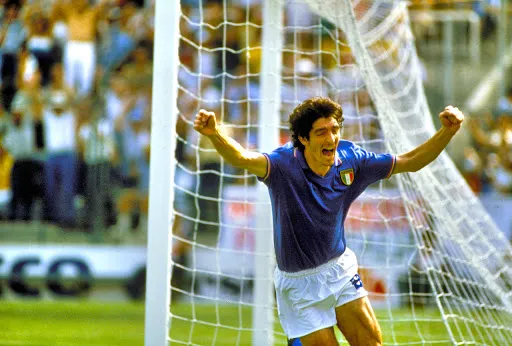
Rossi headed Italy in front after five minutes from a near-post corner. Brazil equalised through Socrates. Rossi scored again just before the half-hour, a finish from inside the six-yard box after a move that cut through the Brazilian defence. Falcao equalised again in the second half.
Then Rossi completed his hat-trick. A right-wing cross, a first-time finish at the back post, 3-2. Brazil pushed for the equaliser they needed. They did not get it. One of the best sides in the history of international football went home in the second round. Paolo Rossi had scored three goals in thirty-three minutes.
The knockout rounds
Italy beat Poland in the semi-final 2-0. Rossi scored both.
In six days he had gone from a player written off by his own country's press to the tournament's leading scorer.
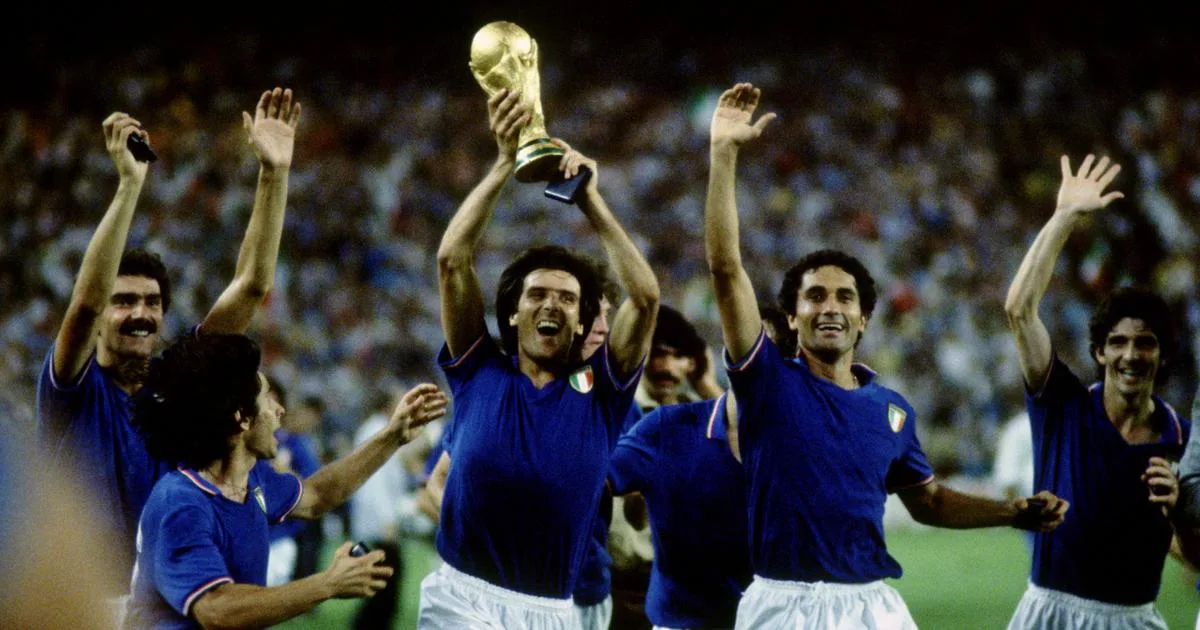
The final was against West Germany in Madrid. Italy won 3-1. Rossi opened the scoring in the 57th minute, meeting a cross from Gentile with a finish that Schumacher could not stop. Marco Tardelli made it 2-0 with a strike from the edge of the area and then ran the length of the pitch shaking his fists, an image that became one of the defining photographs of the tournament. Alessandro Altobelli added a third. Paul Breitner pulled one back late, but it was already settled.
Dino Zoff lifted the trophy. He was forty years old, the oldest captain to win the World Cup. When the whistle went, Bearzot embraced his goalkeeper on the pitch and wept.
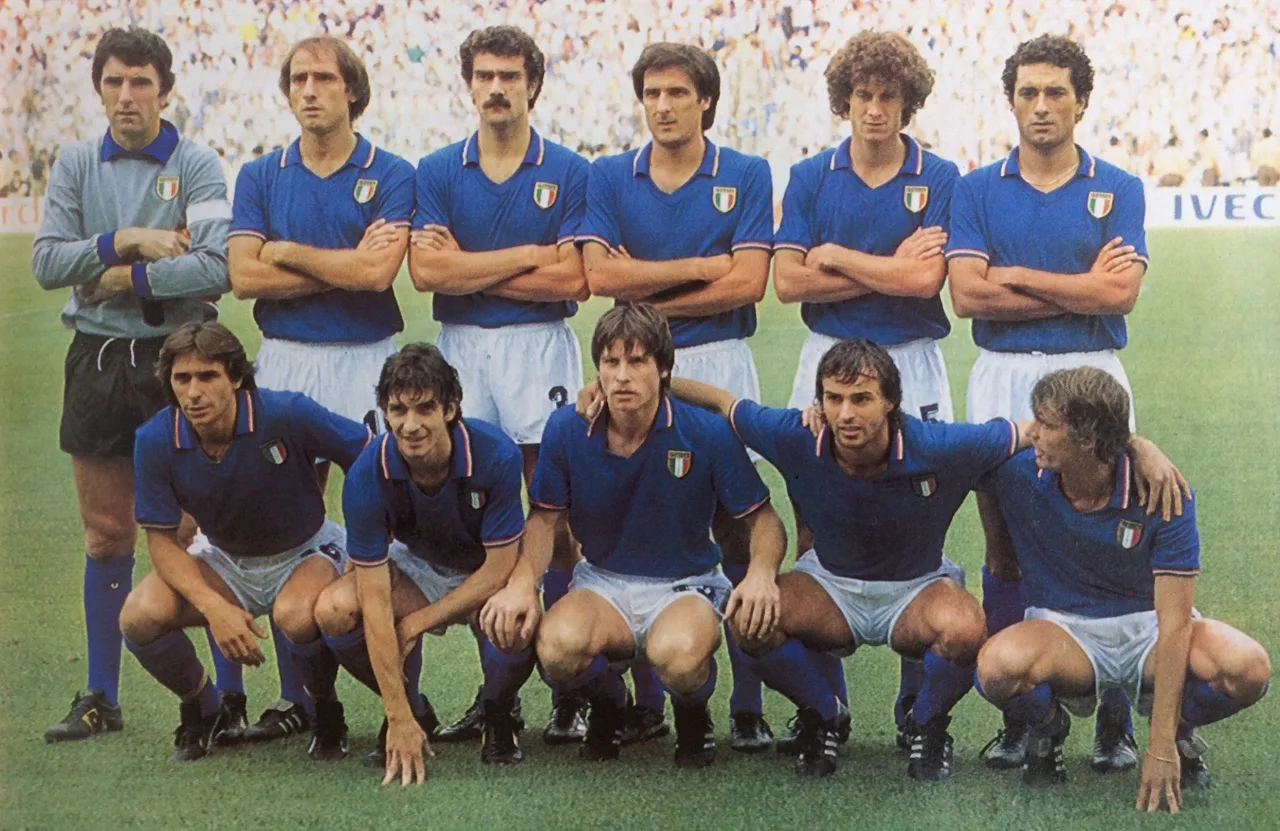
Rossi finished the tournament with six goals in three matches and won the Golden Boot. He also won the Ballon d'Or that year.
The shirt
adidas supplied Italy for the 1982 World Cup. The home shirt was dark blue — the Azzurri — with a simple round neck, the adidas Three Stripes in blue on the shoulders and a small national federation crest on the left chest. There was no graphic pattern, no deviation from the national colour. It was a plain, clean shirt of its era, the kind that looked like nothing until you knew what was scored in it.
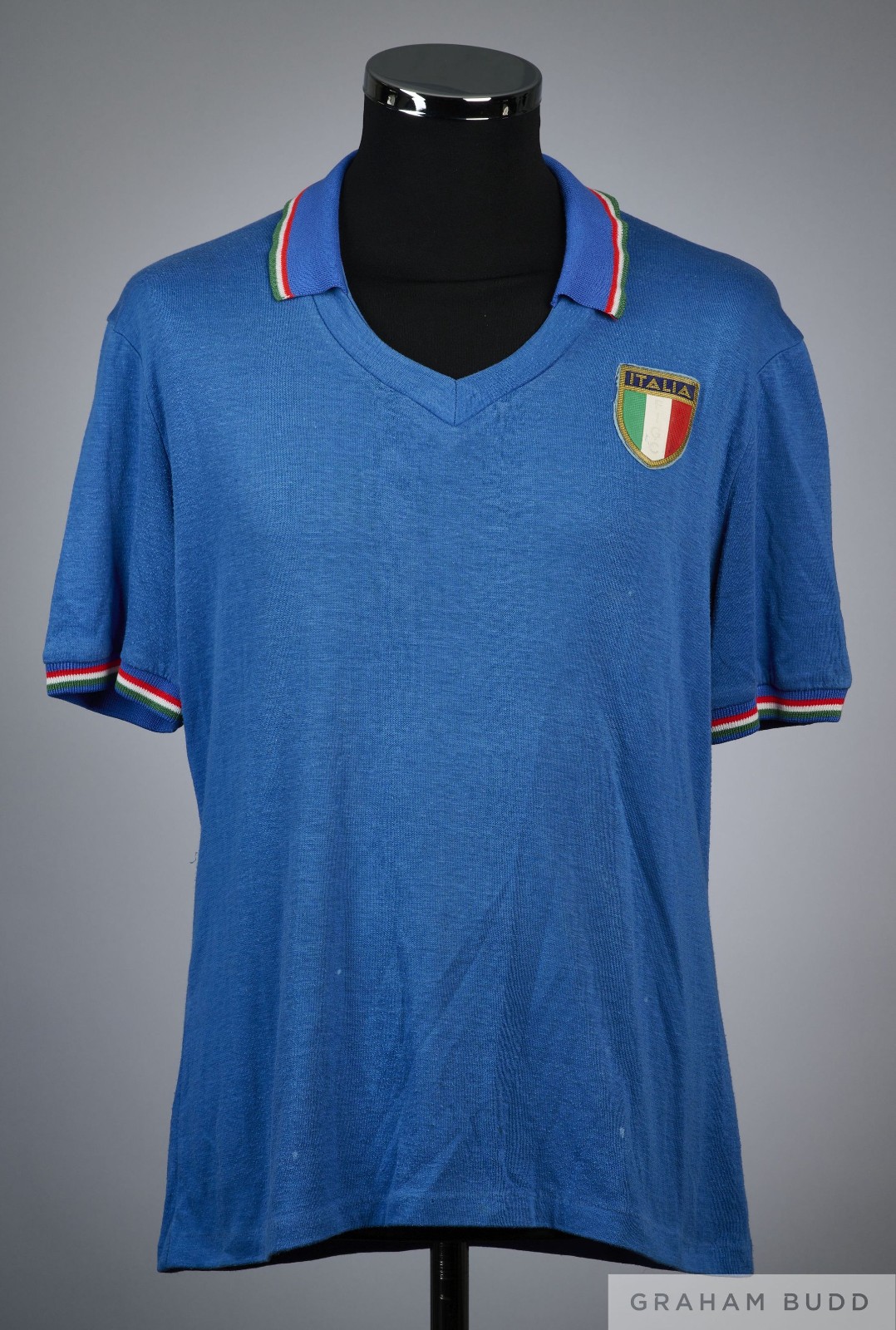
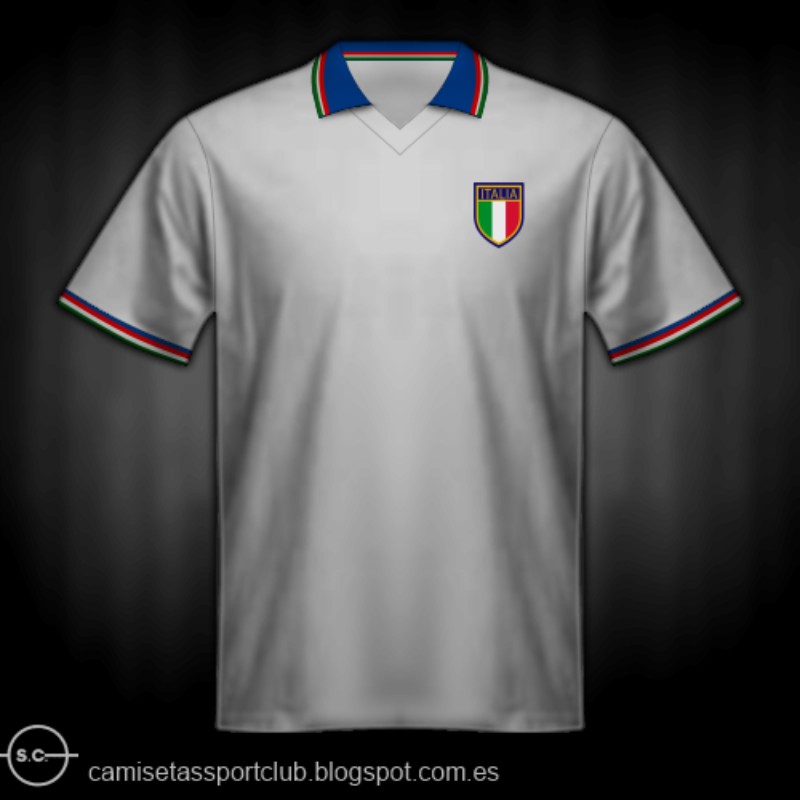
The away shirt was white with blue trim, worn for the matches where Italy were required to change. The home blue is what most people remember: the colour Rossi wore in Barcelona, the colour Zoff wore when he lifted the trophy in Madrid.
The shirt asks nothing of you visually. It is blue. The Three Stripes are there. That is all. What makes it worth finding now is everything that happened inside it: the comeback from disgrace, the three goals against Brazil, the final, the oldest World Cup captain walking up the steps. The shirt is a container for one of the most unlikely stories in the history of the competition.
adidas / 1982 World Cup
Italy 1982 home kit
In the ShirtSociety catalogue
adidas / 1982 World Cup
Italy 1982 away kit
In the ShirtSociety catalogue