Brazil did not always play in yellow. Into the 1940s the national team wore white shirts with blue collars. That changed because of a single afternoon in 1950.
The Maracanazo
In the deciding match of the 1950 World Cup, played in front of a packed Maracana in Rio de Janeiro, host nation Brazil lost 2-1 to Uruguay. The defeat became known as the Maracanazo and was treated as a national catastrophe. The white shirt was blamed and judged unpatriotic. Brazilian football decided to start again from nothing.
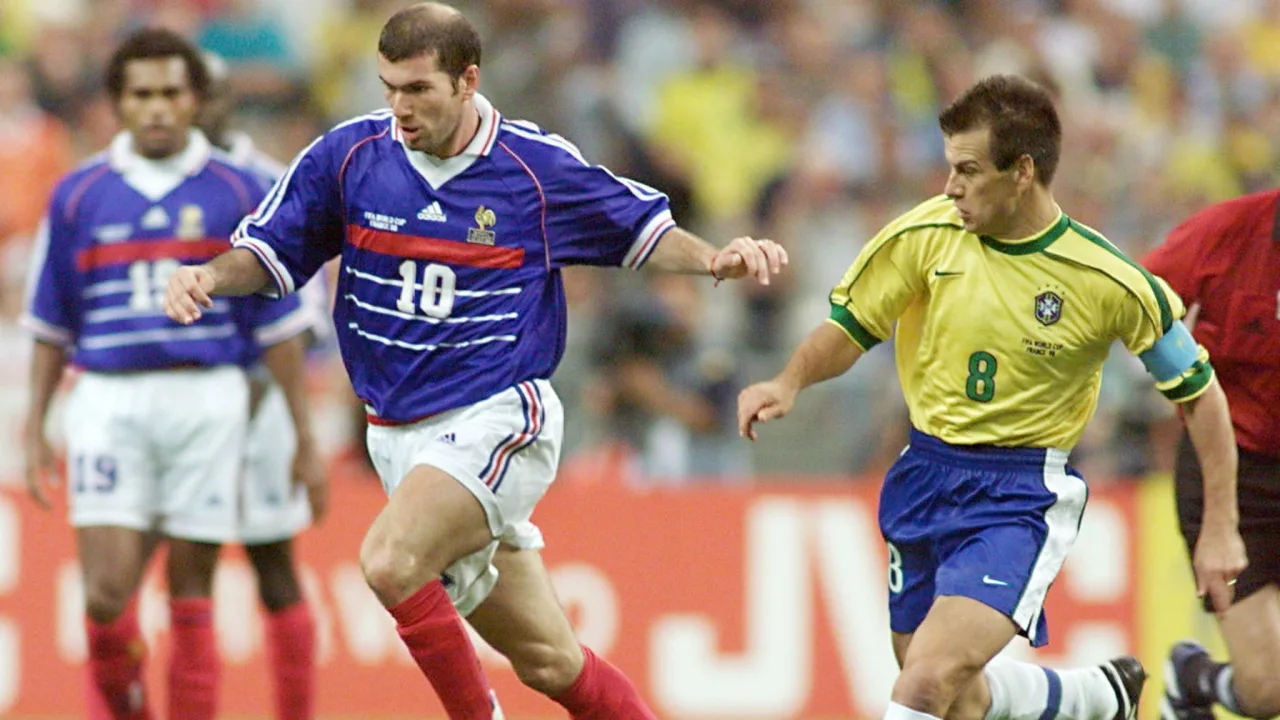
In 1953 the newspaper Correio da Manha ran a competition to design a new kit, with one condition: it had to use the four colours of the Brazilian flag, yellow, green, blue and white. Aldyr Garcia Schlee, a teenage illustrator from Pelotas, submitted a design of a yellow shirt with a green collar, blue shorts and white socks. It beat more than four hundred other entries and was adopted as the new national kit, debuting at the 1954 World Cup.
Mexico, 1970
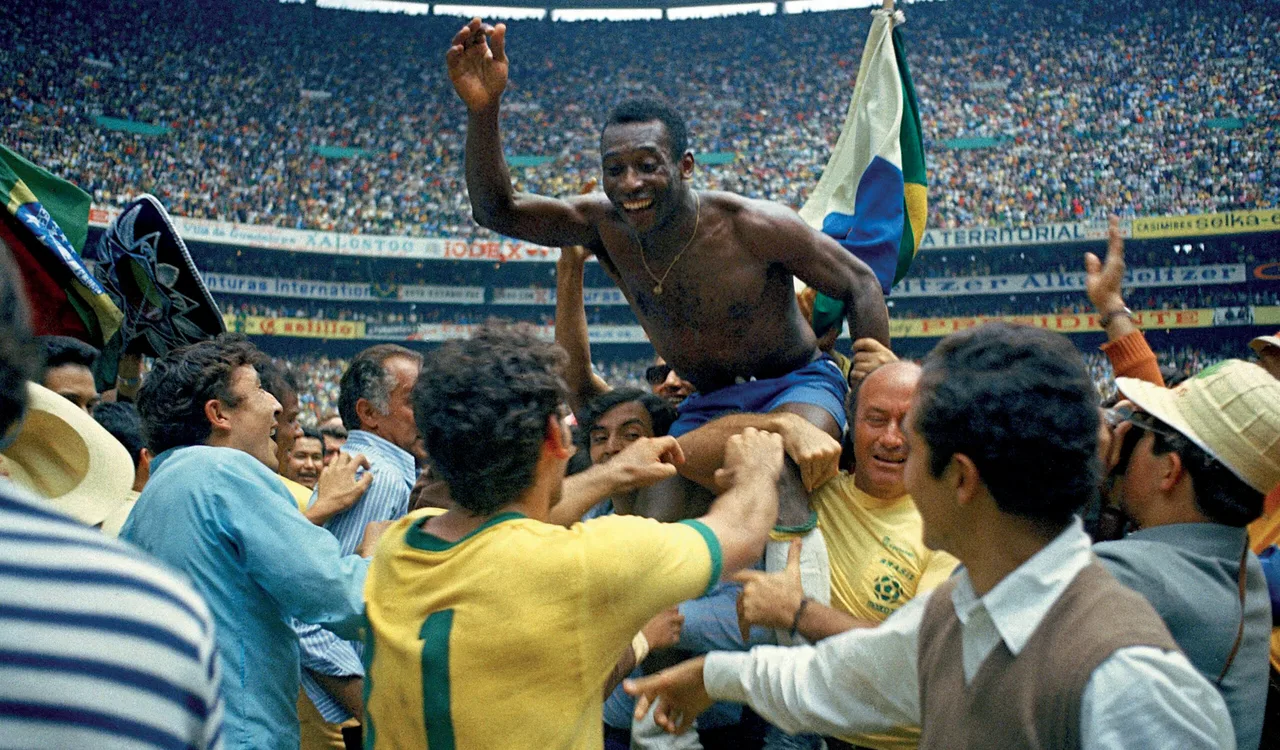
By 1970 that yellow shirt belonged to the best Brazil team ever assembled. Managed by Mario Zagallo, the squad featured Pele, Jairzinho, Tostao, Gerson and Rivelino in attack, a forward line in which, as commentators of the time noted, almost every player was good enough to wear the number 10 in a lesser side. Pele wore it anyway, already a two-time World Cup winner heading into his final tournament for Brazil.
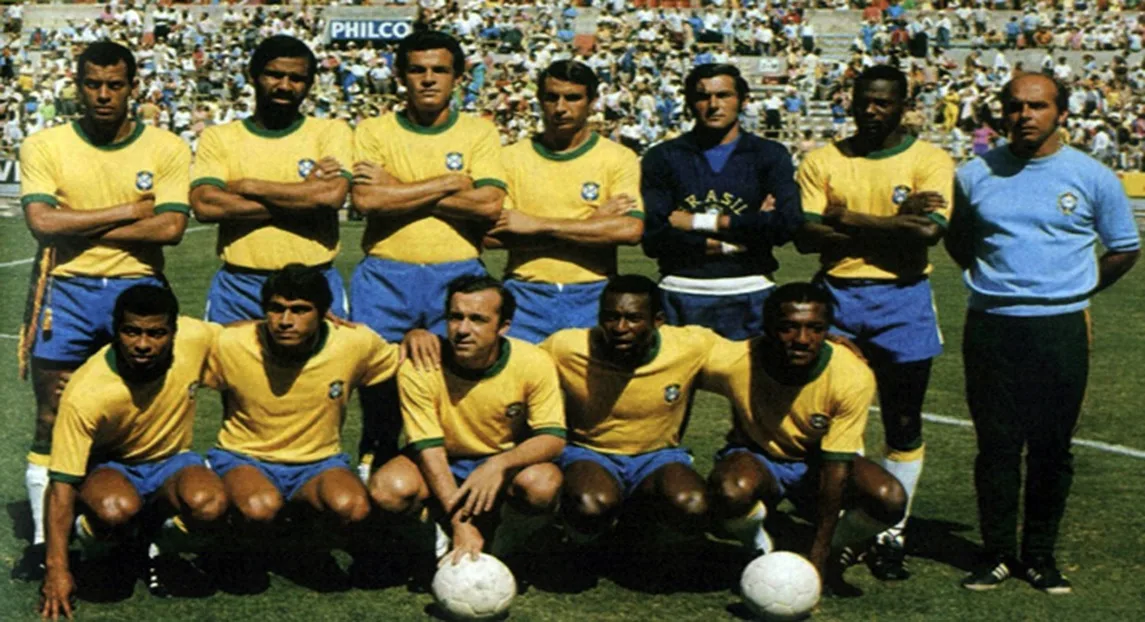
The shirt itself was plain: solid canary yellow, a green round collar and cuffs, no manufacturer logo and no player name, just the number and the crest of the CBD, Brazil's football confederation at the time. It carried none of the championship stars that decorate the crest today, since those were only added in later years. The shirt was made by the Brazilian manufacturer Athleta, with the squad also carrying a near-identical set produced by Umbro, distinguishable only by small differences in the badge.
Brazil won every one of their six matches at the tournament. Jairzinho scored in all six, a feat no player has repeated at a World Cup since. The final against Italy at the Estadio Azteca on 21 June 1970 finished 4-1: goals from Pele, Gerson and Jairzinho were followed by the fourth, a low first-time finish from captain Carlos Alberto at the end of a move that swept the length of the pitch and is still shown as one of the great team goals in the sport's history.
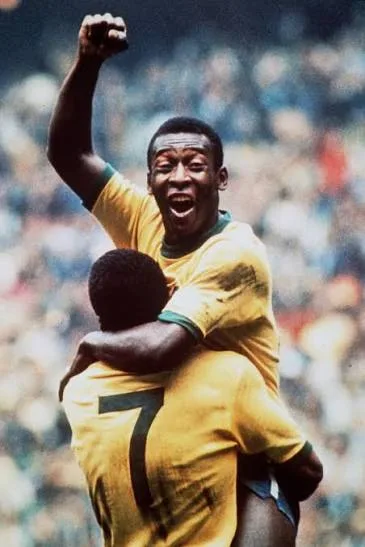
It was Brazil's third World Cup, which meant the Jules Rimet Trophy was theirs to keep permanently. The 1970 tournament was also the first World Cup broadcast in colour, and the sight of that yellow shirt in motion, worn by a team playing football that felt closer to dance than sport, is why the image of Pele with his arms spread after his opening goal in the final remains one of the most reproduced photographs football has ever produced.
Why it still matters
The shirt asks for nothing visually. There is no branding to date it, no sponsor to place it in a particular decade. What it carries instead is the context: a design born out of a national humiliation in 1950, adopted as an act of reinvention, and then worn twenty years later by a team that is still the reference point whenever people talk about the idea of the beautiful game.
Athleta / 1970 World Cup
Brazil 1970 home kit
Third World Cup, first in colour